Engagement & Wedding Rings: Where Tradition Meets Personal Choice
Content Quicklinks
- - 1. Why the “Ring Finger” Became So Important
- - 2. How Engagement Rings Are Traditionally Worn in the UK
- - 3. Wedding Day Ring Order: What Goes Closest to the Heart?
- - 4. Ancient Origins That Still Influence Modern Customs
- - 5. Countries That Share the Left-Hand Tradition
- - 6. Why Some Cultures Prefer the Right Hand
- - 7.How Cultural Backgrounds Shape Ring Traditions
- - 8. Engagement Rings for Men: A Modern Shift
- - 9. Promise Rings, Eternity Rings & Alternative Choices
- - 10. So… Which Finger Is “Correct”?
- - 11. Final Thought: Make the Tradition Yours
'Surprisingly straightforward' is one of the most frequent questions couples have when selecting rings:
Which finger should engagement and wedding rings be worn on?
But the answer is far from straightforward.
Ring-wearing customs have developed in intriguing ways across generations, cultures, and religions. Some traditions are influenced by contemporary values, fashion, and individual expression, while others have their roots in centuries of history.
This is a concise, up-to-date guide to ring placement that doesn't feel antiquated.
1. Why the “Ring Finger” Became So Important
Many cultures have long associated the fourth finger with symbolic meaning. In the past, it was thought to be closely related to the heart, which made it the ideal location for a ring that symbolised devotion and love.
Even though science later refuted the notion, this romantic notion contributed to the association of engagement and wedding rings with a specific finger.
What remained was the symbolism.
2. How Engagement Rings Are Traditionally Worn in the UK
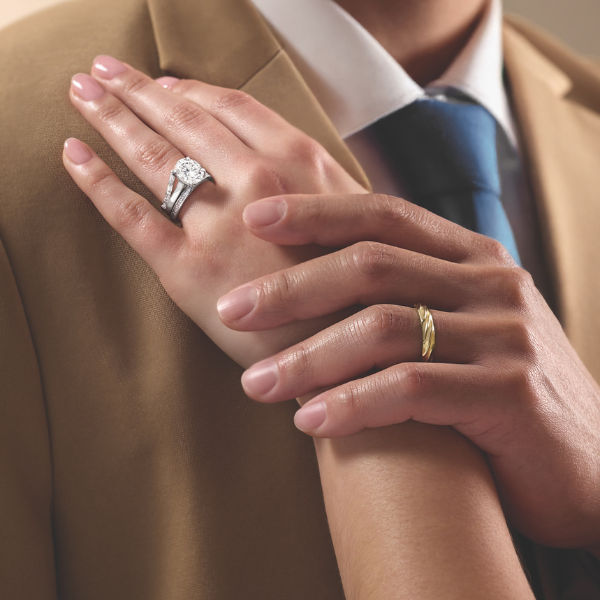
Engagement rings are customarily worn on the left hand's fourth finger in the UK and Ireland.
This practice is still the most popular option today and has become ingrained in British culture. Additionally, promise rings are usually worn on the same finger when they are exchanged.
Many people decide to wear their wedding band and engagement ring on the same finger after getting married, neatly stacked.
3. Wedding Day Ring Order: What Goes Closest to the Heart?
During a wedding ceremony, the engagement ring is usually put on the finger after the wedding band.
In a symbolic sense, this places the engagement ring above the heart and the wedding ring closer to it. Some brides temporarily relocate their engagement ring to the opposite hand during the ceremony and then reposition it afterwards.
However, there is no requirement; comfort and preference always come first.
4. Ancient Origins That Still Influence Modern Customs
Early civilisations used rings as symbols of union long before engagement rings evolved into what they are today.
- For the ancient Egyptians, the circle represented eternity.
- Engagement rings were first used by the Romans as a marriage vow.
Eventually, these concepts merged, forming customs that persist throughout Europe and beyond.
5. Countries That Share the Left-Hand Tradition
The left-hand ring tradition is not limited to the United Kingdom. It is widely used in countries such as:
- United States
- Canada
- Australia
- Ireland
- New Zealand
The left hand is also preferred in a number of European, Mediterranean, and Middle Eastern cultures, including those in Egypt, Scandinavia, and portions of Italy.
6. Why Some Cultures Prefer the Right Hand
The right hand has more symbolic meaning in many regions of the world and is frequently connected to tradition, strength, or trust.
The following nations have a high prevalence of right-handed wedding and engagement rings:
- Germany
- Spain
- India
- Greece
- Poland
- Russia
In some places, wedding bands are worn after engagement rings, reflecting the relationship's chronology rather than being placed symbolically.
7. How Cultural Backgrounds Shape Ring Traditions
Ring placement traditions are often shaped by cultural background, regional customs, and family practices rather than fixed rules. In some traditions, rings may be worn on the right hand during ceremonies and later moved to the left for everyday wear. In others, there is no specific guidance, and placement is influenced by comfort, symbolism, or local convention.
Across Europe and beyond, these customs continue to evolve. Today, many couples choose to adapt traditional practices in a way that feels personal, practical, and reflective of modern lifestyles rather than following any strict framework.
8. Engagement Rings for Men: A Modern Shift
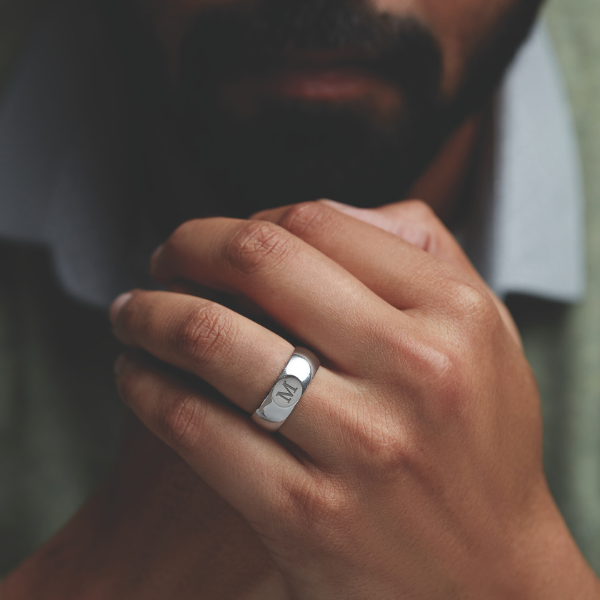
It is no longer uncommon for men to wear engagement rings.
The popularity of men's engagement rings is a reflection of shifting perspectives on personal style, equality, and shared commitment. Nowadays, a lot of couples decide on rings together, and both partners wear one prior to the wedding.
Typical features of men's engagement rings include:
- Plain metal bands
- Pavé or subtle diamond detailing
- Signet or statement styles
There are only preferences, no restrictions.
9. Promise Rings, Eternity Rings & Alternative Choices
The engagement-to-wedding path is not always followed by commitment rings.
- Promise rings often symbolise intention or exclusivity
- Eternity rings mark milestones such as anniversaries or life events
- Toi et Moi rings represent two individuals united
Depending on comfort and meaning, these can be worn on either hand or any finger.
10. So… Which Finger Is “Correct”?
There isn’t one.
These days, ring placement is just as much about practicality and identity as it is about tradition. The significance of the ring is far more important than its placement, regardless of whether you adhere to family traditions, cultural norms, or your own.
Your relationship should be reflected in your jewellery, not a set of rules.
11. Final Thought: Make the Tradition Yours
Wedding and engagement rings are symbols, not guidelines.
Your rings should feel organic, cosy, and significant to you whether you wear them on your left or right hand, stacked together, or alone.
Every ring at SunshineDiamonds is made to honour uniqueness, love, and contemporary relationships, regardless of how you decide to wear it.