Shaped Wedding Rings: How to Match a Wedding Band to Your Engagement Ring
Quick Summary
- Shaped wedding rings are designed to follow the outline of an engagement ring.
- Curved, wishbone, chevron and contoured bands can help reduce an unwanted gap.
- The best shape depends on the engagement ring setting and how low the centre stone sits.
- Solitaire, halo, two-stone and side-stone rings may all need different wedding-band profiles.
- Always test both rings together before deciding on the final shape and width.
- Comfort, stone security, metal and future resizing should also be considered.
Content Quicklinks
- - What Are Shaped Wedding Rings?
- - Why Choose a Shaped Wedding Band?
- - Types of Shaped Wedding Rings
- - Matching Different Engagement Ring Styles
- - Straight vs Shaped Wedding Rings
- - Should There Be a Gap?
- - Plain vs Diamond-Set Bands
- - Choosing the Metal
- - Choosing Band Width
- - UK Buying Checklist
- - Frequently Asked Questions
Choosing a wedding ring is not simply about finding a band you like on its own. It also needs to work visually and physically with your engagement ring.
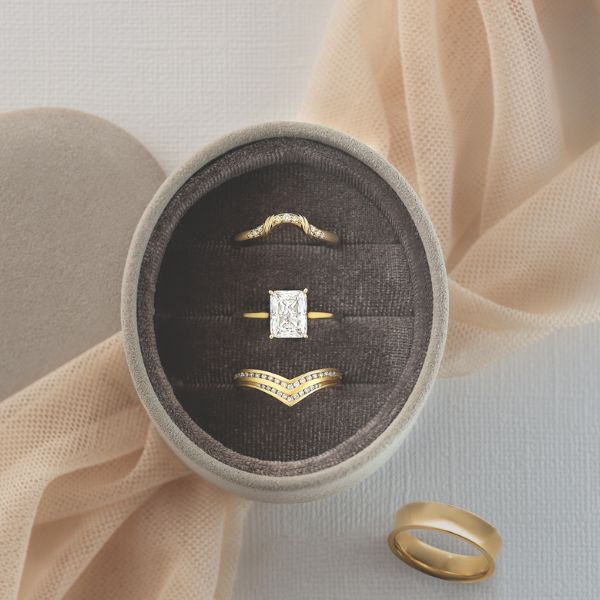
This is where shaped wedding rings become particularly useful. Rather than following a completely straight line, they are designed with a curve, point or contour that can fit around the setting of an engagement ring.
A well-matched wedding band can make both rings look as though they were designed as a pair, while still allowing each piece to keep its own character.
Explore our wedding rings while using this guide to understand which band profile may work best with your engagement ring.
What Are Shaped Wedding Rings?
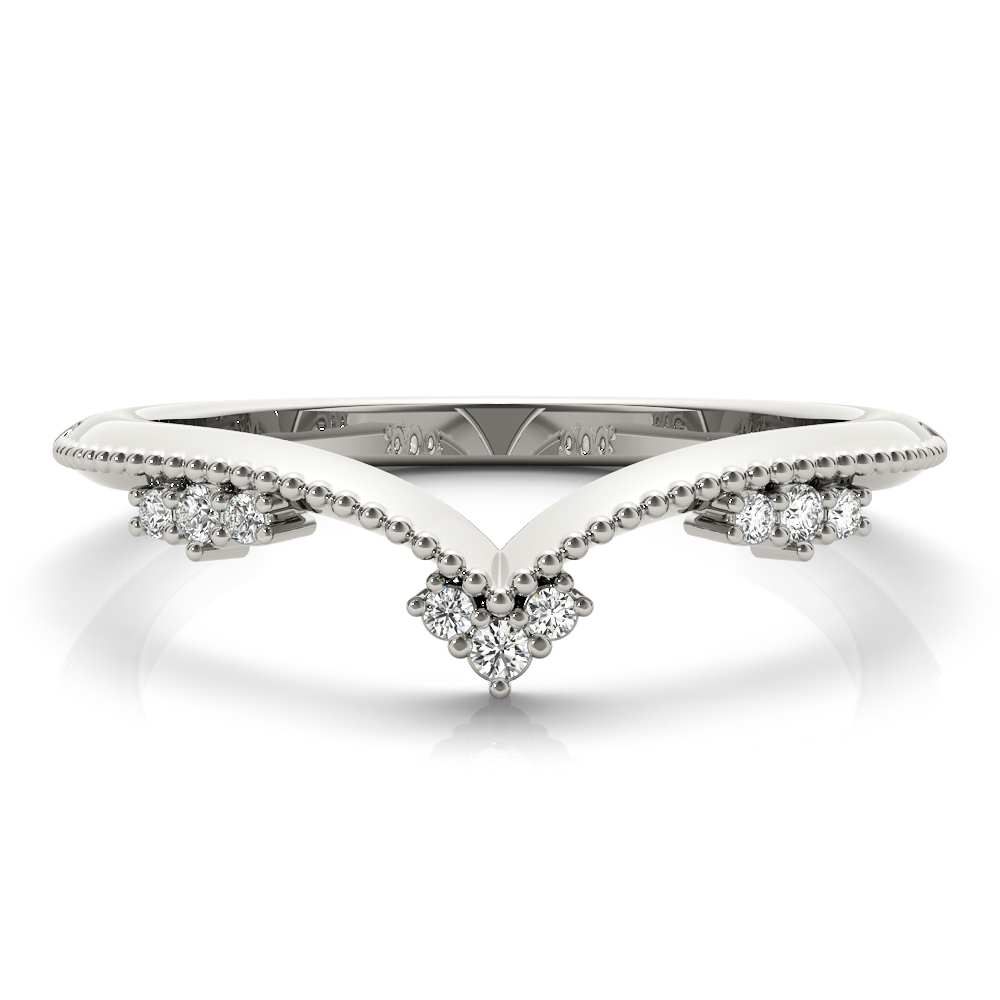
A shaped wedding ring is designed with a profile that differs from a completely straight band. It may include a gentle curve, a pronounced V-shape, a contour around a centre setting or an open section intended to accommodate the engagement ring.
You may also see these styles described as:
- Curved wedding rings
- Contoured wedding bands
- Fitted wedding rings
- Wishbone wedding rings
- Chevron wedding bands
- Wedding rings designed to fit around engagement rings
Although the names can vary, the principle is similar: the wedding ring has been shaped to work more comfortably around another ring.
Why Choose a Shaped Wedding Band?
Some engagement ring settings allow a straight wedding band to sit neatly against the ring. Others do not.
A low-set centre diamond, large halo, side stones or unusual setting can project beyond the band and create a visible space between the two rings.
A fitted design can also help to create a more deliberate ring stack instead of making the gap appear accidental.
Popular Types of Shaped Wedding Rings
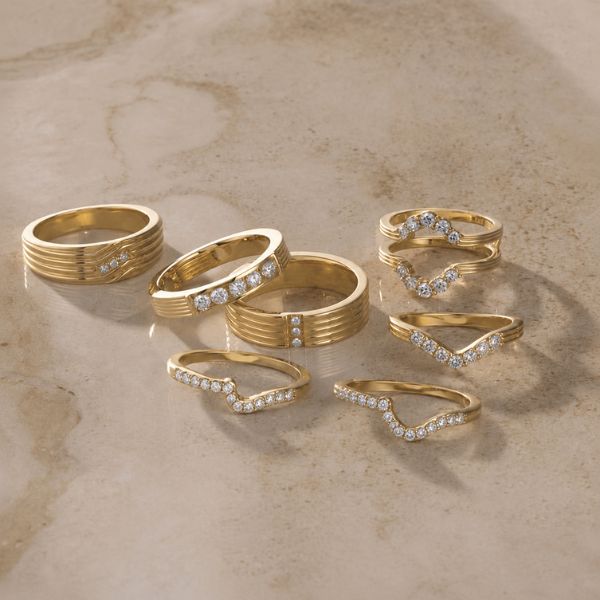
Curved Wedding Ring
Features a soft curve in the centre and can fit around solitaire, halo and other raised engagement-ring settings.
Wishbone Wedding Ring
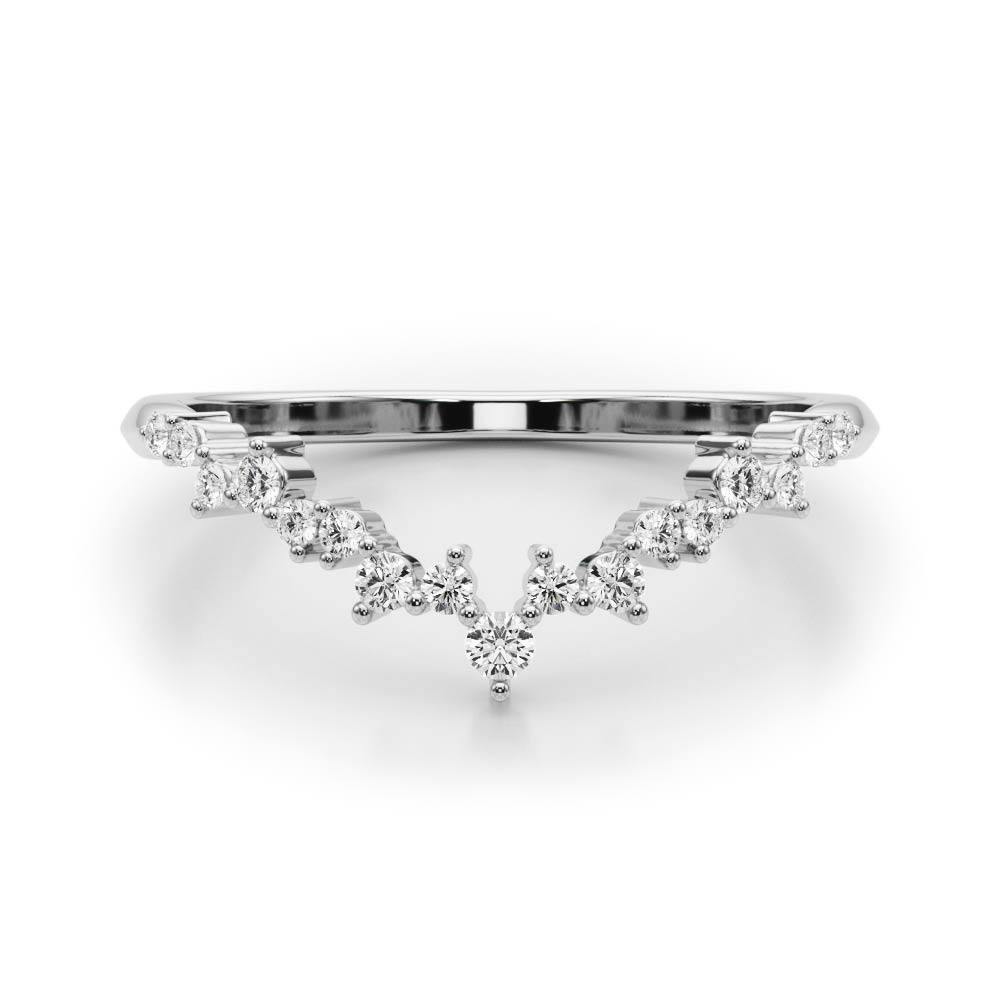
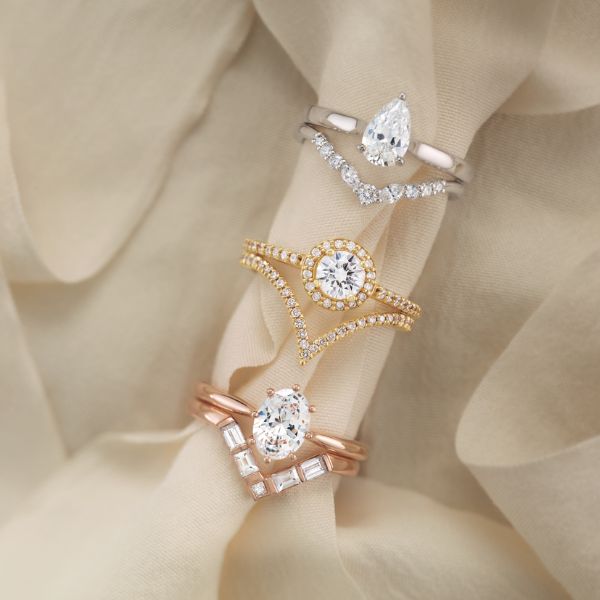
Forms a more noticeable V shape and can frame pear, marquise and other elongated engagement rings beautifully.
Chevron Wedding Band
Uses a defined pointed shape for a modern, geometric appearance and is particularly effective in contemporary ring stacks.
Contoured Wedding Band
Closely follows the outline of the engagement ring and can create the appearance of a coordinated bridal set.
Open Wedding Band
Leaves an intentional opening around the centre setting, which can work with some larger or lower-set engagement rings.
Asymmetric Shaped Band
Uses an uneven or flowing curve and can complement unusual engagement rings such as two-stone and contemporary designs.
How to Match a Wedding Ring to Different Engagement Ring Styles
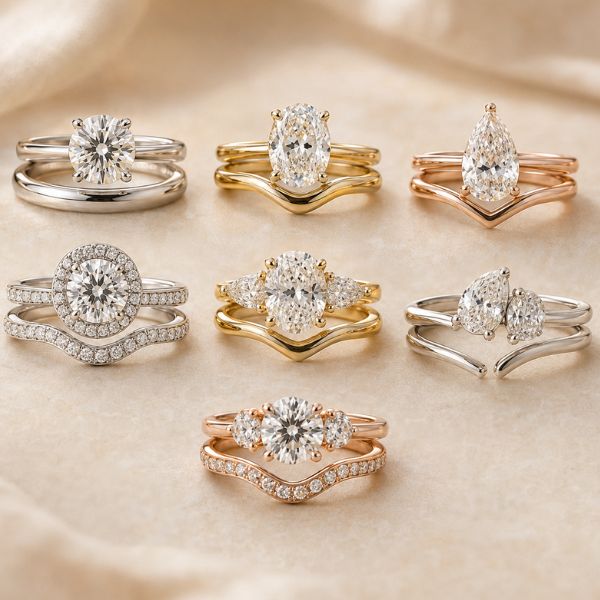
The shape of the engagement ring setting is usually more important than the diamond shape alone.
Solitaire Engagement Rings
A raised solitaire setting often leaves enough room beneath the centre stone for a straight wedding band.
However, a low-set solitaire may require a gently curved or fitted wedding band to sit closer to the engagement ring.
Oval Engagement Rings
Oval diamonds are elongated, but whether you need a shaped band depends primarily on the basket or setting underneath the stone.
A soft curved wedding band can complement the rounded outline of an oval engagement ring without overwhelming it.
Pear-Shaped Engagement Rings
Pear-shaped engagement rings can pair particularly well with curved or wishbone wedding rings.
A V-shaped design may echo the pointed end of the pear diamond and create a balanced, intentional stack.
Halo Engagement Rings
Halo settings can have a wider footprint than a solitaire because smaller diamonds surround the centre stone.
If the halo sits low, a curved or contoured wedding band may be required to sit comfortably alongside it.
Side-Stone Engagement Rings
Side stones can increase the width and profile of the engagement ring. A wedding band should therefore be tested against the full side profile rather than only the centre stone.
Two-Stone Engagement Rings
Two-stone rings can be particularly individual because the two main stones may sit at different angles or extend across a wider section of the finger.
A curved, open or asymmetric wedding band may help create enough space around the design.
If you are considering this style, read our two-stone engagement ring guide for more information about diamond pairings, settings and proportions.
Trilogy Engagement Rings
Trilogy designs feature three principal stones and can therefore have a broader setting across the finger.
Depending on how low the side stones sit, a fitted or gently curved band may provide a closer match.
Explore our trilogy engagement rings if you prefer a three-stone design.
Straight vs Shaped Wedding Rings
| Feature | Straight Wedding Ring | Shaped Wedding Ring |
|---|---|---|
| Profile | Straight across the finger | Curved, pointed or contoured |
| Best With | Engagement rings with enough clearance underneath the centre setting | Low-set, halo, unusual or wider engagement-ring settings |
| Appearance | Traditional and simple | More fitted and coordinated |
| Flexibility | Often easier to wear separately | May look best when worn with the engagement ring it was selected for |
| Customisation | Usually more straightforward | Can be created specifically around the engagement-ring profile |
Should a Wedding Ring Sit Flush Against an Engagement Ring?
It does not have to.
Some people prefer the engagement and wedding rings to sit completely flush, creating one continuous bridal set. Others deliberately prefer a small gap because it helps each ring remain visually distinct.
The important point is that the rings should sit comfortably and should not put unnecessary pressure on each other's stones or settings.
Can a Shaped Wedding Ring Damage an Engagement Ring?
A correctly matched wedding band should not create damaging pressure against the engagement ring.
Problems are more likely when the edges of diamonds, claws or settings repeatedly rub against the adjacent ring.
This is one reason why choosing the correct contour and checking both rings together is so important.
Plain or Diamond-Set Shaped Wedding Ring?
Both options can work beautifully, but they create very different results.
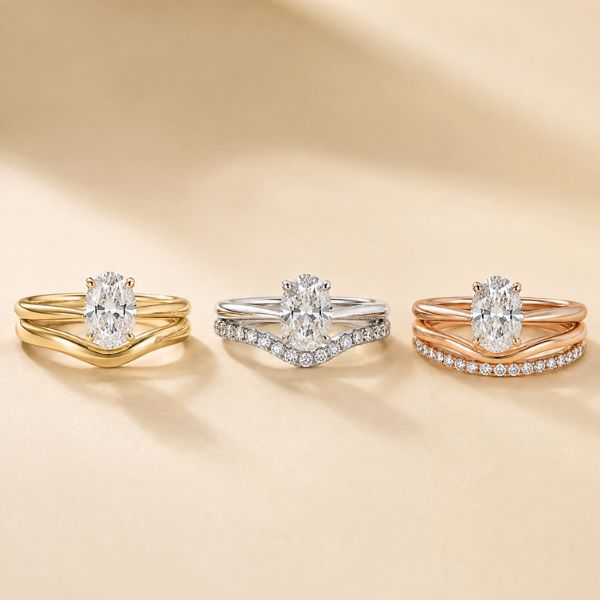
Plain Shaped Band
Keeps the engagement ring as the main visual focus and can create an elegant, understated bridal set.
Diamond-Set Shaped Band
Adds extra sparkle across the finger and can visually connect with diamond shoulders or a halo engagement ring.
Mixed Stack
A plain wedding band can later be combined with a diamond eternity ring to create a layered look.
What Diamond Setting Works Well in a Shaped Wedding Ring?
Small diamonds can be set into shaped bands in several ways.
- Claw-set: allows plenty of diamond visibility and sparkle.
- Pavé-set: creates a delicate line of closely spaced diamonds.
- Channel-set: places diamonds between metal walls for a clean, structured appearance.
- Bezel-style details: can give individual stones a more defined metal surround.
The most appropriate option depends on the shape of the wedding ring, the diamond size and how closely it will sit beside the engagement ring.
Which Metal Should You Choose?
Many couples choose the same precious metal as their engagement ring because it creates a more unified appearance.
| Metal | Appearance | Consideration |
|---|---|---|
| Yellow Gold | Warm and traditional | Works beautifully with both white and coloured diamonds and gemstones. |
| White Gold | Bright and contemporary | Creates a cohesive white appearance beside diamond-set engagement rings. |
| Rose Gold | Soft and romantic | Can create a distinctive contrast or a coordinated warm-toned bridal set. |
| Platinum | Naturally white | A durable precious metal commonly chosen for engagement and wedding rings. |
Should the Wedding Ring Metal Match the Engagement Ring?
Matching metals is the simplest approach, but it is not compulsory.
Some modern bridal stacks intentionally mix yellow gold and white metals or combine rose gold with platinum.
If mixing metals, consider how the colours work together and whether you want the contrast to look deliberate.
How Wide Should a Shaped Wedding Ring Be?
Band width can significantly change the overall proportions of your bridal set.
A very delicate wedding ring can make a large engagement ring appear even more prominent, while a wider band can create a bolder and more contemporary combination.
| Band Style | General Look |
|---|---|
| Fine / Delicate | Light, elegant and keeps attention on the engagement ring |
| Medium Width | Balanced and suitable for many engagement-ring styles |
| Wide Band | Bold, modern and more visually dominant |
Should You Buy Your Wedding Ring at the Same Time as Your Engagement Ring?
You do not have to, but there can be advantages.
If you already know you want a perfectly fitted bridal set, choosing the wedding ring while the engagement-ring design is available can make matching easier.
It also gives you an opportunity to check how both rings look from the top, side and on the finger before making the final decision.
Can a Shaped Wedding Ring Be Worn on Its Own?
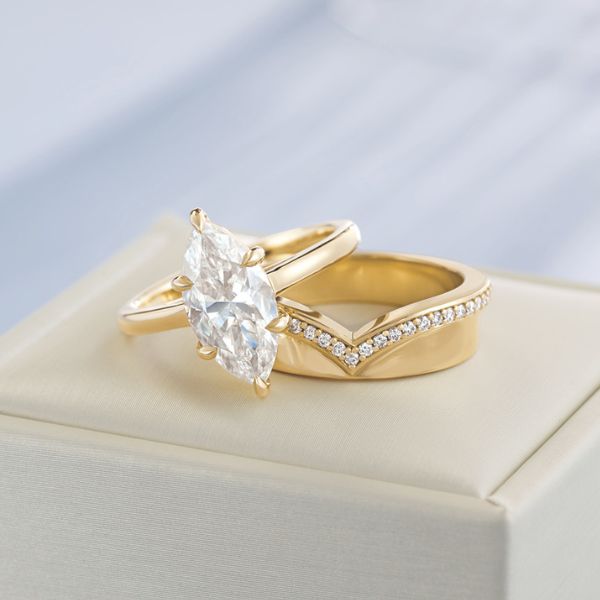
Yes, although this depends on the design.
A subtle curved ring can look attractive independently. A very pronounced contour or open band may make more visual sense when worn alongside the engagement ring it was designed to fit.
If you expect to wear your wedding ring alone regularly, consider this before choosing a highly specialised fitted shape.
Can a Shaped Wedding Ring Be Resized?
Resizing possibilities depend on the design.
A relatively simple precious-metal band may offer more flexibility, while an intricate shape, extensive diamond setting or diamonds running around a large part of the circumference can make resizing more complicated.
What Should UK Buyers Check Before Buying a Shaped Wedding Ring?
1. Bring or Measure the Engagement Ring
The wedding ring should be selected according to the actual engagement-ring profile rather than assumptions based only on the centre diamond shape.
2. Check the Side Profile
Look underneath the centre setting to understand whether a straight band has enough clearance or whether a curve is required.
3. Check for Contact Between Stones and Metal
Make sure exposed diamond edges, claws and settings are not rubbing unnecessarily against the neighbouring ring.
4. Consider Band Width
Try the engagement ring and wedding band together so you can judge their combined width and visual balance.
5. Confirm Diamond Information
For diamond-set wedding rings, check whether the stones are natural or laboratory-grown and review the available information about total carat weight and specifications.
6. Check Precious-Metal Hallmarking
In the UK, qualifying precious-metal articles above the relevant statutory exemption weights should carry an appropriate hallmark.
7. Ask About Resizing
Confirm whether the chosen shaped band can be resized later and what limitations apply.
How to Choose a Shaped Wedding Ring in 5 Steps
1. Check the Engagement Ring
Look at the setting height, centre stone and side profile to see whether a straight band will fit.
2. Decide on the Fit
Choose whether you want the rings completely flush or are comfortable with a deliberate gap.
3. Choose the Shape
Compare curved, wishbone, chevron, contoured and open styles.
4. Choose Plain or Diamond-Set
Decide whether the engagement ring should remain the main focal point or whether you want additional sparkle.
5. Try the Rings Together
Check comfort, width, stone contact and overall appearance before making your final choice.
Frequently Asked Questions About Shaped Wedding Rings
Explore More from Sunshine Diamonds
Final Thoughts
The best shaped wedding ring is not simply the one with the most attractive curve. It is the band that works naturally with your engagement ring's setting, proportions and profile.
A straight wedding ring may be ideal when there is enough clearance beneath the centre setting. When the engagement ring sits lower or has a wider halo, side stones or an unusual two-stone design, a curved, wishbone or contoured wedding band can create a much better fit.
Pay particular attention to how the rings meet from the side, whether any diamonds or claws rub against each other and how the combined width feels on your finger.
Explore the wedding ring collection at Sunshine Diamonds to compare different metals, diamond styles and designs for your bridal set.