Two-Stone Engagement Rings Explained: Meaning, Diamond Pairings & How to Choose
Quick Summary
- A two-stone engagement ring features two principal gemstones rather than one centre stone
- The stones can match or combine contrasting diamond shapes
- Toi et Moi means “you and me” and is associated with two people coming together
- Oval, pear, round and emerald-cut diamonds can create attractive pairings
- Visible dimensions matter as much as carat weight when balancing two stones
- Yellow gold, white gold, rose gold and platinum all create different looks
- Natural and lab-grown diamonds can both be used in two-stone designs
- UK buyers should consider hallmarking, resizing, stone security and wedding-band fit
Content Quicklinks
- - Quick Answer
- - What Is a Two-Stone Engagement Ring?
- - What Does a Two-Stone Engagement Ring Mean?
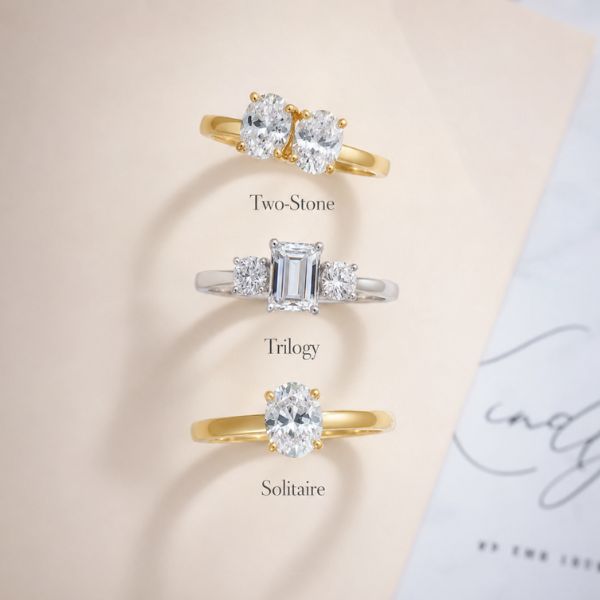
- - Two-Stone vs Solitaire Rings
- - Two-Stone vs Trilogy Rings
- - Which Diamond Shapes Work Well Together?
- - Should Both Diamonds Be the Same Size?
- - Choosing the Setting
- - Which Precious Metal Works Best?
- - Natural or Lab-Grown Diamonds?
- - Can You Mix Diamonds and Gemstones?
- - Wedding Band Compatibility
- - What Should UK Buyers Check?
- - Frequently Asked Questions
- - Final Thoughts
A two-stone engagement ring creates its character through the relationship between two centre stones rather than relying on one dominant diamond.
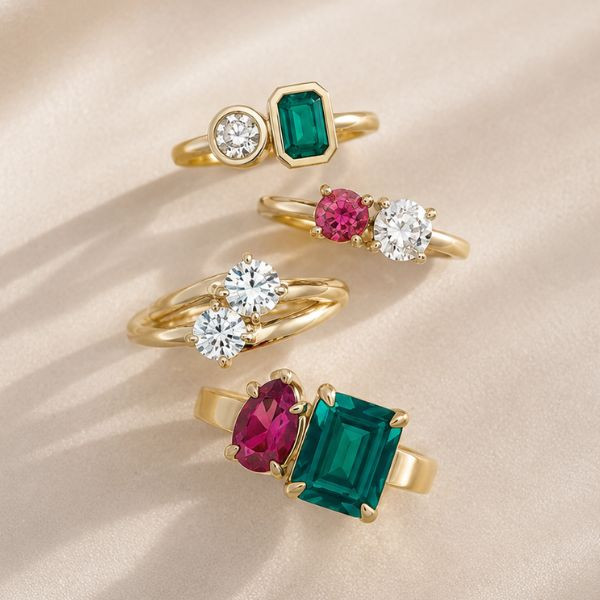
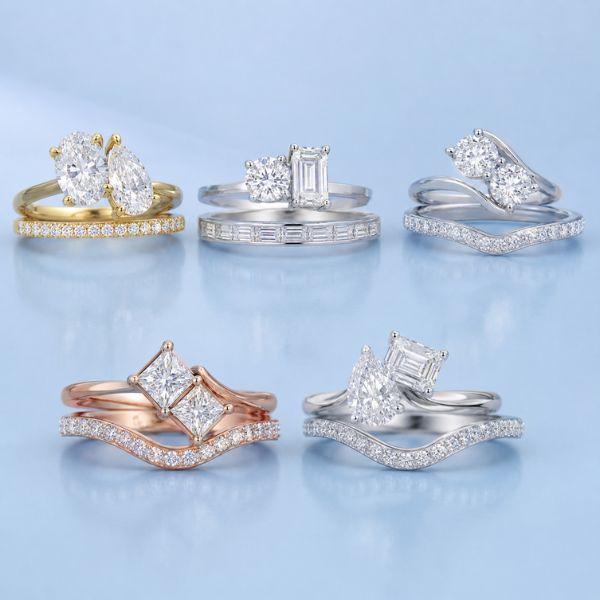
The stones may match in shape and size or deliberately contrast. An oval can sit beside a pear-shaped diamond, an emerald cut can be paired with a softer shape, or two round diamonds can create a more symmetrical appearance.
Sometimes called a Toi et Moi engagement ring, the style is closely associated with the idea of two people coming together within one piece of jewellery.
If you are considering a 2 stone engagement ring, explore two-stone diamond rings while using this guide to understand diamond pairings, proportions, settings, metals and the practical points UK buyers should consider.
What Is a Two-Stone Engagement Ring?
A two-stone engagement ring places two principal gemstones together within one ring design.
Unlike a traditional solitaire, where one centre diamond creates the main focal point, a two-stone ring depends on the relationship between both stones.
• side by side;
• slightly offset;
• at contrasting angles;
• diagonally across the finger;
• close together;
• or with a small intentional gap between them.
This gives a designer more freedom to create either a balanced, symmetrical appearance or something deliberately asymmetric.
What Does a Two-Stone Engagement Ring Mean?
The meaning of a two-stone engagement ring is often linked with partnership.
Instead of one stone representing the relationship, two principal stones sit together within the same ring.
Toi et Moi is French for “you and me”. In jewellery, the phrase is commonly used for rings in which two principal gemstones come together within one design.
The two stones can also carry a personal meaning, such as:
- two partners;
- past and future;
- two important dates;
- two birthstones;
- different favourite diamond shapes;
- or two important stages of a relationship.
There is no requirement to attach a particular meaning to the ring. Some buyers simply prefer the appearance and individuality of two centre stones.
Two-Stone vs Solitaire Engagement Rings
A solitaire places one diamond at the visual centre of the ring. This creates a simple focal point and allows the design to concentrate on one diamond's shape, size and setting.
A two-stone ring works differently because both stones contribute to the overall composition.
A double diamond ring therefore offers additional opportunities to personalise shape, size, spacing and orientation.
Two-Stone vs Trilogy Engagement Rings
A two-stone engagement ring should not be confused with a trilogy ring.
A trilogy design uses three principal stones, normally with one centre diamond and a stone on either side. A two-stone design concentrates instead on the relationship between two main gemstones.
If you prefer three principal stones, explore trilogy engagement rings .
Which Diamond Shapes Work Well Together?
Shape pairing is one of the most distinctive parts of designing a two-stone engagement ring.
The diamonds do not have to match. In fact, deliberately combining different shapes can make the two-stone design more noticeable.
Oval + Pear
Both are elongated, but the oval offers soft symmetry while the pear introduces a tapered point.
Round + Pear
A round diamond creates compact symmetry while the pear adds length and direction.
Emerald + Pear
Straight geometric facets contrast beautifully with the softer curves of a pear-shaped diamond.
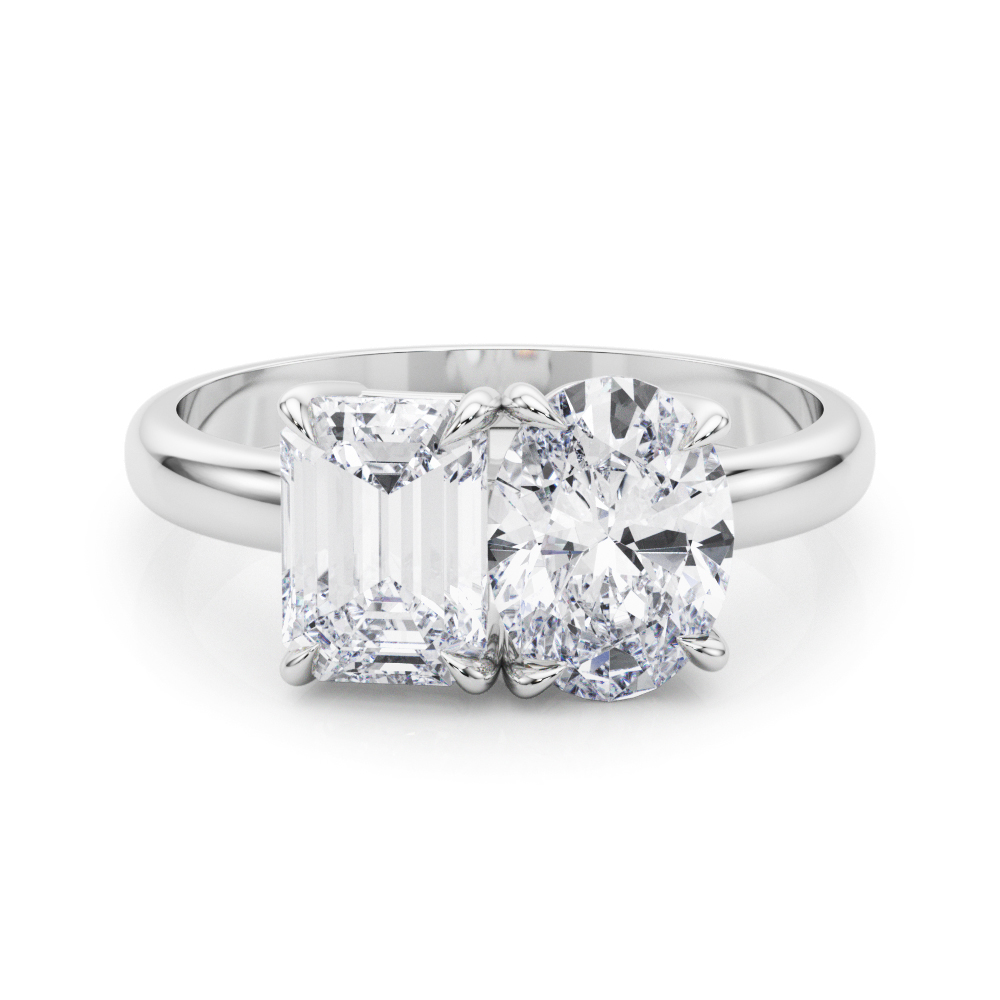
Oval + Emerald
Both can be elongated, while their very different facet styles create clear contrast.
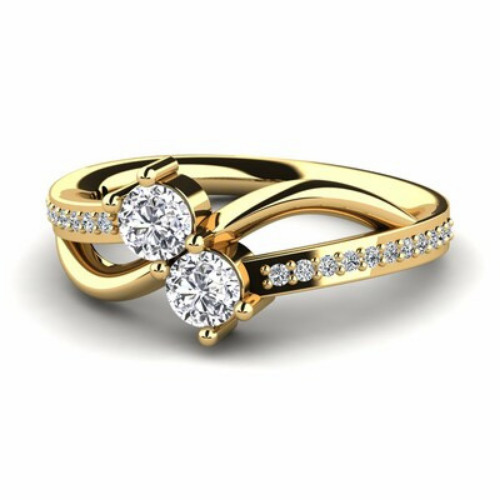
Round + Round
Matching round diamonds create one of the most balanced and symmetrical two-stone looks.
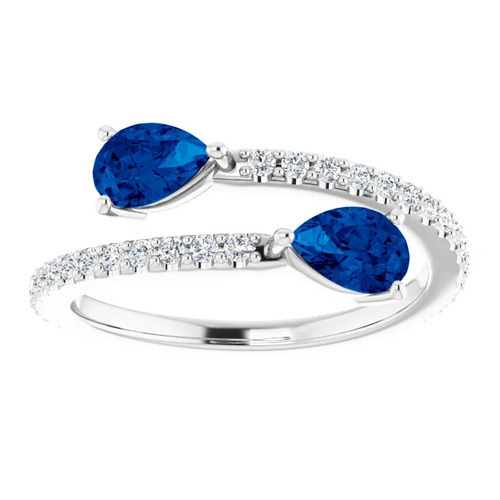
Pear + Pear
The two points can face towards each other, away from one another or sit at contrasting angles.
Should Both Diamonds Be the Same Size?
Not necessarily. Two stones of similar visible size can create a balanced appearance, while deliberately different sizes can make the ring more asymmetric.
If one stone is considerably larger than the other, the smaller gemstone may start to look like a side stone rather than a second principal centre stone.
• stone length;
• stone width;
• visible face-up size;
• shape;
• orientation;
• and the space between the stones.
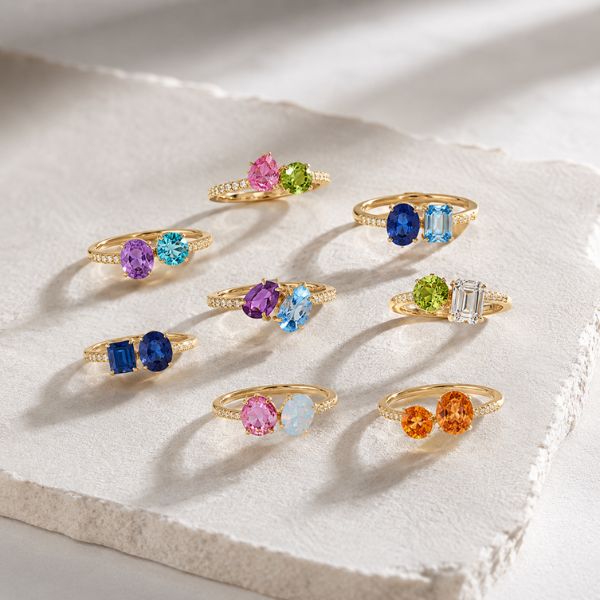
Matching Diamonds or Contrasting Diamonds?
Matching Pair
Two diamonds of the same shape can create a more ordered and symmetrical appearance. Examples include round with round, oval with oval or pear with pear.
Contrasting Pair
Different shapes make the two-stone idea more visually obvious. Oval and pear, round and pear, emerald and pear, cushion and oval, or marquise and round can all create distinctive combinations.
How Close Should the Two Diamonds Sit?
Spacing has a major effect on the finished appearance.
Stones positioned very close together can appear almost like one combined centrepiece. Leaving a small gap makes each individual diamond shape easier to recognise.
Too much separation can make the design appear disconnected, while too little space may hide the contrast between the two shapes.
Choosing the Setting
The setting affects both appearance and stone security.
Claw Setting
Claws keep more of each diamond visible and work well where you want the outlines of two different shapes to remain clear.
Open / Bypass Setting
The band curves towards each gemstone, helping emphasise the idea of two separate stones coming together.
Low-Profile Setting
Positions the stones closer to the finger for a streamlined look, although wedding-band fit should be considered.
Which Precious Metal Works Best?
The precious metal changes the overall character of a two-stone engagement ring.
| Precious Metal | Appearance | Design Effect |
|---|---|---|
| Yellow Gold | Warm | Creates contrast around white diamonds and can soften a contemporary two-stone design. |
| White Gold | Cool and bright | Blends visually with colourless diamonds and keeps attention on the stone shapes. |
| Rose Gold | Warm pink tone | Adds another distinctive element to asymmetric or mixed-shape designs. |
| Platinum | Naturally white | Creates a naturally white precious-metal appearance around both centre stones. |
9ct or 18ct Gold?
UK buyers choosing a gold two-stone ring will often see both 9ct and 18ct gold options.
18ct gold contains a higher proportion of pure gold, while 9ct gold has a different composition and price point.
Your decision should consider colour preference, design, budget, everyday wear and the precious metal you may later choose for the wedding ring.
Natural or Lab-Grown Diamonds?
A two-stone engagement ring can be created using either natural or lab-grown diamonds.
Both are diamonds; the primary difference is their origin. Natural diamonds formed within the earth, while lab-grown diamonds are created under controlled laboratory conditions.
Lab-grown diamonds can offer a different price structure when creating a design with two substantial stones, while natural diamonds may appeal to buyers who specifically prefer naturally formed diamonds.
Compare natural diamond engagement rings and lab-grown diamond engagement rings if you would like to understand both options.
Can You Mix Diamonds and Coloured Gemstones?
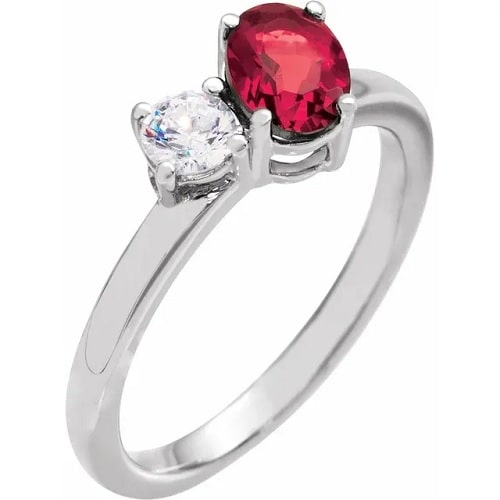
Yes. A two-stone ring does not have to contain two diamonds.
• diamond + sapphire;
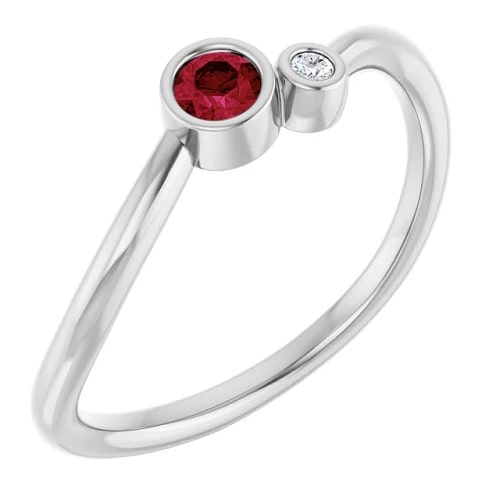
• diamond + ruby;
• diamond + emerald;
• or two different coloured gemstones.
This can introduce colour and personal meaning through birthstones, favourite gemstones or significant dates.
Remember that different gemstones have different hardness and care requirements, so the setting should be designed around both stones.
How Does a Two-Stone Ring Sit on the Finger?
Two principal stones can provide greater finger coverage than a conventional single-centre design, but overall proportions still matter.
• total width across the finger;
• height of both stones;
• whether either stone catches easily;
• direction of pointed shapes;
• band width;
• and spacing between the stones.
A ring may look impressive in an enlarged product photograph but should also appear balanced when viewed at its real size on the hand.
Can You Wear a Wedding Ring with a Two-Stone Engagement Ring?
Yes, although the best wedding-band shape depends on the height and width of the two-stone setting.
A raised design may allow a straight wedding band to sit closely beside it, while lower or asymmetric settings may work better with a curved, shaped or open wedding ring.
Explore wedding rings when planning how the two rings will eventually be worn together.
What Should UK Buyers Check?
1. Precious Metal and Hallmarking
Confirm the precious metal and its fineness. Qualifying precious-metal articles above the relevant UK statutory exemption weights should carry an appropriate hallmark.
2. Individual Diamond Details
With a two-stone ring, ask for information about both principal stones rather than relying only on the combined total carat weight.
3. Natural or Lab-Grown
Confirm whether each stone is natural or lab-grown and review the colour, clarity, measurements and any grading information supplied.
4. Ring Size and Resizing
Some two-stone designs may be more difficult to resize, particularly when diamonds or design details extend far around the band.
Check resizing options before ordering rather than assuming every design can be altered by the same amount.
5. Stone Security
Pay particular attention to pointed shapes such as pear and marquise diamonds. Their tips should be appropriately protected within the setting.
6. Wedding-Band Fit
Check whether the engagement-ring profile will work with a straight wedding ring or whether you may need a shaped or curved band.
7. Returns and Bespoke Orders
Bespoke, personalised or altered jewellery may be treated differently from standard products under a retailer's returns policy, so review the relevant terms before ordering.
How to Choose Your Two-Stone Engagement Ring
Step 1 — Choose the Overall Look
Decide whether you want the design to look symmetrical, asymmetric, traditional, contemporary, understated or statement-making.
Step 2 — Choose the Diamond Shapes
Decide whether your two stones should match or deliberately contrast.
Step 3 — Compare the Proportions
Look at visible millimetre dimensions as well as carat weight so the two stones appear intentionally balanced.
Step 4 — Choose the Setting
Consider security, setting height, everyday practicality and future wedding-band compatibility.
Step 5 — Choose the Precious Metal
Compare yellow gold, white gold, rose gold and platinum according to the appearance you prefer and the jewellery you already wear.
Why Two-Stone Rings Work Well for Personalisation
A two-stone design gives you more variables to personalise than a conventional single-centre-stone ring.
• both diamond shapes;
• individual carat weights;
• stone orientation;
• spacing;
• precious metal;
• setting style;
• band width;
• diamond origin;
• and the overall symmetry of the ring.
Sunshine Diamonds also has a dedicated Toi et Moi rings collection for buyers who particularly like the classic “you and me” interpretation of the two-stone style.
Explore Related Jewellery at Sunshine Diamonds
Frequently Asked Questions
Final Thoughts
A two-stone engagement ring is defined not simply by having two diamonds, but by how those stones work together.
Matching diamonds create balance, mixed shapes introduce contrast and different stone sizes create a deliberate hierarchy. Precious metal, setting height and spacing then determine the overall character and practicality of the finished ring.
For anyone considering a Toi et Moi engagement ring, the best starting point is not simply asking which individual diamond is best.
Instead, consider which pair of diamonds looks best together.
Explore Sunshine Diamonds' two-stone diamond rings to compare different diamond shapes, proportions and precious-metal combinations.