How to Choose a Sapphire Engagement Ring: Colour, Diamonds, Settings & Metals
Quick Summary
Content Quicklinks
Quick Answer Why choose a sapphire engagement ring? How do you choose sapphire colour? Does sapphire clarity and cut matter? Sapphire and diamond engagement rings Which setting is best? Which sapphire shape should you choose? White gold, yellow gold or platinum? Sapphire vs diamond engagement rings Can sapphire engagement rings be worn every day? Will a sapphire ring sit with a wedding band? What should UK buyers check? Sapphire engagement ring FAQsQuick Answer
Choose a sapphire engagement ring by focusing first on sapphire colour, then shape, setting and precious metal. For everyday wear, also consider stone protection, ring height and how the engagement ring will sit beside a future wedding band.
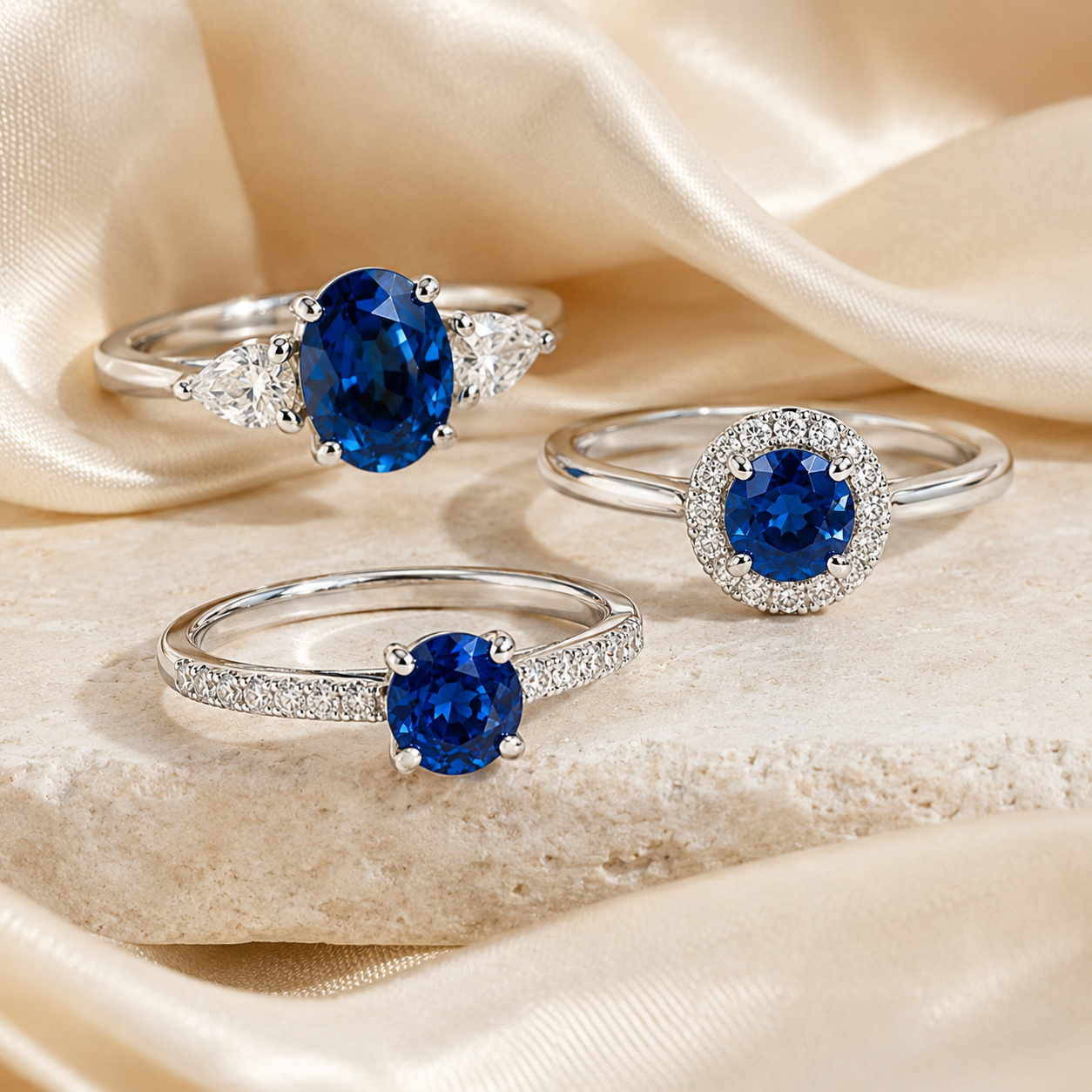
A sapphire engagement ring offers something immediately distinctive: rich colour combined with the familiar structure of fine bridal jewellery.
From a deep blue sapphire surrounded by diamonds to a simpler sapphire set in yellow gold or platinum, the final appearance can change considerably depending on the gemstone's colour, shape, cut, setting and precious metal.
If you are comparing sapphire engagement rings , it is worth looking beyond the size of the centre stone. Colour, proportions, visible inclusions, diamond accents, setting security and wedding-band compatibility can all influence how the ring looks and feels in everyday wear.
Why Choose a Sapphire Engagement Ring?
The most obvious difference between a sapphire engagement ring and a traditional colourless diamond solitaire is colour.
Blue sapphire creates a strong central focal point while still working naturally with many familiar engagement-ring settings, including side-stone, halo and three-stone designs.
Sapphire belongs to the corundum mineral family and measures 9 on the Mohs hardness scale. This makes sapphire a practical gemstone for jewellery designed to be worn regularly.
Hardness does not mean a sapphire is impossible to damage. A strong impact can still affect the stone or setting, which is why claw security and protection around exposed edges remain important.
How Do You Choose the Right Sapphire Colour?
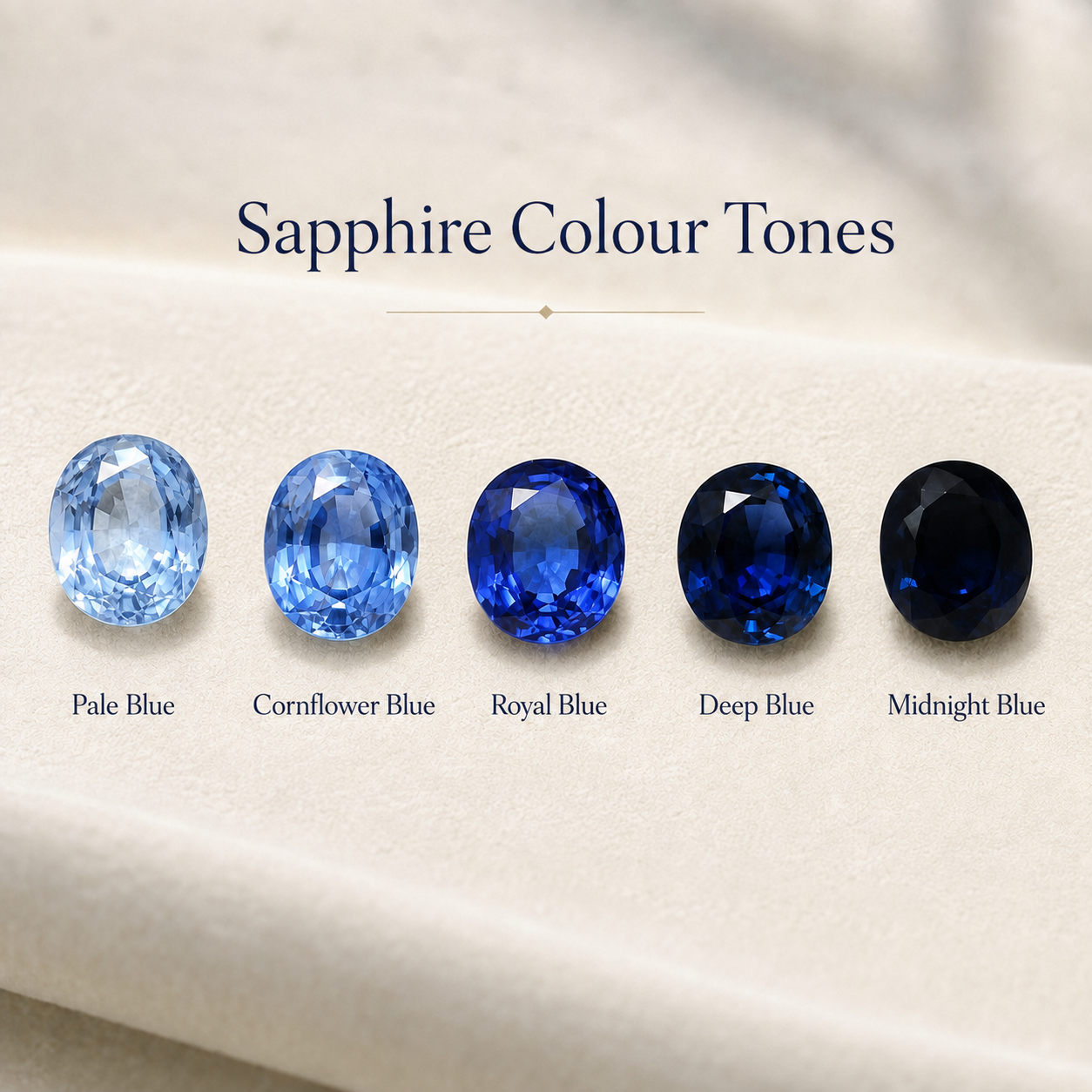
Colour is usually the first characteristic you notice when viewing a sapphire. Rather than focusing only on whether the gemstone is described as “blue”, consider its hue, tone and saturation.
Hue
Hue describes the main visible colour. A sapphire may appear predominantly blue while also showing subtle secondary tones.
Personal preference matters. You do not need to select a particular shade simply because it is considered traditional.
Tone
Tone describes how light or dark the sapphire appears.
Very dark blue sapphires can sometimes look almost black in lower lighting, while lighter examples may create a brighter and softer appearance.
Saturation
Saturation relates to the intensity or strength of the colour.
A sapphire with lively colour can create a particularly strong focal point when paired with bright diamonds.
Does Sapphire Clarity and Cut Matter?
Yes. Natural sapphires can contain internal characteristics that developed as the crystal formed. These are not automatically signs of a poor gemstone.
A more useful question is whether inclusions are distracting when the sapphire is viewed normally or whether they reduce the attractiveness of the stone.
Cut also matters because it influences how effectively the sapphire displays its colour.
Poor proportions can create areas that appear overly dark or less lively, while a well-proportioned stone should present its colour attractively across the visible face.
Sapphire and Diamond Engagement Rings
A sapphire diamond ring combines the colour of sapphire with the brightness of diamonds.
The diamonds can be subtle accents or a major part of the overall design.
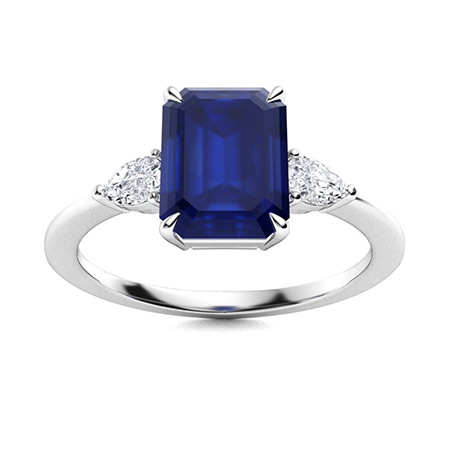
Sapphire with Diamond Side Stones
Side diamonds can frame the sapphire and add width across the finger while allowing the coloured centre stone to remain the main feature.
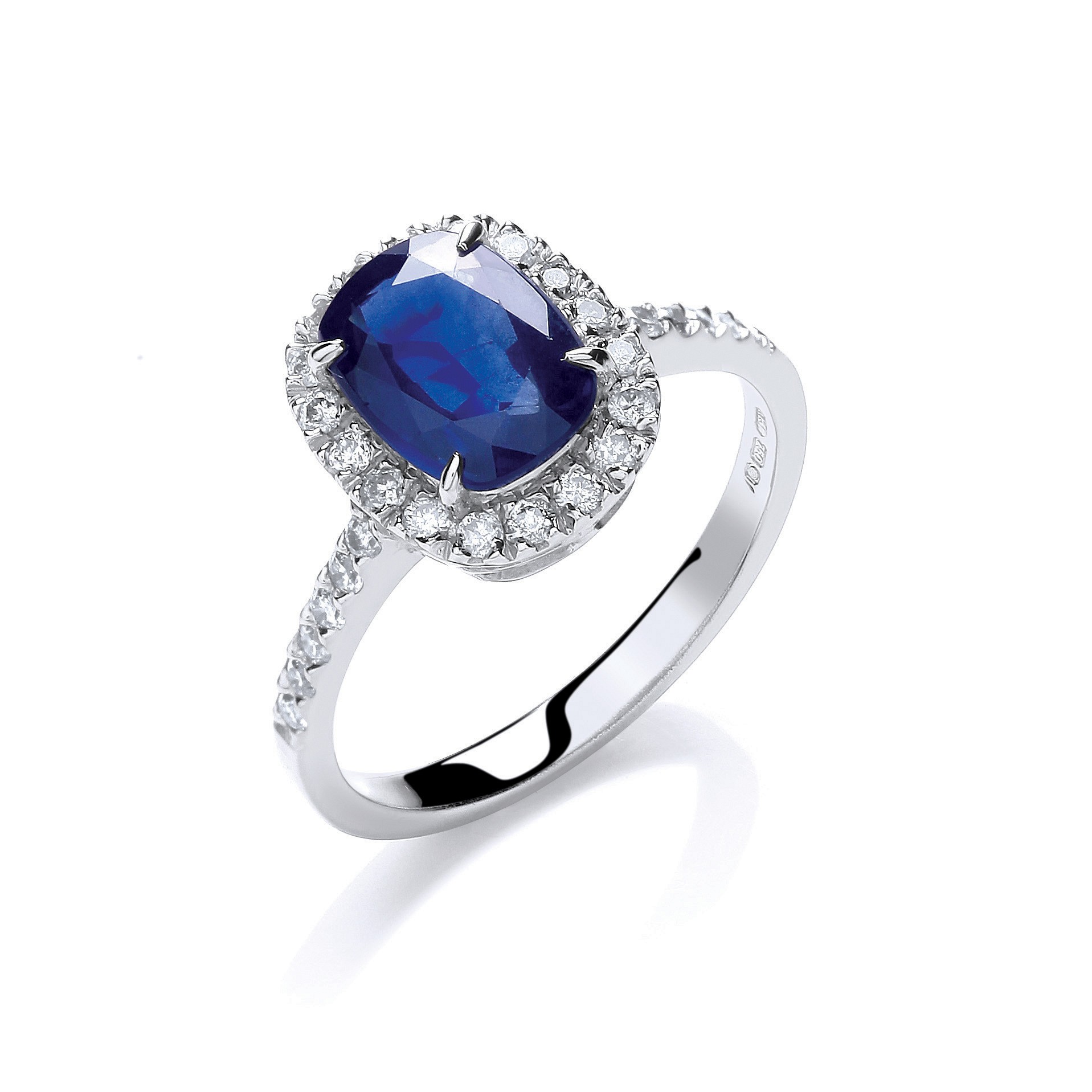
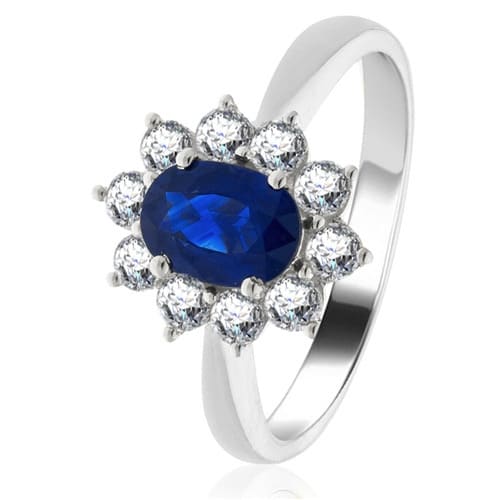
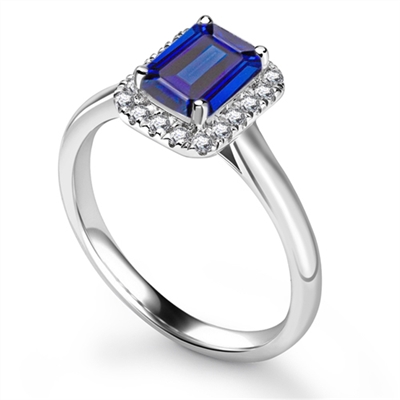
Diamond Halo
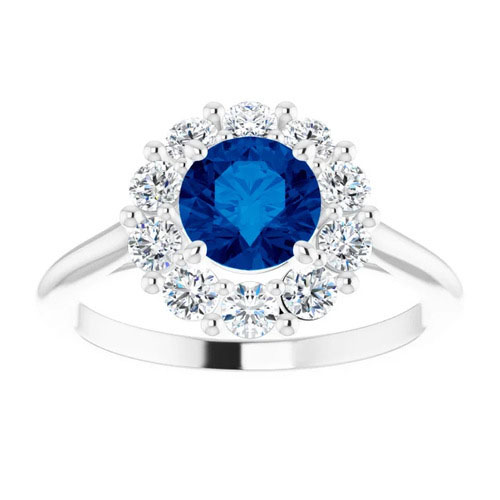
A halo places smaller diamonds around the sapphire, creating a bright border and more visual presence around the centre.
Diamond-Set Shoulders
Diamonds set along the band introduce additional sparkle without surrounding the sapphire itself.
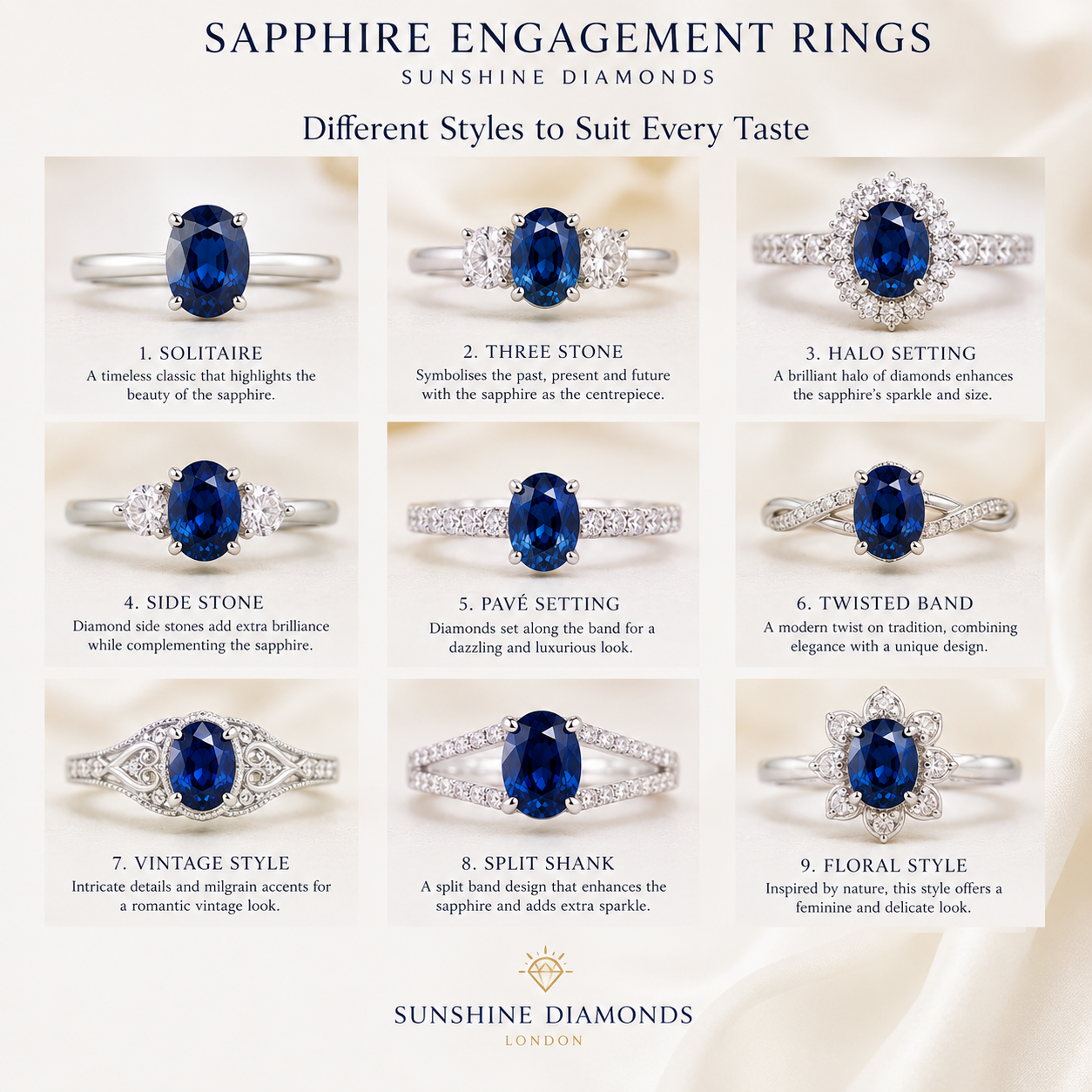
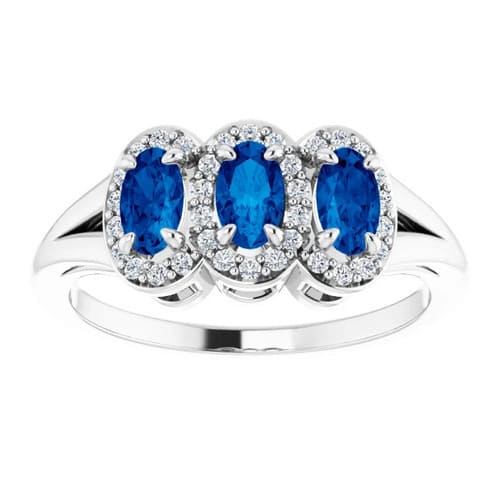
If you prefer a three-stone arrangement, you can also compare trilogy engagement rings to see how centre and side-stone proportions affect the overall design.
Which Setting Is Best for a Sapphire Engagement Ring?
The setting does more than hold the sapphire in place. It influences how much of the gemstone remains visible, how high the ring sits and how protected the stone is during everyday wear.
| Setting | Appearance | What to Consider |
|---|---|---|
| Claw / Prong | Open and traditional | Allows much of the sapphire to remain visible. Claws should be checked periodically. |
| Bezel | Clean and contemporary | A rim of precious metal surrounds the stone and provides additional edge coverage. |
| Halo | Detailed and bright | Smaller diamonds surround the sapphire and add visual width around the centre. |
| Three-Stone | Balanced and substantial | Side stones should complement rather than overpower the sapphire centre. |
| Low Profile | Close to the finger | Can feel practical, although the setting may affect how a wedding band sits beside it. |
Which Sapphire Shape Should You Choose?
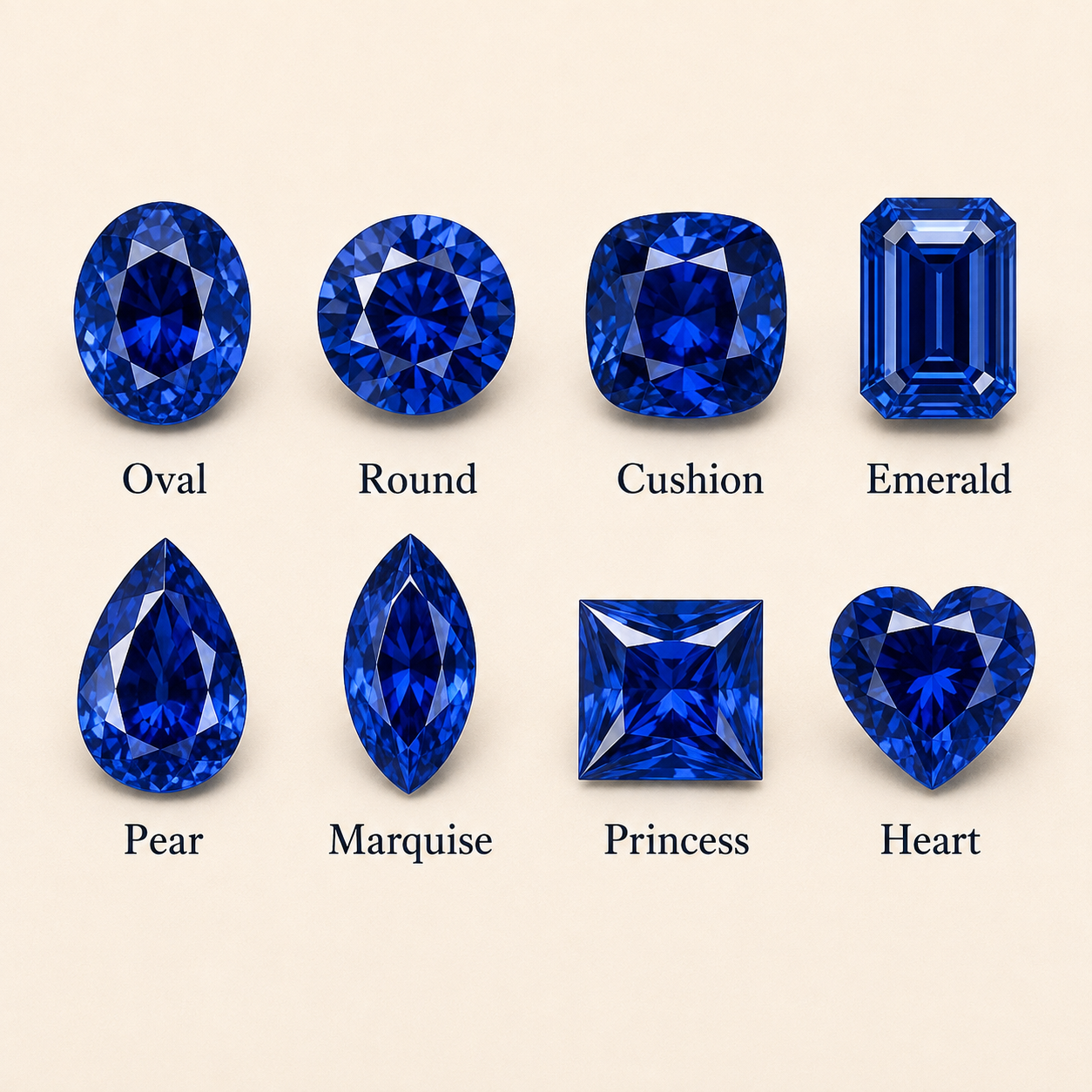
Shape changes both the style and proportions of a sapphire engagement ring.
Oval Sapphire
An oval sapphire creates an elongated appearance and can provide generous visible coverage along the finger.
It works particularly well with diamond halos and side stones.
Round Sapphire
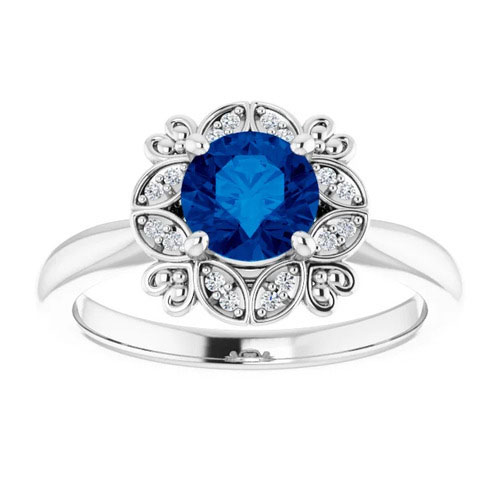
Round sapphires have balanced proportions and can work with simple solitaire-inspired designs as well as more decorative settings.
Cushion Sapphire
Cushion shapes generally combine a square or rectangular outline with softened corners.
They can offer a substantial centre-stone appearance while retaining a softer silhouette.
Emerald-Cut Sapphire
An emerald-cut sapphire uses a more geometric rectangular outline and step-style facets.
Its large facets can make internal characteristics easier to notice, so compare the individual gemstone carefully.
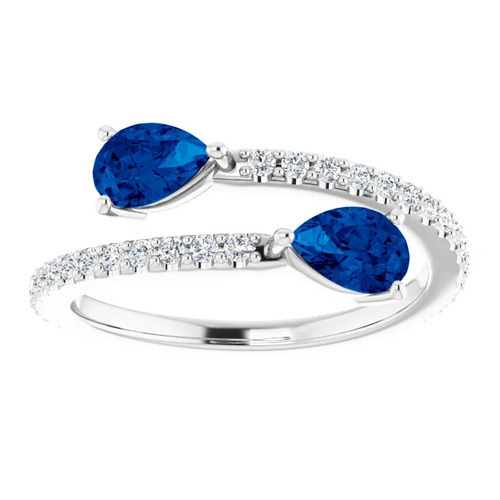
Pear-Shaped Sapphire
A pear shape combines a rounded end with a pointed tip.
The orientation can change the way the ring appears on the finger, while the pointed end benefits from appropriate protection within the setting.
White Gold, Yellow Gold or Platinum?
The precious metal surrounding a sapphire can noticeably change the overall appearance of the ring.
| Metal | Visual Effect | Why Choose It? |
|---|---|---|
| White Gold | Cool and bright | Creates a coordinated appearance with blue sapphire and colourless diamonds. |
| Yellow Gold | Warm contrast | Creates a noticeable contrast against blue sapphire and adds warmth to the design. |
| Rose Gold | Soft and warm | Offers a distinctive pink-toned contrast against a blue centre stone. |
| Platinum | Naturally white | Suited to buyers who prefer a dense, naturally white precious metal. |
Sapphire or Diamond Engagement Ring?
The choice is mainly about personal style rather than one option being universally better.
A sapphire engagement ring introduces obvious colour, while a traditional diamond engagement ring focuses more heavily on brilliance and a neutral appearance.
If you prefer a classic clear centre stone, compare natural diamond engagement rings .
You can also explore lab-grown diamond engagement rings if you would like to compare another diamond-origin option.
Sapphire can be particularly appealing for someone who wants colour to form an important part of the engagement ring's identity.
Can You Wear a Sapphire Engagement Ring Every Day?
Sapphire's hardness makes it suitable for regular jewellery wear, but no gemstone or ring should be considered indestructible.
Everyday practicality depends on the complete ring rather than the sapphire alone.
Periodic professional inspection is sensible for any engagement ring that is worn regularly.
Will a Sapphire Engagement Ring Sit with a Wedding Band?
It depends on the engagement-ring setting.
A raised sapphire setting may allow a straight wedding band to sit closely beside it, while a lower or wider centre setting can leave a small gap.
A shaped, curved or contoured wedding ring may sometimes follow the engagement ring more closely.
Compare different wedding rings alongside your engagement-ring design rather than choosing the two rings completely separately.
What Should UK Buyers Check Before Buying a Sapphire Engagement Ring?
Buyers comparing sapphire engagement rings in the UK should look beyond product photography and the headline carat weight.
1. Check the Precious Metal
Confirm exactly which precious metal and fineness you are buying, for example 9ct gold, 18ct gold or platinum.
2. Check Hallmarking
Precious-metal jewellery sold in the UK must comply with the applicable hallmarking rules where the relevant statutory weight thresholds apply.
3. Ask About the Sapphire
Ask for clear information about the centre gemstone, including any relevant treatment information that is disclosed for the sapphire.
4. Check the Diamond Details
If the design contains diamonds, confirm whether the diamonds are natural or lab-grown and review the information provided for the stones.
5. Check Ring Size and Resizing
Some engagement-ring designs are easier to resize than others.
Rings with gemstones or diamonds extending further around the band can leave less plain metal available for future alterations.
6. Think About the Wedding Ring
If you want a straight wedding ring to sit flush with the engagement ring, check the height and width of the sapphire setting before ordering.
7. Check Returns and Aftercare
Understand the retailer's policies for returns, resizing, repairs and made-to-order jewellery before completing your purchase.
8. Compare Colour in Person Where Possible
Sapphire colour can appear different depending on lighting and screen settings.
If you would like to compare sapphire colours, diamond accents and precious metals in person, you can visit the Sunshine Diamonds showroom .
How to Make the Final Choice
Step 1 — Choose the Sapphire Colour
Decide whether you prefer a lighter, brighter blue or a deeper, richer shade.
Step 2 — Choose the Shape
Compare oval, round, cushion, emerald and pear shapes according to how you want the centre stone to look on your finger.
Step 3 — Decide How Much Diamond Detail You Want
A simple sapphire centre keeps attention firmly on colour. Side stones, halos and diamond-set shoulders introduce additional brightness.
Step 4 — Choose the Setting
Consider appearance, stone protection, setting height and wedding-band compatibility.
Step 5 — Choose the Precious Metal
Compare yellow gold, white gold, rose gold and platinum according to the contrast you prefer and the jewellery you already wear.
Sapphire Engagement Ring FAQs
Sapphire measures 9 on the Mohs hardness scale and is well suited to regular jewellery wear. However, the gemstone and setting can still be damaged by hard impacts, so sensible care and periodic setting checks remain important.
There is no single best shade. Look for a sapphire colour you find attractive in different lighting conditions and consider hue, tone and saturation rather than choosing purely according to a colour name.
Yes. Diamonds can be used as side stones, halos or shoulder accents around a sapphire. Their colourless appearance creates noticeable contrast against a blue centre stone.
Both can work well. White gold creates a cooler appearance, while yellow gold provides warmer contrast against blue sapphire. The better choice depends on your preferred style.
The best setting depends on the sapphire shape, level of protection required and style you prefer. Claw, bezel, halo and side-stone settings can all be suitable options.
Sometimes. A raised centre setting may allow a straight wedding ring to sit closely beside the engagement ring, while lower or wider settings may work better with a curved or shaped wedding band.
No. Carat measures weight rather than visible size. Shape, dimensions, cut, proportions and colour also influence how large and attractive the sapphire appears when viewed from above.
Many sapphire engagement rings can be resized, but the amount of adjustment depends on the design, setting and whether gemstones or diamonds extend far around the band.
Explore Related Jewellery
→ Sapphire Engagement Rings → Engagement Rings → Natural Diamond Engagement Rings → Lab-Grown Diamond Engagement Rings → Trilogy Engagement Rings → Wedding Rings → Gemstone JewelleryExplore Sapphire Engagement Rings
Compare sapphire shapes, diamond accents, settings and precious-metal options to find a design that suits your style.
View Sapphire Engagement Rings