Diamond Bangles vs Cuff Bracelets: The Complete UK Style Guide
Quick Summary
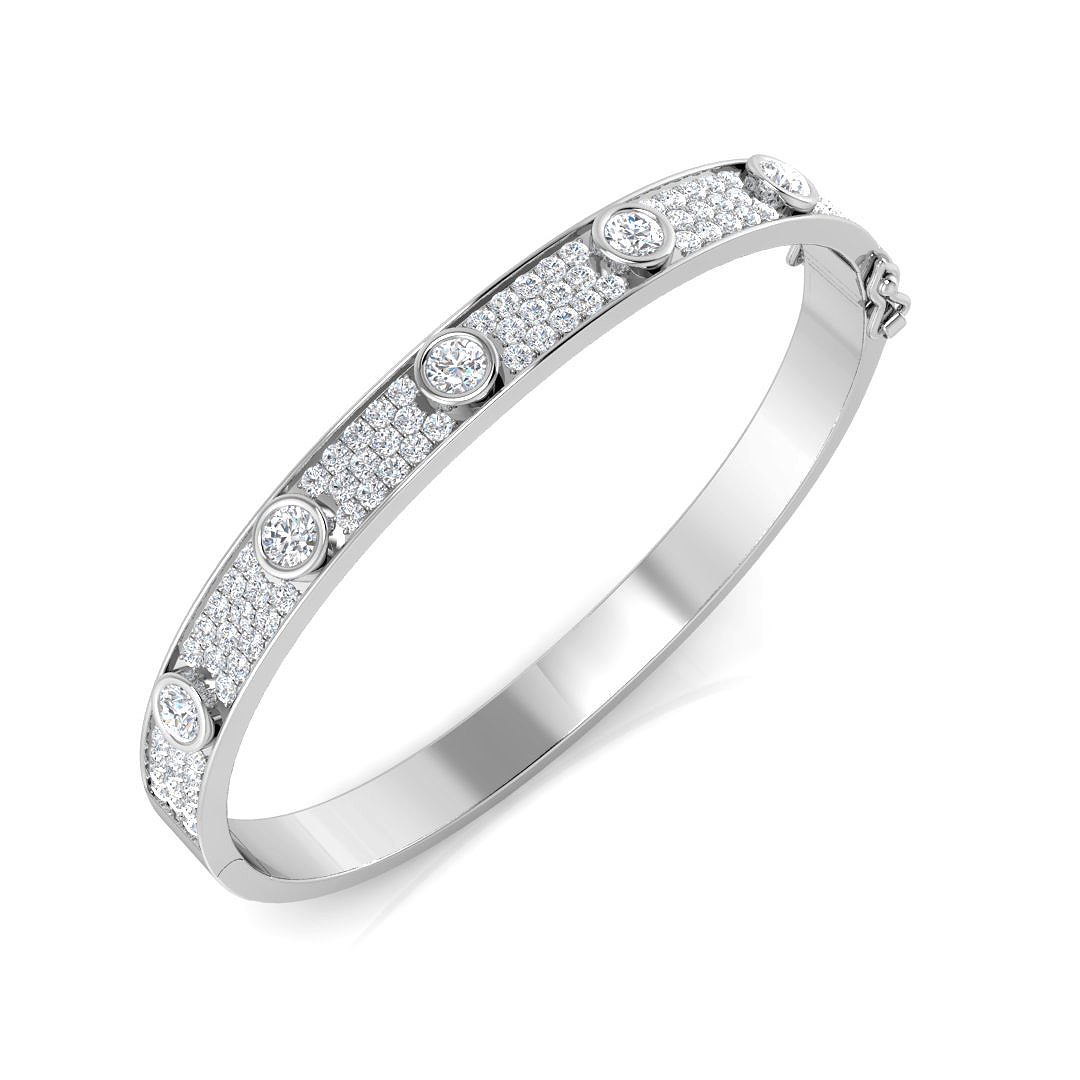
- Bangles are rigid closed circles — elegant, stackable, perfect for everyday wear
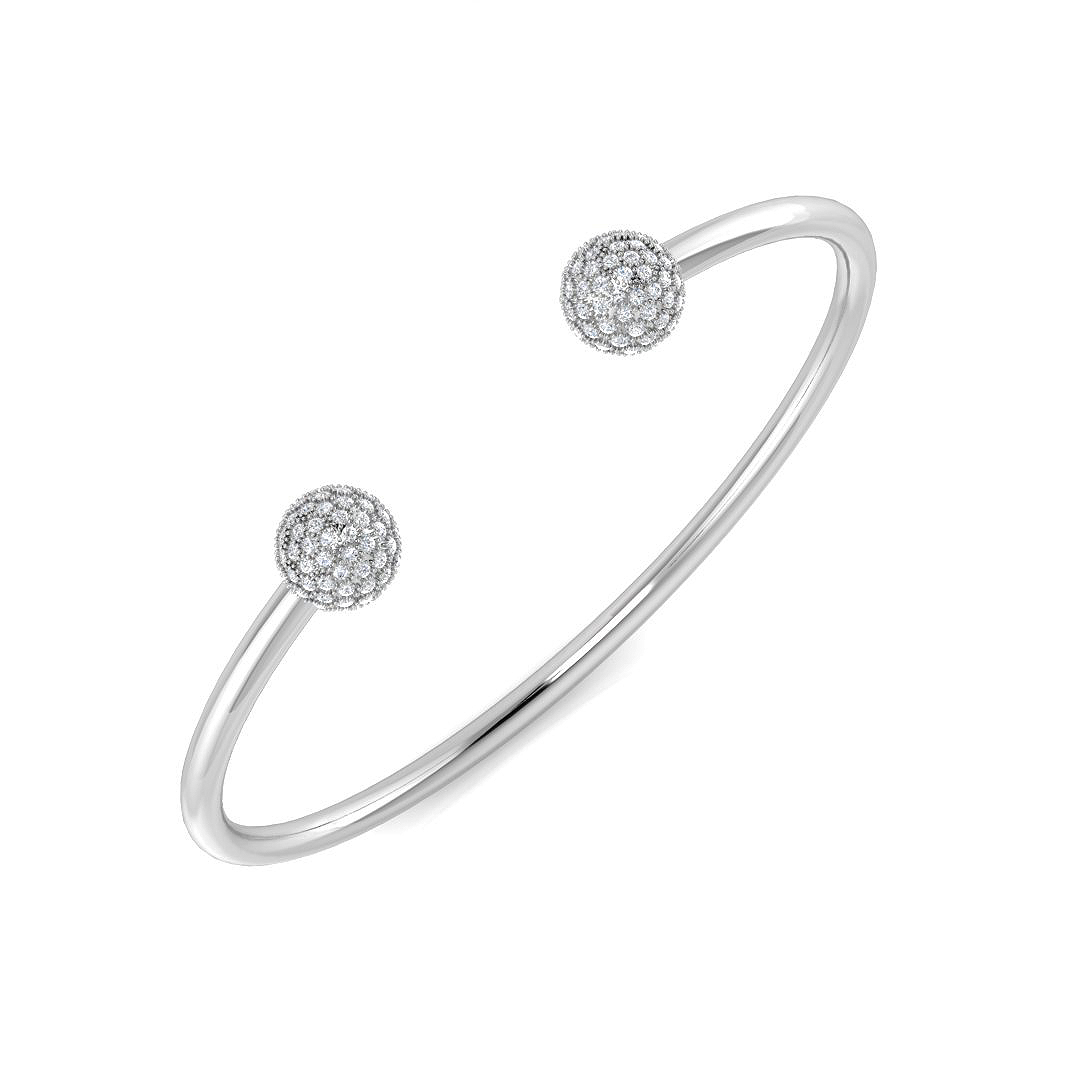
- Cuffs are open-back rigid bands — bolder, sculptural, best worn solo
- Tennis bracelets are flexible diamond lines — timeless sparkle for any occasion
- Lab-grown diamonds deliver identical brilliance to mined stones at better value
- All Sunshine Diamonds pieces are UK hallmarked 18ct gold or platinum
- Every diamond is IGI or GIA certified — you know exactly what you're buying
- Fit guide: measure knuckles for bangles, wrist for cuffs, finger's width for tennis
- Stack rule: 3–4 pieces max — mix rigid and fluid styles for the best result
Content Quicklinks
- - Bangle, Cuff or Tennis Bracelet — What's the Difference?
- - Lab-Grown Diamond Bangles: A Closer Look
- - Diamond Cuff Bracelets: The Modern Statement
- - Tennis Bracelets: Timeless Sparkle
- - Choosing Your Metal: 18ct Gold & Platinum
- - Why UK Hallmarked Bracelets Matter
- - Getting the Fit Right
- - Styling for Every Occasion
- - How to Stack Bangles, Cuffs & Tennis Bracelets
- - Why Lab-Grown Diamonds Are the Smart Choice
- - Caring for Your Fine Bracelets
- - Comparison Tables
- - FAQs
- - Final Thoughts
Few pieces of jewellery work as hard as a beautifully made bracelet. Whether you are drawn to the clean circle of a lab-grown diamond bangle, the bold sweep of a diamond cuff, or the endless sparkle of a tennis bracelet, the right wrist piece carries you effortlessly from a morning meeting to a black-tie evening. At Sunshine Diamonds, every bracelet is crafted in UK-hallmarked 18ct gold or platinum and set with certified lab-grown diamonds — giving you more brilliance for your budget without any compromise on quality or ethics.
This guide explains the real differences between bangles, cuffs and tennis bracelets, which metals suit each style, how to get the fit right, and how to wear them for every occasion. Whether you are buying for yourself or choosing a gift, you will find everything you need to decide with confidence.
Bangle, Cuff or Tennis Bracelet — What's the Difference?
These three terms are often used interchangeably, but each style has its own character, construction and ideal occasion. Understanding the differences means you choose the piece that actually suits your life — not just the one that looks prettiest in a photograph.
✦ Bangle
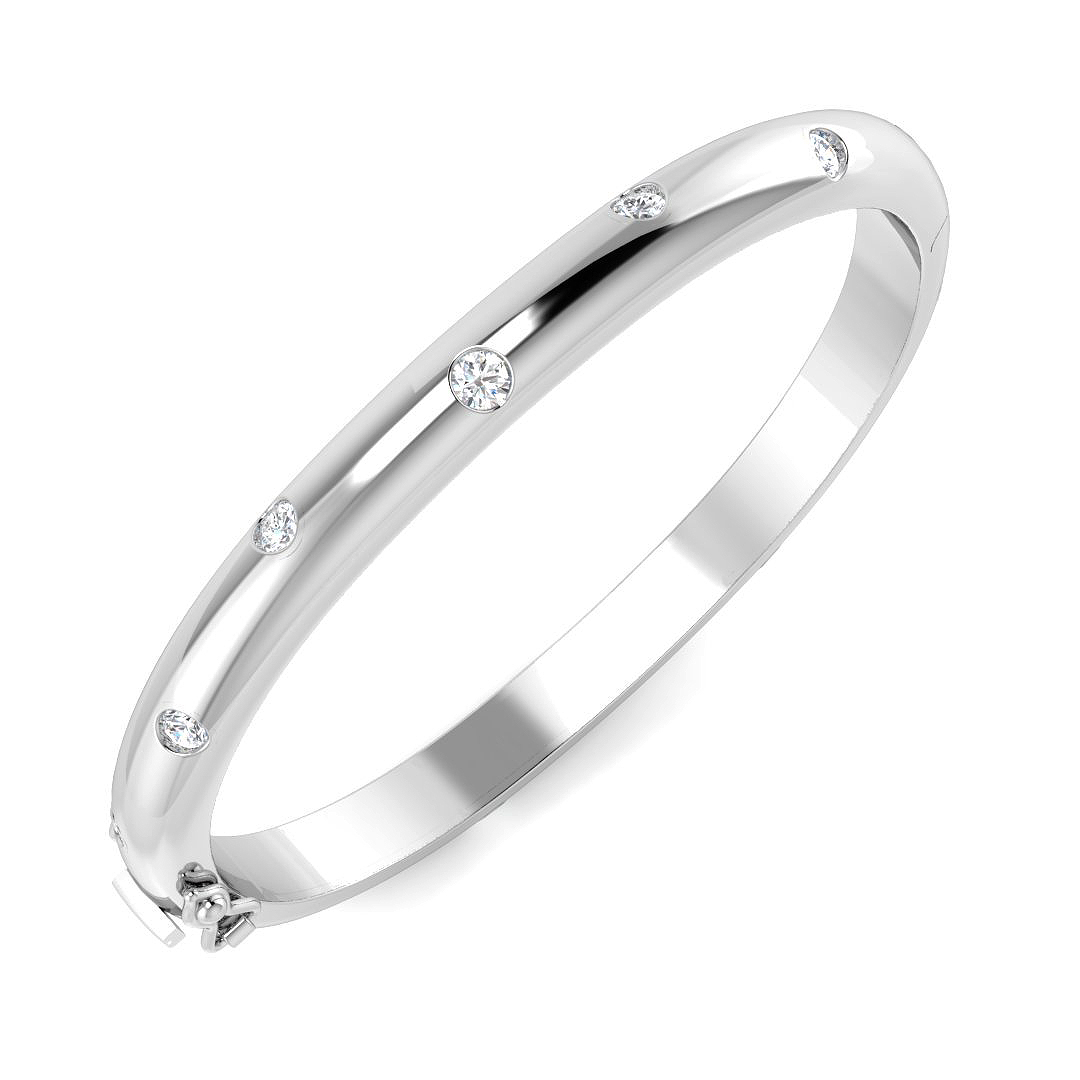
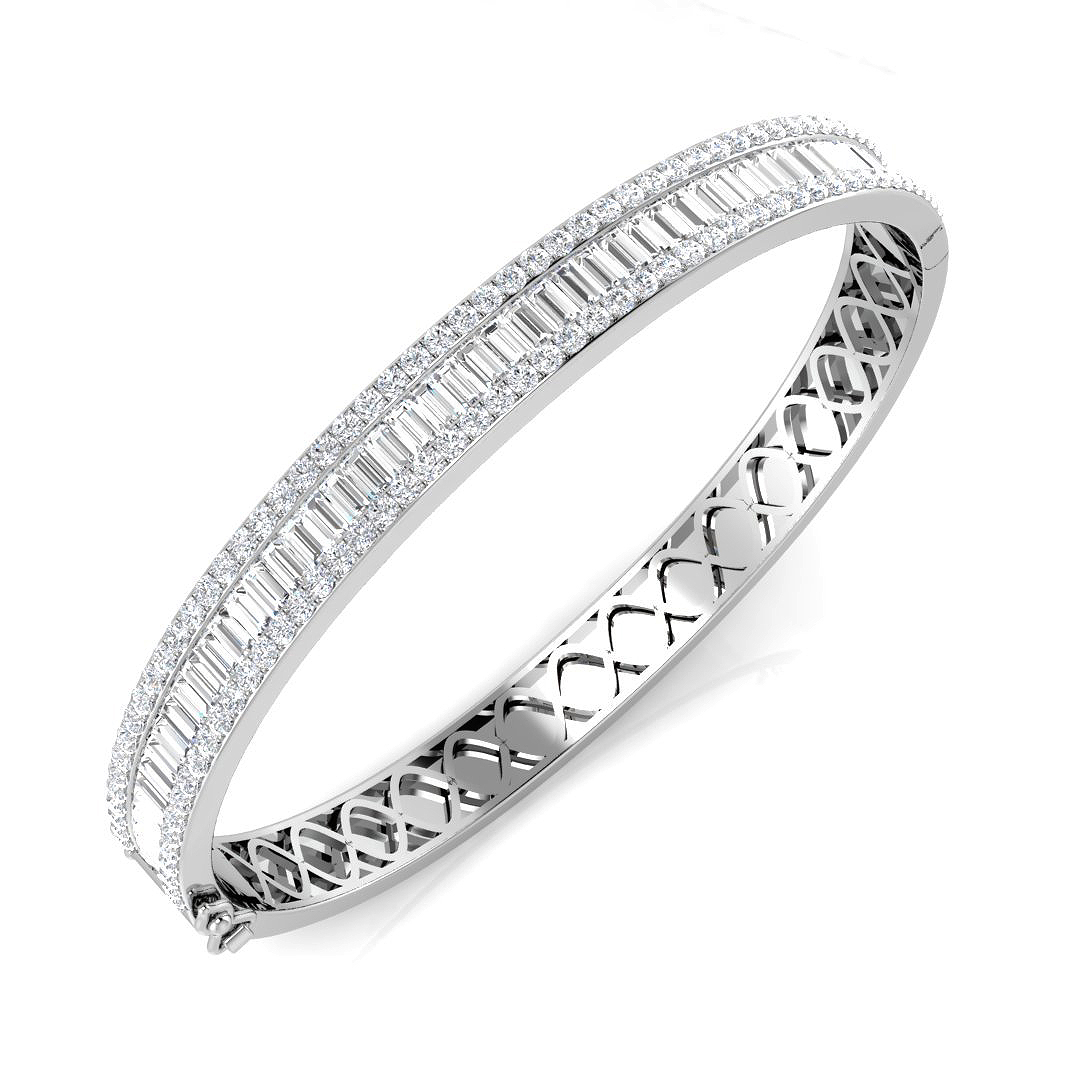
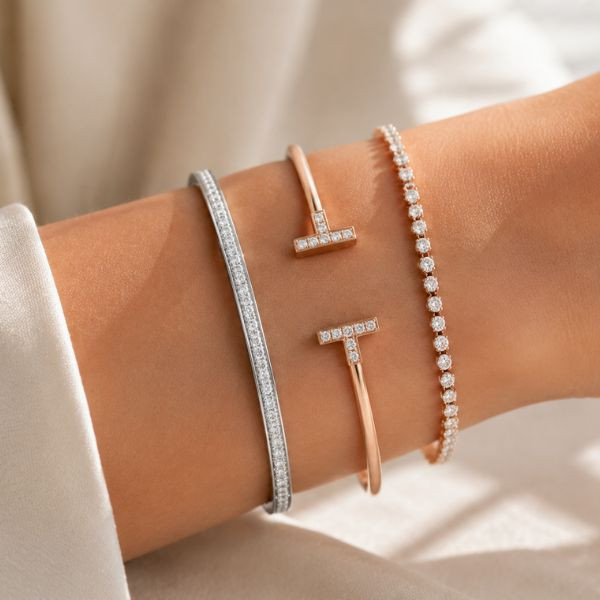
A rigid, closed (or hinged) circle that slips over the hand. Structured, elegant and easy to stack. The most versatile of the three for everyday wear.
✦ Cuff
A rigid band with an open back that slides on from the side. Sculptural and bold — a single cuff can anchor an entire look. Best worn as a statement on its own.
✦ Tennis Bracelet
A flexible line of matched lab-grown diamonds in a continuous strand. Fluid, fine and famously versatile. Catches light from every angle as it moves.
All three work beautifully in their own right, and all three can be layered for a considered, modern wrist stack. Explore the full diamond bracelet collection to see bangles, cuffs and tennis styles in hallmarked 18ct gold and platinum.
Lab-Grown Diamond Bangles: A Closer Look
A diamond bangle is the quiet all-rounder of fine jewellery. Slim pavé-set designs read as everyday luxury, while wider channel-set or eternity-style bangles make a clear statement on the wrist. Because they are rigid, they sit neatly and do not catch the way chain bracelets can — practical for long days at a desk or commuting into the city.
Hinged openings make them easy to put on one-handed, and a figure-of-eight safety catch keeps them secure throughout the day. The metal you choose sets the entire tone of the piece:
- 18ct yellow gold — rich, warm and traditional. Suits classic styles and pairs especially well with oval or cushion-cut lab-grown diamonds.
- 18ct white gold — cool, bright and modern. Especially striking with round brilliant lab-grown diamonds for a contemporary pavé finish.
- Platinum — denser and exceptionally hard-wearing. The best choice if you plan to wear your bangle every single day without removing it.
Every Sunshine Diamonds bangle is set with IGI- or GIA-certified lab-grown diamonds. Because lab-grown stones share the same chemical and optical properties as mined diamonds, you are getting identical sparkle — typically at a significantly better price per carat, with full provenance transparency.
Diamond Cuff Bracelets: The Modern Statement
Diamond cuffs are for those who like their jewellery to be noticed. Because the back is open, a cuff sits proudly on the wrist and pairs beautifully with eveningwear, a sleeveless summer dress, or a sharp tailored look. Diamond-accented cuffs in 18ct white gold or platinum feel cool and contemporary; a polished rose gold cuff brings warmth and softness that works across the full spectrum of skin tones.
Key things to look for in a well-made cuff:
- Smooth inner edges — no sharp corners or rough metal that can catch the skin over a long day.
- A slight flex in the metal — so it can be eased on and off without losing its shape over months of wear.
- A snug but not tight fit — a cuff should stay in position without gripping. You should be able to slide a finger underneath it.
- Considered diamond placement — a cuff with a diamond accent at the front reads as a deliberate design choice rather than mere decoration.
For occasions where you want real impact with minimal effort, a single diamond cuff is usually the answer. Resist the urge to stack multiple cuffs — the drama of a cuff comes precisely from its solitude on the wrist.
Tennis Bracelets: Timeless Sparkle
If you want continuous brilliance, nothing rivals a lab-grown diamond tennis bracelet. A line of perfectly matched stones catches the light from every angle as the bracelet moves, and the flexible setting drapes elegantly around the wrist in a way that neither bangles nor cuffs can replicate.
Lab-grown diamonds excel in tennis bracelets specifically because consistency of colour and clarity is far easier to achieve across a full set of stones. The result is a line that looks beautifully uniform — something that can be considerably harder and more expensive to guarantee with mined diamonds at the same price point.
- Double-locking clasp — worth prioritising for peace of mind. Tennis bracelets are the most flexible of the three styles and can occasionally work loose during active days.
- Claw or bezel settings — claw settings maximise light entry for more sparkle; bezel settings offer a lower profile for everyday security.
- Total carat weight — for everyday wear, 1.00–2.00ct total weight across the full bracelet is the sweet spot. Statement pieces run from 3.00ct upwards.
Worn alongside a fine watch, a lab-grown diamond tennis bracelet is one of the most effortlessly polished combinations in modern fine jewellery.
Choosing Your Metal: 18ct Gold & Platinum
The metal sets the entire tone of your bracelet. Sunshine Diamonds works exclusively with hallmarked 18ct gold (yellow, white and rose) and platinum — the only metals genuinely appropriate for fine diamond jewellery. Here is how they compare for bracelet wear:
| Metal | Character | Best For | Durability |
|---|---|---|---|
| 18ct Yellow Gold | Rich, warm, traditional | Classic bangles, heirloom pieces | Excellent |
| 18ct White Gold | Cool, bright, modern (nickel-free) | Diamond cuffs & tennis bracelets | Excellent |
| 18ct Rose Gold | Soft, romantic, on-trend | Statement cuffs, stacking | Excellent |
| Platinum | Dense, naturally white, hypoallergenic | Daily-wear diamond pieces | Outstanding |
Why UK Hallmarked Bracelets Matter
Every precious-metal piece sold in the UK above the weight threshold must be hallmarked by an official Assay Office. That set of marks — struck into the metal itself by the London, Birmingham, Edinburgh or Sheffield Assay Office — is your legal guarantee that the metal's purity has been independently verified, not simply claimed by the seller.
At Sunshine Diamonds, UK hallmarking sits alongside Hatton Garden craftsmanship, IGI- or GIA-certified lab-grown diamonds, and secure, considered settings. When you buy from us, you know exactly what you are wearing, where it was made, and that it is built to last a lifetime. Learn more about our sourcing and certification standards on our about pages.
- The sponsor's mark — the maker's registered mark, identifying who submitted the piece for hallmarking.
- The metal fineness mark — confirms 18ct gold (750) or platinum (950) as independently tested.
- The Assay Office mark — a leopard's head (London), an anchor (Birmingham), a castle (Edinburgh) or a rose (Sheffield).
- The date letter — some offices include a letter indicating the year of hallmarking, adding an extra layer of traceability.
Getting the Fit Right
Comfort and security matter as much as aesthetics. An ill-fitting bangle can slide off; a tight cuff is uncomfortable all day. Here is how to measure correctly for each style:
- Bangles — measure around the widest part of your hand with your knuckles tucked in. The bangle must pass over your knuckles, so this is the critical measurement. Hinged styles are the most forgiving if you fall between sizes.
- Cuffs — measure your wrist circumference and allow for the open gap (typically 2–3 cm). A gentle flex in the metal lets you fine-tune the fit once it is on.
- Tennis bracelets — aim for about a finger's width of movement between the bracelet and your wrist. Too loose and the line twists; too tight and it will not drape naturally.
Styling for Every Occasion
The best bracelet is the one you actually reach for. Here is how each style maps to real life:
- Weddings & black tie — a platinum or 18ct white gold lab-grown diamond tennis bracelet alongside a fine watch is effortlessly elegant. Let it be the star of the wrist; resist adding other pieces.
- Evening events & parties — a bold rose or yellow gold diamond cuff makes a confident statement with a sleeveless dress or structured blazer. No other bracelets needed.
- Daily office wear — a slim 18ct diamond bangle adds quiet sparkle that layers neatly with a watch without competing with it. Choose a low-profile setting to avoid snagging on clothing.
- Casual weekends — a fine tennis bracelet or a single plain bangle worn with an everyday watch is understated and modern.
- Milestone gifting — a single bangle now, designed to be added to over time, is one of the most thoughtful gifts in fine jewellery. Each addition marks a new chapter.
How to Stack Bangles, Cuffs & Tennis Bracelets
A considered wrist stack is one of the most powerful moves in fine jewellery styling. The key word is considered — an overcrowded wrist hides the very detail you paid for. Here are the rules that make stacking work:
- Mix textures, not chaos — pair a pavé-set bangle with a plain polished one for contrast that feels intentional rather than accidental.
- Keep metals consistent — all 18ct white gold or platinum for a sleek, editorial look; mixed golds for a warmer, more relaxed stack. Avoid combining white and yellow gold in the same stack unless you are confident it reads intentional.
- Balance rigid and fluid — pair one or two rigid bangles with a flexible tennis bracelet so the stack moves naturally and catches light differently as you move.
- Limit cuffs to one — a cuff is a statement; two cuffs on the same wrist compete with each other and dilute the impact of both.
- Leave breathing room — three to four pieces is usually the upper limit before individual details are lost. A gap between pieces lets each one remain visible and intentional.
- Watch placement — wear your watch on one wrist and your stack on the other for a balanced, polished overall look.
Why Lab-Grown Diamonds Are the Smart Choice for Bracelets
A bracelet is one of the best-value ways to wear a significant total carat weight — and lab-grown diamonds make that more achievable than ever. Because a tennis bracelet or pavé bangle requires multiple matched stones, the consistency advantage of lab-grown diamonds is particularly pronounced: every stone in the line shares the same colour and clarity grade, producing a visually uniform result that is difficult and expensive to replicate with mined diamonds at the same budget.
- Same optical properties — lab-grown diamonds are chemically and physically identical to mined diamonds. The sparkle, hardness (10 on the Mohs scale) and refractive index are exactly the same.
- IGI and GIA certified — every Sunshine Diamonds lab-grown stone comes with a grading report from an independent laboratory, confirming cut, colour, clarity and carat weight.
- 50–70% more for your budget — the same spend that buys a 1.00ct total weight mined diamond tennis bracelet typically buys a 1.50–1.70ct lab-grown equivalent. That difference is visible on the wrist.
- Full supply chain transparency — lab-grown diamonds have no association with conflict mining, and their provenance is fully traceable from growth chamber to setting.
- UK hallmarked settings — the diamonds are only as good as the metal they are set in. Every Sunshine Diamonds bracelet is submitted to a UK Assay Office and carries the hallmark to prove it.
Browse our full lab-grown diamond jewellery collection or visit the diamond bracelets category to explore current styles in all three metals.
Caring for Your Fine Bracelets
A well-made bracelet in 18ct gold or platinum will last a lifetime with straightforward care. The diamonds themselves are among the hardest natural substances on earth — it is the metal and settings that benefit most from a little attention.
- Put jewellery on last — after perfume, lotion and hairspray — and take it off first. Chemicals in beauty products can dull the metal finish over time.
- Clean regularly — warm water, a drop of mild washing-up liquid and a soft-bristled brush (an old toothbrush works well) will remove everyday oils and dirt. Rinse thoroughly and dry with a lint-free cloth.
- Store separately — even platinum and 18ct gold can mark one another in a shared jewellery box. Use a soft pouch or a box with individual compartments.
- Check clasps and settings periodically — especially on tennis bracelets, where the links flex with every movement. An annual check by a jeweller catches any loosening before a stone can work free.
- Remove during activity — swimming (chlorine weakens gold alloys over time), gardening and sport are all better done without fine jewellery. A cuff or bangle can also distort if knocked during exercise.
Comparison Tables
Bangle vs Cuff vs Tennis Bracelet — At a Glance
| Feature | Bangle | Cuff | Tennis Bracelet |
|---|---|---|---|
| Structure | Rigid circle (closed/hinged) | Rigid, open back | Flexible diamond line |
| Statement level | Medium | High | Subtle–medium |
| Stacks well? | Excellent | Good (1–2 max) | Excellent |
| Best metal | 18ct gold / platinum | Rose / white gold | White gold / platinum |
| Ideal occasion | Daily to smart | Parties / evening | Weddings / daily |
| Sizing approach | Knuckle circumference | Wrist + gap allowance | Wrist + finger's width |
| Gifting ease | Medium (size-dependent) | Easy (adjustable) | Easy (standard sizes) |
Lab-Grown vs Natural Diamonds in Bracelets
| Factor | Lab-Grown Diamond | Natural (Mined) Diamond |
|---|---|---|
| Real diamond? | Yes — identical chemically and optically. | Yes |
| Certification | IGI / GIA graded | IGI / GIA graded |
| Colour/clarity consistency | Excellent across a full bracelet line | Harder to match at lower budgets |
| Value for money | 50–70% more carat weight per £ | Higher price for same spec |
| Ethical provenance | Fully traceable, no mining impact | Varies by supply chain |
| Appearance | Indistinguishable to the eye | Indistinguishable to the eye |
| Best for | Tennis bracelets & pavé bangles | Buyers prioritising rarity/tradition |
Metal Comparison for Diamond Bracelets
| Metal | Purity | Colour | Hypoallergenic? | Best Style Match |
|---|---|---|---|---|
| 18ct Yellow Gold | 750/1000 | Warm gold | Yes (nickel-free) | Classic bangles |
| 18ct White Gold | 750/1000 | Bright white | Yes (nickel-free) | Cuffs & tennis |
| 18ct Rose Gold | 750/1000 | Warm pink | Yes (nickel-free) | Statement cuffs |
| Platinum | 950/1000 | Naturally white | Yes | All-day diamond wear |
Frequently Asked Questions
Final Thoughts
Whether you are drawn to the elegant simplicity of a lab-grown diamond bangle, the sculptural confidence of a diamond cuff, or the fluid brilliance of a tennis bracelet, the right piece is the one that matches how you actually live — and that you will still be reaching for in twenty years.
At Sunshine Diamonds, every bracelet is crafted in UK-hallmarked 18ct gold or platinum and set with IGI- or GIA-certified lab-grown diamonds. You get the brilliance, the craftsmanship and the peace of mind — without the compromise on value or ethics that mined diamonds can involve.
Browse the full diamond bracelets collection, explore all lab-grown diamond jewellery, or book a consultation with the Sunshine Diamonds team to find the right piece — for yourself or for someone you love.