Rose Gold Diamond Rings: How to Choose the Right Diamond, Setting & Style
Quick Summary
- Rose gold gets its distinctive pink colour primarily from copper added to the gold alloy.
- Both 9ct and 18ct rose gold can be used for diamond rings, but they differ in pure gold content, colour and price.
- Round, oval, emerald, pear and marquise diamonds can all work beautifully with rose gold.
- Rose gold can reflect some warmth into a diamond, so diamond colour and claw metal are worth considering together.
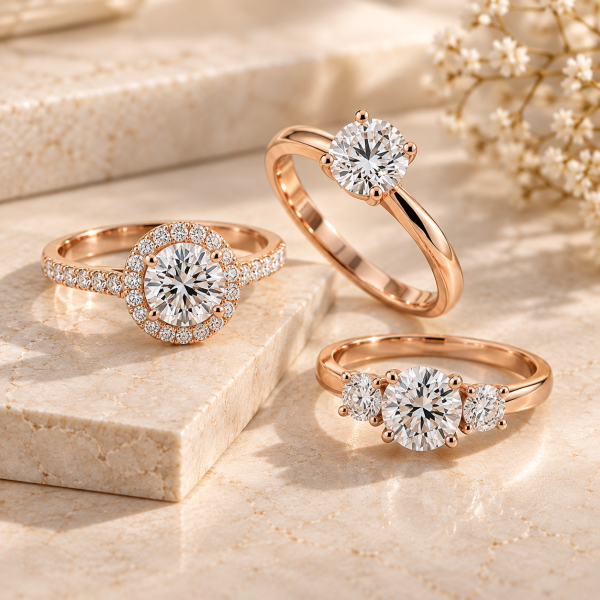
- Solitaire, hidden halo, trilogy and vintage-inspired settings each create a very different finished look.
- Rose gold does not rely on rhodium plating to maintain its pink colour.
Content Quicklinks
- - Is Rose Gold Good for a Diamond Ring?
- - The History of Rose Gold
- - What Is Rose Gold Made From?
- - How Rose Gold Changes Diamond Appearance
- - Best Diamond Shapes for Rose Gold
- - Rose Gold Diamond Ring Settings
- - Rose Gold vs Other Metals
- - Rose Gold Engagement Rings
- - How to Care for Rose Gold
- - Frequently Asked Questions
A rose gold diamond ring has a character that is difficult to reproduce with another precious metal. Its colour is warmer than white gold or platinum, softer than traditional yellow gold and distinctive without being difficult to wear.
That combination explains much of its appeal.
Rose gold can make a simple solitaire feel less conventional, bring warmth to a vintage-inspired design and create an attractive contrast around a white diamond. It also works across jewellery bought for very different reasons, including engagement rings, anniversary gifts and diamond rings chosen simply because the wearer loves the design.
For UK buyers, however, choosing the right ring involves more than deciding that rose gold looks good. The gold carat, diamond shape, colour grade, setting, band profile and intended use can all influence how the finished ring appears and feels.
If you want to compare designs while reading this guide, explore our rose gold diamond rings collection.
Is Rose Gold Good for a Diamond Ring?
Yes. Rose gold is a practical and attractive precious-metal choice for diamond jewellery. Its pink tone is created by alloying gold primarily with copper and, depending on the formulation, other metals such as silver.
It can work particularly well with round, oval, cushion, pear, marquise and vintage-inspired diamond designs.
One reason it is so versatile is that the metal contributes to the overall design without necessarily dominating it. A fine rose gold band can provide just enough colour to make a white diamond stand out, while a wider or more decorative setting makes the pink metal a much stronger feature.
The History and Romantic Legacy of Rose Gold
Rose gold may feel contemporary, but pink-toned gold jewellery has a much longer history.
Goldsmiths have experimented with copper-rich gold alloys for generations. The metal became particularly associated with nineteenth-century Russia, where pink-toned gold was sometimes known as Russian gold.
Carl Fabergé famously used rose-coloured gold within decorative jewellery and luxury objects produced during the period of the Russian Imperial Court.
Its appeal did not remain confined to Russia. Pink gold also appeared in Victorian jewellery and later returned prominently during the Retro period of the 1930s and 1940s, when designers embraced warmer metals and more sculptural jewellery.
That history helps explain why rose gold feels comfortable in apparently contrasting design styles.
A plain rose gold solitaire can look modern and minimal. The same precious metal combined with milgrain edges, engraving or filigree-inspired detailing can create an entirely different, vintage-influenced character.
The Science of the Blush: What Is Rose Gold Made From?
Pure gold is naturally yellow and relatively soft. Gold used for jewellery is therefore alloyed with other metals to change its working characteristics and, in some cases, its colour.
Rose gold gets its characteristic pink or reddish appearance primarily from copper.
Increasing the proportion of copper generally creates a stronger pink or red tone. Some rose gold alloys also contain silver, which can soften the finished colour.
The precise recipe varies between manufacturers, which means two rose gold rings do not necessarily have exactly the same shade.
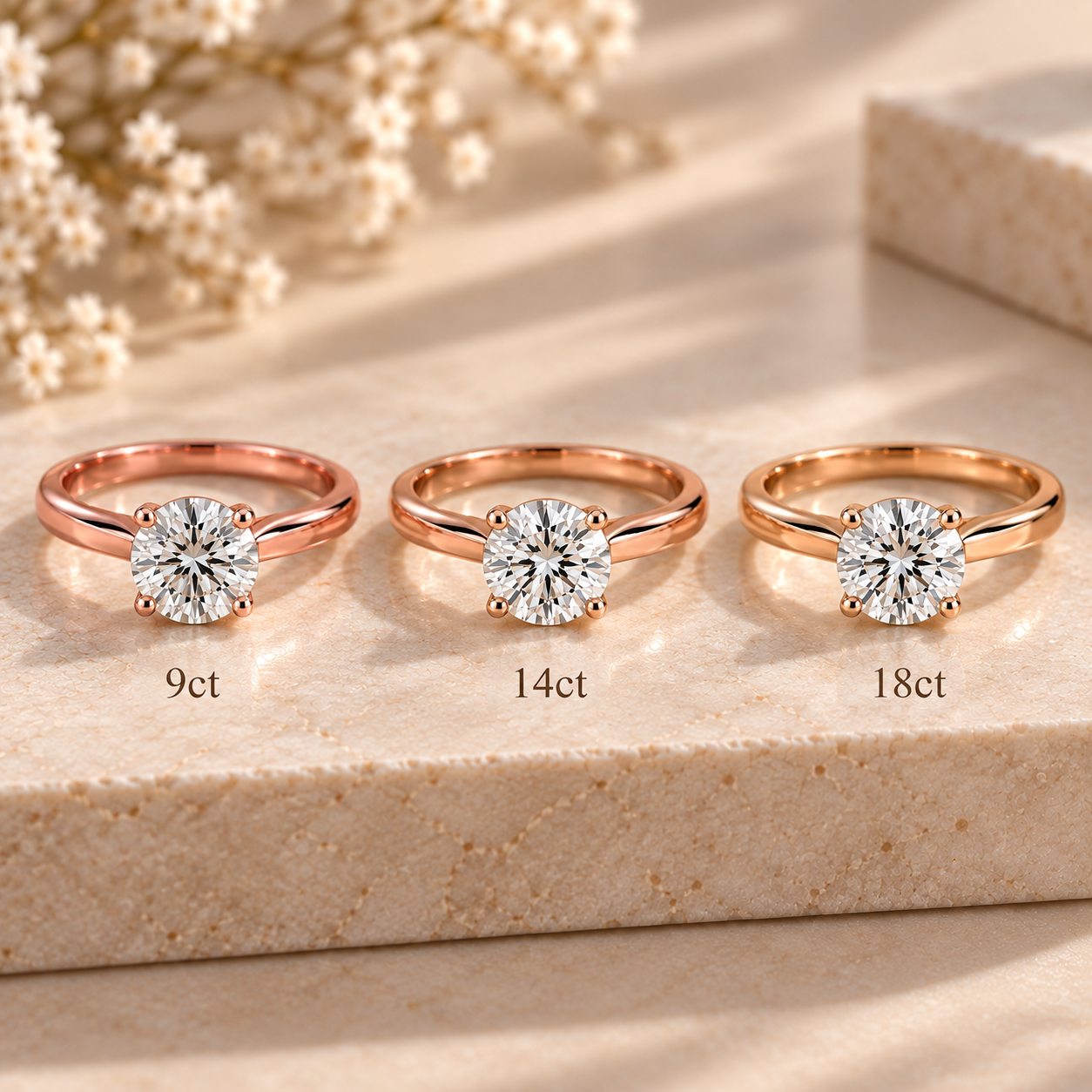
9ct vs 18ct Rose Gold
In the UK, 9ct and 18ct are two important options for rose gold jewellery.
| Feature | 9ct Rose Gold | 18ct Rose Gold |
|---|---|---|
| Pure Gold Content | 37.5% | 75% |
| Common UK Fineness Mark | 375 | 750 |
| Typical Colour | Can show a more pronounced copper influence | Often richer and softer in gold tone |
| Price | Generally lower | Generally higher |
| Good For | Budget-conscious buyers and everyday jewellery | Fine jewellery and buyers wanting higher gold content |
Rose gold also has a useful maintenance characteristic. Its colour comes from the alloy itself rather than from a white surface coating. It therefore does not rely on rhodium plating to remain pink.
This does not mean that a rose gold ring remains completely unchanged. Like any precious-metal ring worn regularly, it can collect scratches, surface marks and changes in polish over time.
How Rose Gold Can Change the Appearance of a Diamond
A diamond does not appear completely independently from its setting. Its facets reflect light and some of the colours around it, which means the precious metal surrounding the stone can influence how the diamond's colour is perceived.
Rose gold naturally creates warmer reflections than platinum or white gold.
That can be used deliberately.
A slightly warmer diamond can sit harmoniously within a rose gold setting, while a colourless or near-colourless stone creates a stronger visual contrast against the pink metal.
If keeping a high-colour diamond looking as crisp and white as possible is your priority, one design option is to combine a rose gold band with white gold or platinum claws around the centre diamond.
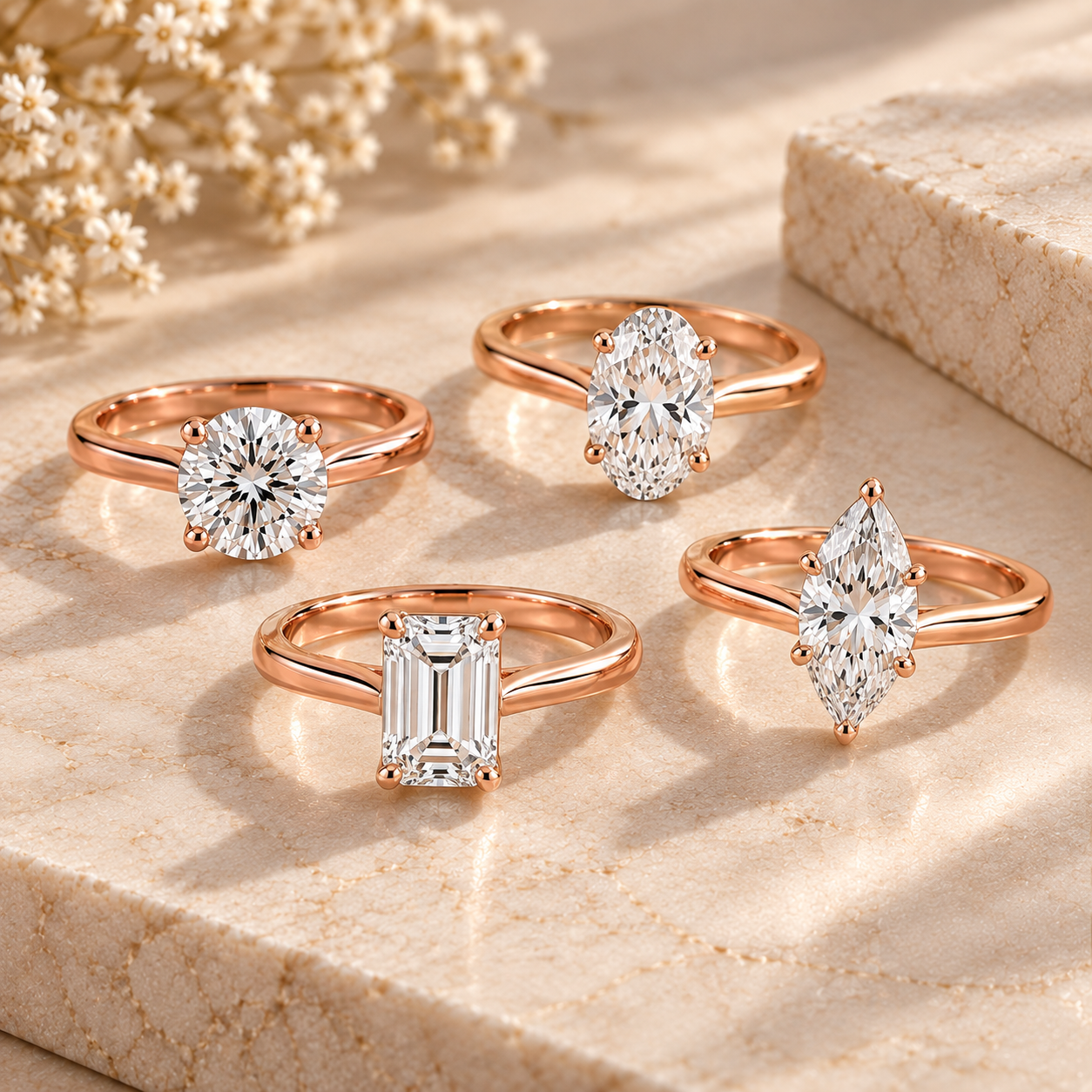
Maximising Brilliance: The Best Diamond Shapes for Rose Gold
There is no single diamond shape that must be used with rose gold. A better question is what visual effect you want the finished ring to create.
The Classic Round Brilliant
Round brilliant diamonds remain one of the easiest shapes to combine with rose gold.
Their symmetrical outline suits both traditional and contemporary settings, while brilliant-cut faceting is designed to produce strong brightness and sparkle.
A round centre diamond on a narrow rose gold band creates a clean, easily recognisable contrast between the stone and precious metal.
For a more decorative result, the same shape can be surrounded by a halo or paired with pavé-set shoulders.
Oval Diamond Rings
Oval diamonds offer the sparkle associated with brilliant-style faceting but create a more elongated outline on the finger.
This can make an oval rose gold diamond ring particularly effective with a fine band.
A four-claw solitaire keeps the appearance light and contemporary. Diamond shoulders add extra brilliance, while a halo creates greater overall presence.
Depending on its individual proportions, an oval diamond may also provide greater visible finger coverage than a round diamond of a similar carat weight.
Marquise Diamonds
A marquise diamond creates a much more directional look.
Its pointed ends and elongated outline make it visually distinctive, making it an attractive option for someone who does not want a conventional round solitaire.
Rose gold can soften some of the marquise diamond's sharp geometry. The pointed ends should, however, be properly protected by the setting.
Emerald-Cut Diamonds
Emerald-cut diamonds create a completely different type of visual effect.
Instead of relying on the intense scintillation associated with a round brilliant, an emerald cut uses broad step facets to create its characteristic hall-of-mirrors appearance.
Those larger, more open facets can reveal diamond colour more easily than many brilliant cuts, so the interaction between the diamond and rose gold deserves particular attention.
A warmer diamond may sit beautifully in rose gold, while buyers wanting a stronger white contrast may prefer a higher colour grade or white-metal claws.
Iconic Rose Gold Diamond Ring Settings
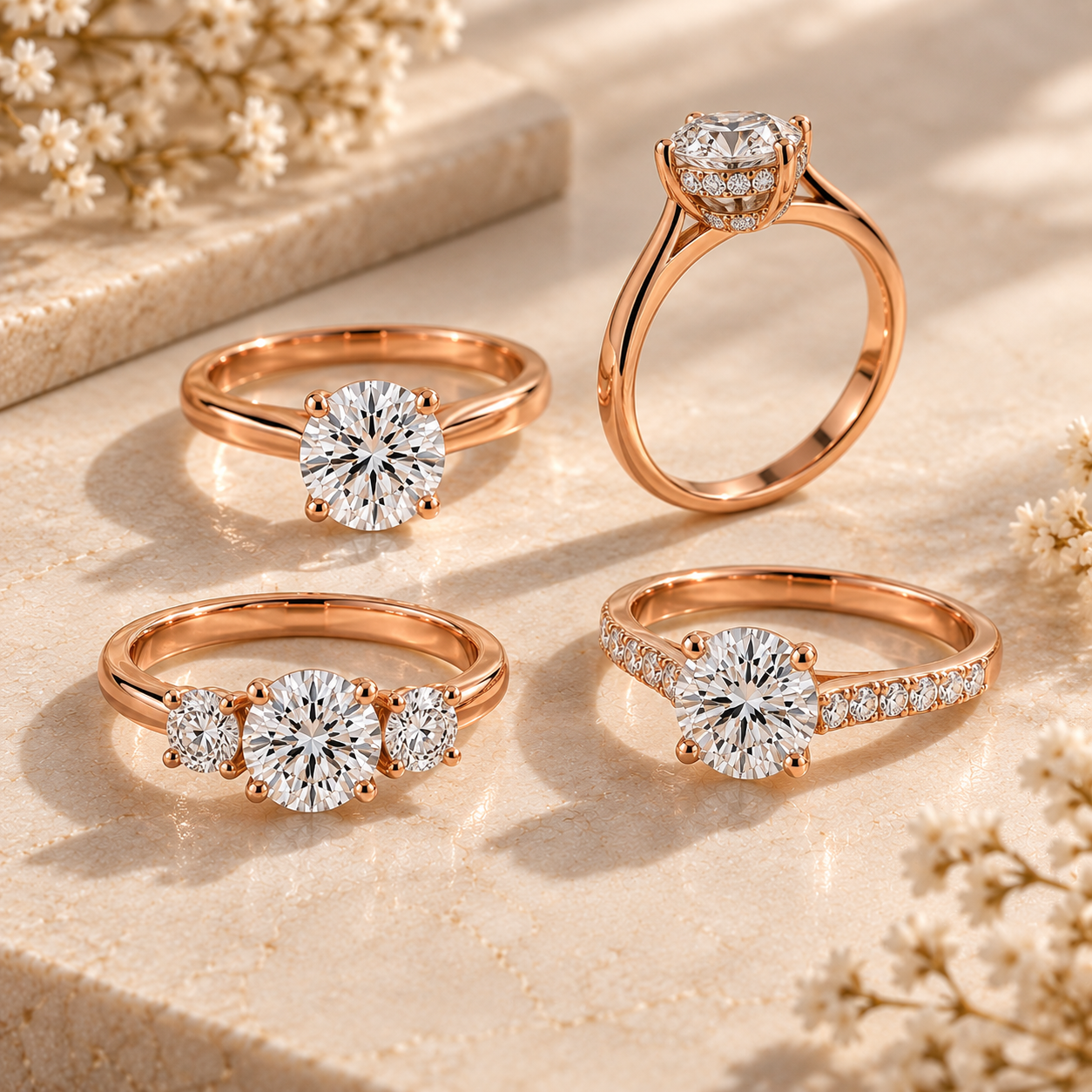
The setting changes the personality of a ring just as much as the diamond shape.
Rose Gold Solitaire
Keeps attention firmly on the centre diamond while allowing the warm metal colour to frame the stone.
Hidden Halo
Adds a discreet collar of diamonds below the centre stone for extra detail visible mainly from the side.
Diamond Shoulders
Adds additional brilliance along the band and connects the centre diamond visually with the finger.
Trilogy Setting
Uses three principal diamonds and can create a traditional, meaningful or highly contemporary three-stone design.
Vintage-Inspired
Milgrain, engraving and decorative galleries work particularly naturally with the warmer rose gold colour.
Contemporary Setting
Clean lines, unusual diamond orientations and asymmetrical details can give rose gold a distinctly modern character.
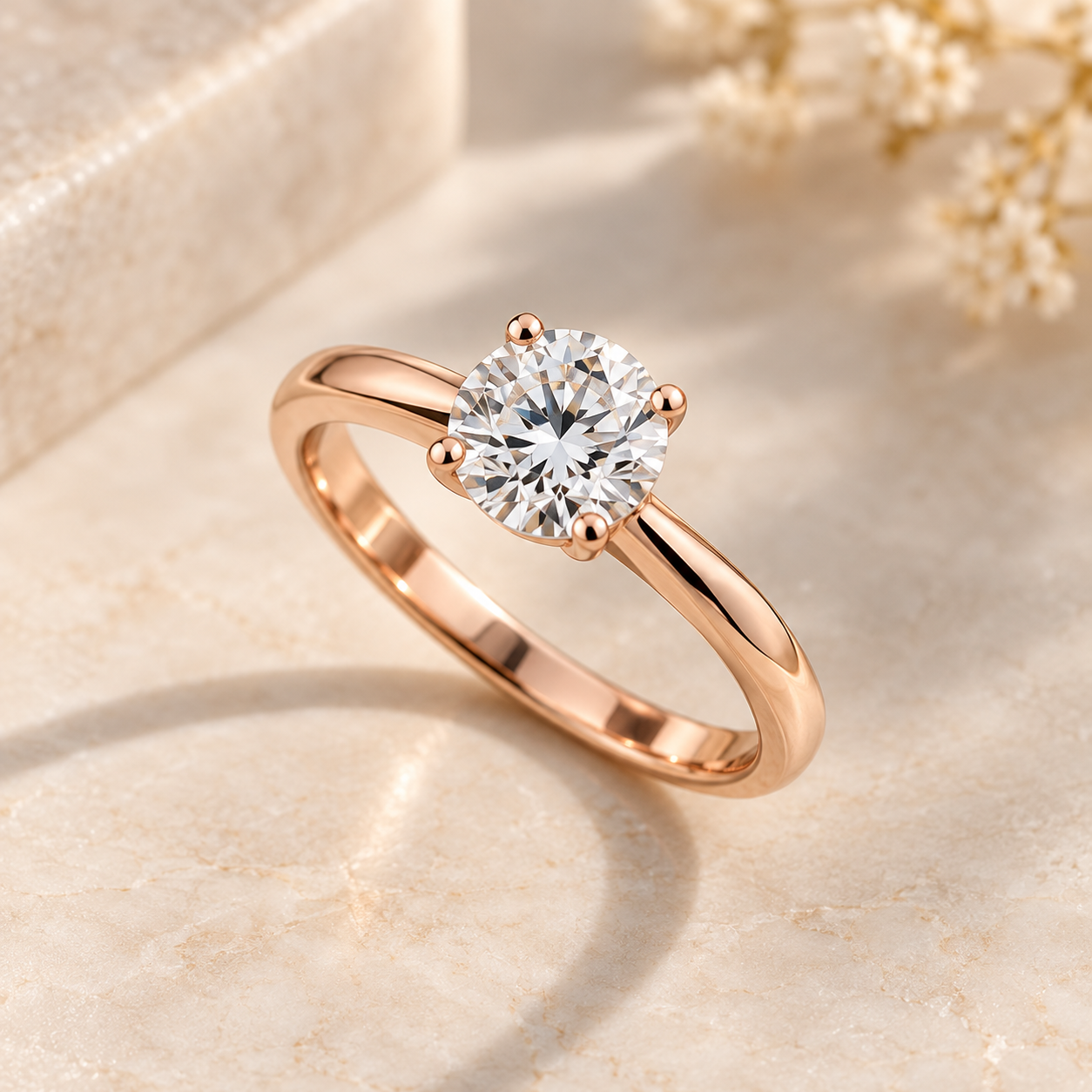
The Modern Rose Gold Solitaire
A solitaire keeps the design focused on one centre stone.
This is an excellent option if you like rose gold but do not want the colour to dominate the jewellery. A slender polished band introduces warmth while leaving the diamond as the obvious focal point.
Hidden Halo Settings
A hidden halo places small diamonds around or beneath the base of the centre setting rather than surrounding the diamond when viewed directly from above.
From the top, the ring may still look like a solitaire. From the side, the additional diamonds become visible.
Diamond Shoulder Settings
Diamonds set along the shoulders can create a gradual transition from the rose gold band towards the centre stone.
Pavé-set shoulders create more overall brilliance, while smaller diamond accents allow more of the pink metal itself to remain visible.
Trilogy Diamond Rings
Three-stone settings give designers several ways to balance rose gold with diamonds.
All three stones can use the same shape, or contrasting side stones can be chosen to emphasise the centre diamond.
Vintage-Inspired Rose Gold Rings
Rose gold naturally suits vintage-influenced jewellery.
Milgrain edging, engraving, geometric galleries and decorative metalwork all gain additional definition from the warmer metal colour.
Rose Gold vs Yellow Gold, White Gold and Platinum
Colour is the most obvious difference between these precious metals, but maintenance, weight and overall styling also matter.
| Metal | Colour | Maintenance | Overall Character |
|---|---|---|---|
| Rose Gold | Warm pink | No rhodium plating required for colour | Romantic, distinctive and versatile |
| Yellow Gold | Warm yellow | Routine polishing as required | Traditional and rich |
| White Gold | Bright white finish | Rhodium finish may require renewal | Clean and contemporary |
| Platinum | Naturally white | No rhodium plating required | Substantial and naturally white |
If you are still comparing metal colours, browse our wider selection of gold diamond rings rather than choosing purely from photographs.
Is a Rose Gold Diamond Ring Suitable for an Engagement Ring?
Absolutely.
Rose gold is particularly useful for engagement jewellery because it can make familiar designs feel more individual without requiring an unconventional diamond shape.
A classic round solitaire gains a warmer personality. An oval or pear-shaped centre stone can look softer, while vintage settings feel particularly natural in rose gold.
If you are specifically looking for a proposal ring, explore our rose gold engagement rings alongside the wider diamond rings for women collection.
How to Style a Rose Gold Diamond Ring
One of rose gold's strongest qualities is that you do not need to build an entirely rose gold jewellery collection around it.
Rose gold can be combined with yellow gold, white gold and platinum.
Mixed-metal jewellery tends to look most successful when the combination appears deliberate. For example, a rose gold diamond ring can sit comfortably beside a white-metal watch because the diamond itself provides a visual connection.
If you prefer a coordinated look, rose gold earrings, necklaces or bracelets can repeat the colour elsewhere without requiring every piece to match exactly.
The warm colour also works particularly well with neutral clothing, navy, black, cream, green and softer pastel shades.
How to Clean and Care for a Rose Gold Diamond Ring
A diamond is extremely hard, but the complete ring still requires sensible care.
Hand cream, soap, cosmetics and everyday residue can accumulate around the setting and reduce the amount of light reaching the diamond.
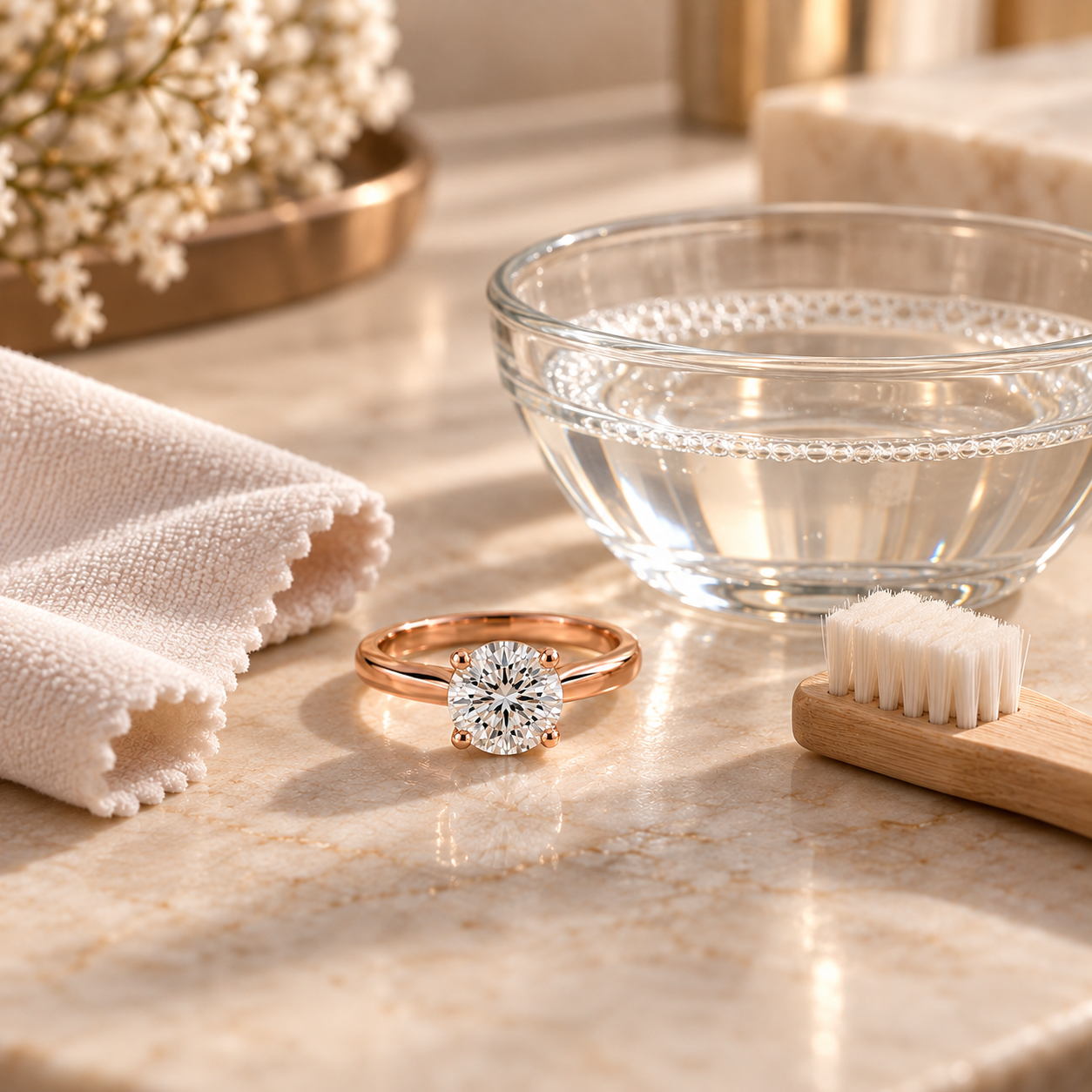
Cleaning at Home
For routine home cleaning, use lukewarm water with a small amount of mild washing-up liquid.
Allow the ring to soak briefly, then gently clean around the setting with a very soft brush.
Pay particular attention to the underside of the centre diamond, where residue often collects.
Rinse carefully and dry using a clean, soft, lint-free cloth.
When to Remove Your Ring
Consider removing valuable diamond jewellery before heavy manual work, gardening, gym sessions involving metal equipment or activities where the ring may receive repeated knocks.
Harsh household chemicals and abrasive cleaning products should also be avoided.
Professional Checks
If you wear the ring frequently, periodic professional inspection is a sensible precaution.
This is particularly important for engagement rings because checking claws and stone security can identify wear before it becomes a larger problem.
8 Reasons to Choose a Rose Gold Diamond Ring
- Distinctive Colour: Rose gold offers a warm pink tone that feels different from traditional yellow and white metals without being difficult to style.
- Long Jewellery History: Its use stretches through nineteenth-century jewellery, Russian goldsmithing and twentieth-century design.
- Wide Choice of Diamond Shapes: Round, oval, emerald, pear, cushion and marquise diamonds can all work effectively with rose gold.
- No Rhodium Colour Coating Required: The pink colour comes from the alloy itself rather than a white surface plating.
- Works with Modern and Vintage Settings: Rose gold can look equally natural in a minimalist solitaire or a highly detailed vintage-inspired design.
- Creates Attractive Diamond Contrast: The warm metal can clearly define a white or near-colourless centre diamond.
- Suitable for Natural and Lab-Grown Diamonds: Your preferred diamond origin does not limit your rose gold setting options.
- Easy to Mix with Other Jewellery: Rose gold can form part of both coordinated and mixed-metal jewellery wardrobes.
Frequently Asked Questions About Rose Gold Diamond Rings
Explore More from Sunshine Diamonds
Final Thoughts: Choosing Your Rose Gold Diamond Ring
A successful rose gold diamond ring is not simply a white diamond placed on a pink band.
The precious-metal colour, diamond shape, diamond colour, setting and proportions all interact to create the finished appearance.
For someone who wants strong brilliance with a clean contemporary look, a round or oval solitaire may be the right answer.
For someone drawn to stronger geometry, an emerald-cut centre stone creates a completely different result.
If vintage jewellery is the inspiration, rose gold provides a natural foundation for milgrain, engraving and more decorative settings.
Most importantly, choose a ring that suits how you genuinely intend to wear it rather than selecting a design simply because it happens to fit a temporary trend.
Explore Sunshine Diamonds' rose gold diamond rings to compare different diamond shapes, settings and natural or lab-grown diamond options.
If you would like to compare warm precious-metal colours more broadly, browse our gold diamond rings , or visit Sunshine Diamonds in Hatton Garden, London, to view different metals and settings in person.