The Princess of Wales at Wimbledon: How to Wear Ruby and Diamond Jewellery
Quick Summary
- The Princess of Wales wore ruby and diamond jewellery at the Wimbledon Ladies’ Singles Final on 11 July 2026
- Ruby and diamond earrings combine rich red colour with bright diamond contrast
- Ruby is the traditional July birthstone and can make a meaningful birthday or milestone gift
- Ruby studs suit understated wear, while ruby drop earrings create more movement and impact
- Yellow gold adds warmth, while white gold and platinum create stronger contrast with ruby
- Ruby and diamond rings provide a colourful alternative to traditional all-diamond jewellery
- UK buyers should consider precious-metal fineness, hallmarking, gemstone setting and aftercare
- For balanced styling, choose one main ruby jewellery focal point and keep surrounding pieces simpler
Content Quicklinks
- - The Princess of Wales’s Wimbledon Jewellery
- - Why Rubies and Diamonds Work Together
- - Ruby and Diamond Earring Styles
- - How to Wear Ruby Jewellery with Red
- - Ruby Jewellery with Neutral Colours
- - Can Ruby Jewellery Be Worn Every Day?
- - Ruby as a July Birthstone Gift
- - Ruby and Diamond Rings
- - Ruby Engagement Rings
- - Choosing the Right Precious Metal
- - UK Hallmarking
- - Ruby Jewellery Care
- - Frequently Asked Questions
- - Final Thoughts
The Princess of Wales’s Ruby and Diamond Jewellery at Wimbledon
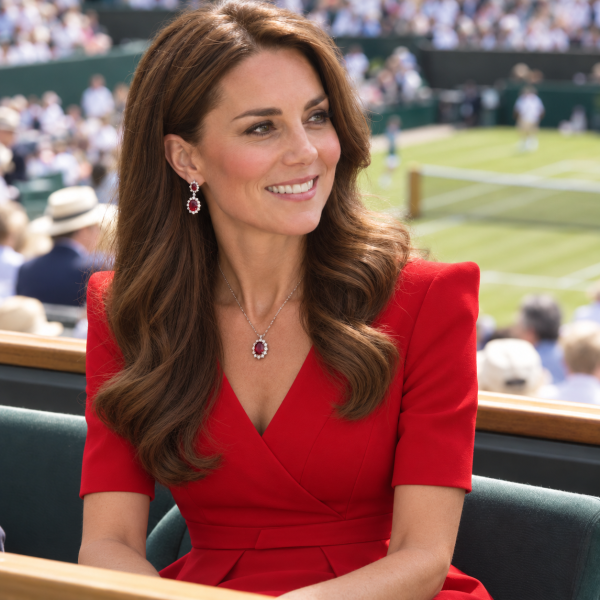
The Princess of Wales brought a striking combination of colour and sparkle to Centre Court when she attended the Wimbledon Ladies’ Singles Final on 11 July 2026.
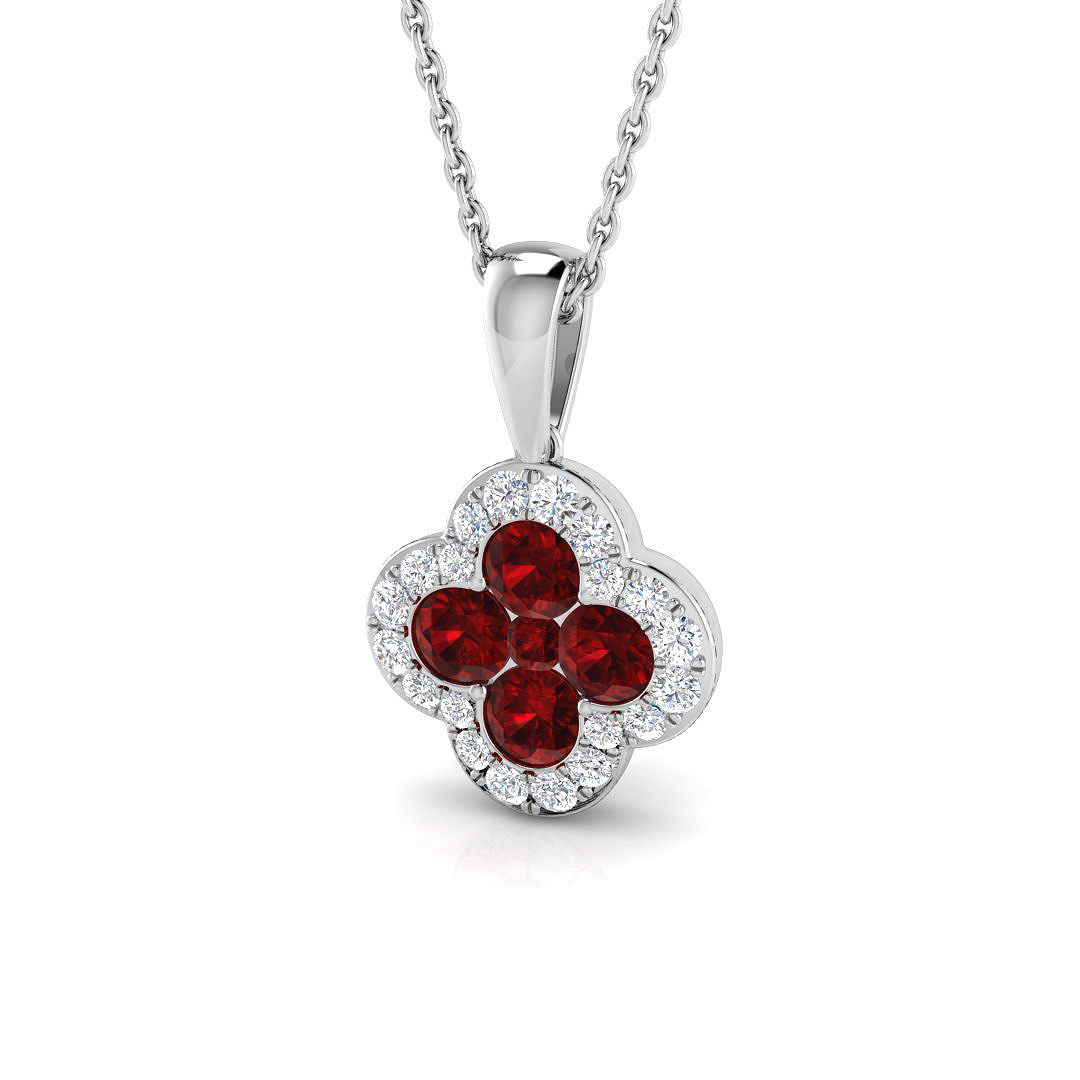
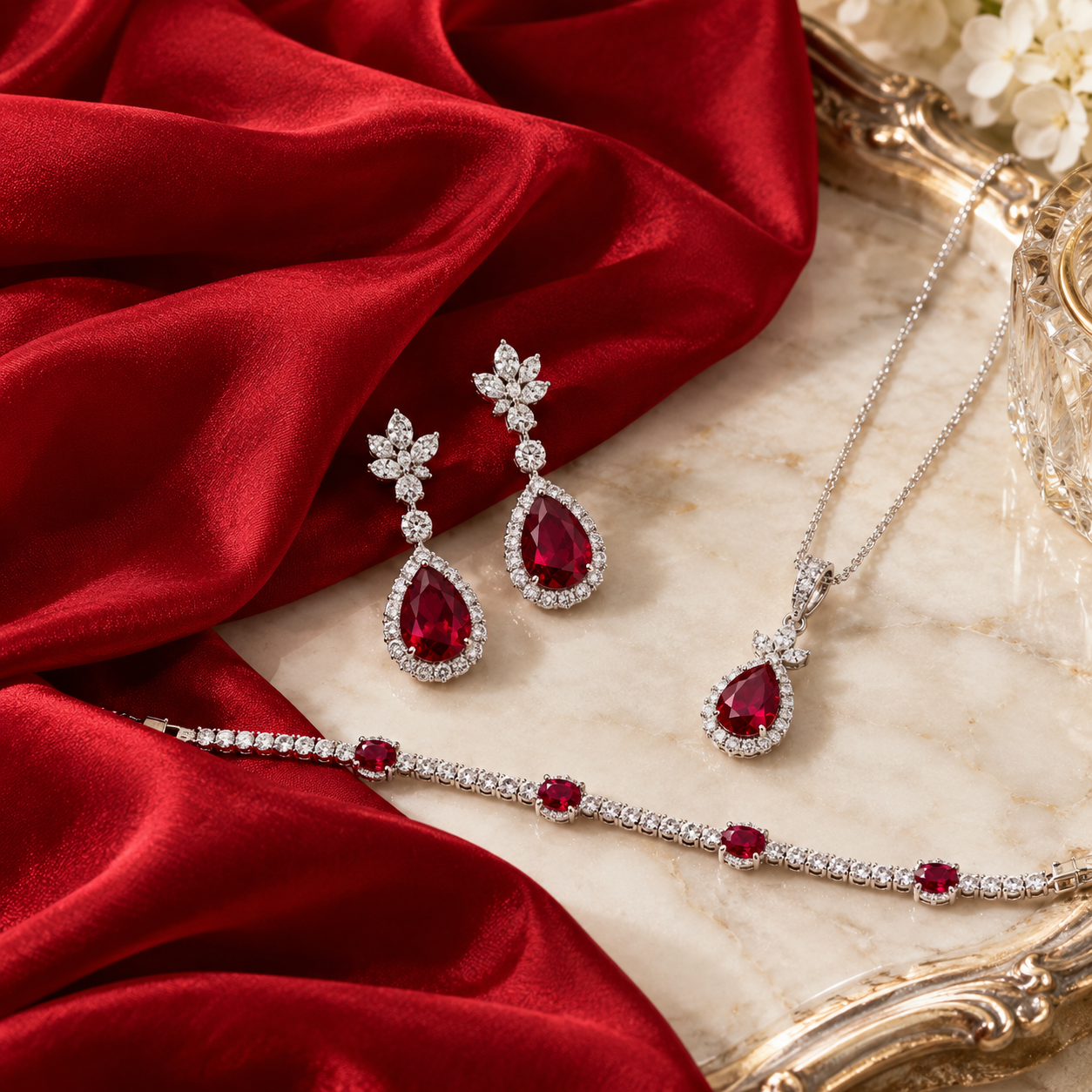
Catherine paired her vivid red outfit with elegant ruby and diamond jewellery, including ruby and diamond drop earrings and a coordinating pendant necklace. The rich red gemstones complemented the colour of her dress, while the diamonds introduced brightness around the face and neckline.
Rather than relying only on colourless diamonds, the appearance demonstrated how a coloured gemstone can become the focal point of fine jewellery while diamonds provide contrast and brilliance.
For jewellery lovers, it is also a reminder of why ruby and diamond earrings, ruby rings, necklaces and birthstone jewellery remain popular choices for birthdays, anniversaries, engagements and other meaningful occasions.
Why Do Rubies and Diamonds Work So Well Together?
Rubies are prized for their distinctive red colour, which can range from vibrant crimson through to deeper and richer shades depending on the individual gemstone.
When ruby is paired with diamond, the two gemstones provide very different visual qualities. The ruby introduces concentrated colour, while the diamonds reflect white light around it.
This contrast can help define the outline of the coloured gemstone and make the ruby appear more noticeable within the finished design.
Rich Colour
Ruby introduces a distinctive red focal point that immediately separates the jewellery from an all-diamond design.
Diamond Contrast
White diamonds provide brightness and definition around the ruby without introducing another competing colour.
Versatile Design
Ruby and diamond jewellery can look traditional, vintage-inspired, romantic or contemporary depending on the setting.
This combination works beautifully across many jewellery categories, including:
- Ruby and diamond earrings
- Ruby stud earrings
- Ruby drop earrings
- Ruby and diamond rings
- Ruby engagement rings
- Ruby cluster rings
- Ruby pendants and necklaces
- Ruby and diamond bracelets
- Three-stone ruby rings
- July birthstone jewellery
Ruby and Diamond Earrings Inspired by the Princess of Wales
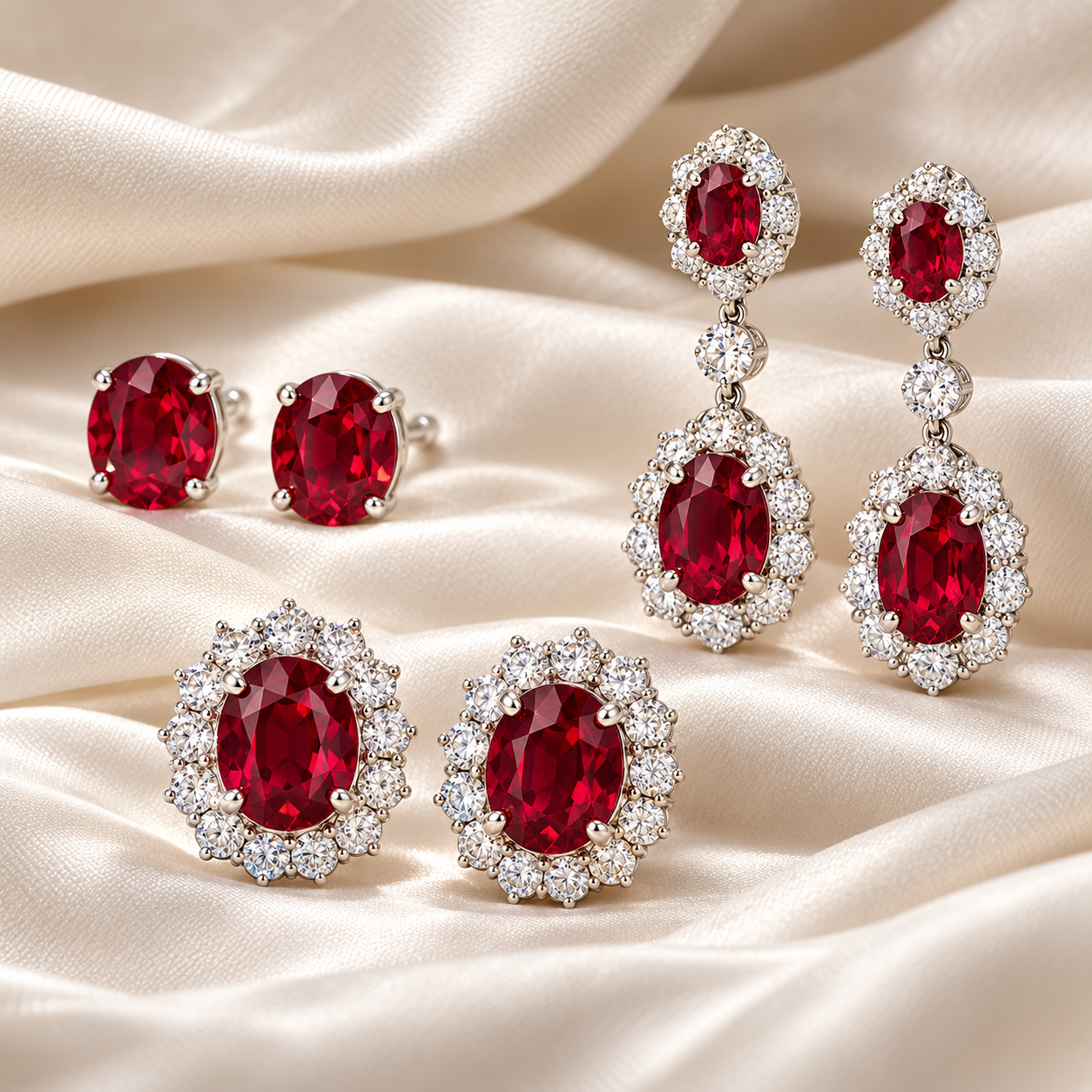
One of the most noticeable elements of Catherine’s Wimbledon look was the use of ruby and diamond earrings to carry the red colour close to the face.
For those inspired by the appearance, there are several ways to create a similar balance between coloured gemstones and diamond sparkle without attempting to reproduce the royal jewellery exactly.
Ruby Stud Earrings
Ruby stud earrings are one of the easiest ways to introduce coloured gemstones into an everyday jewellery collection.
A single ruby can create a clean and understated look, while a design combining ruby with surrounding diamonds can provide additional brilliance.
Because studs sit close to the ear, they can work particularly well for work, dinners, birthdays, weddings and everyday occasions.
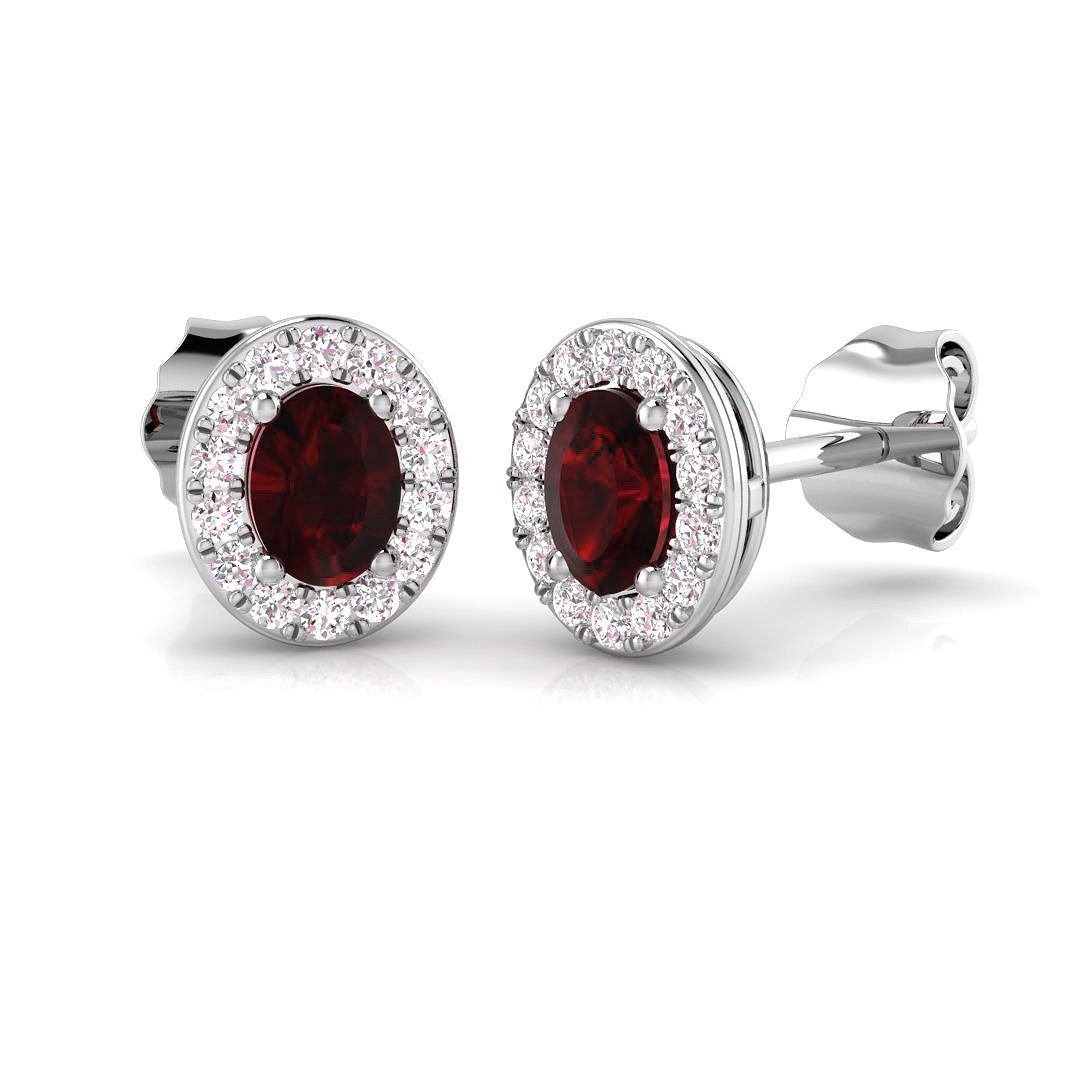
Ruby and Diamond Halo Earrings
A ruby surrounded by a halo of diamonds creates one of the most recognisable coloured-gemstone earring styles.
The contrast between the ruby and surrounding diamonds helps emphasise the centre gemstone, while the diamond border introduces additional sparkle.
Ruby Drop Earrings
Ruby drop earrings generally provide more movement and presence than studs.
As the earrings move, diamonds can catch changing light, making drop designs particularly attractive for evening occasions, weddings and formal events.
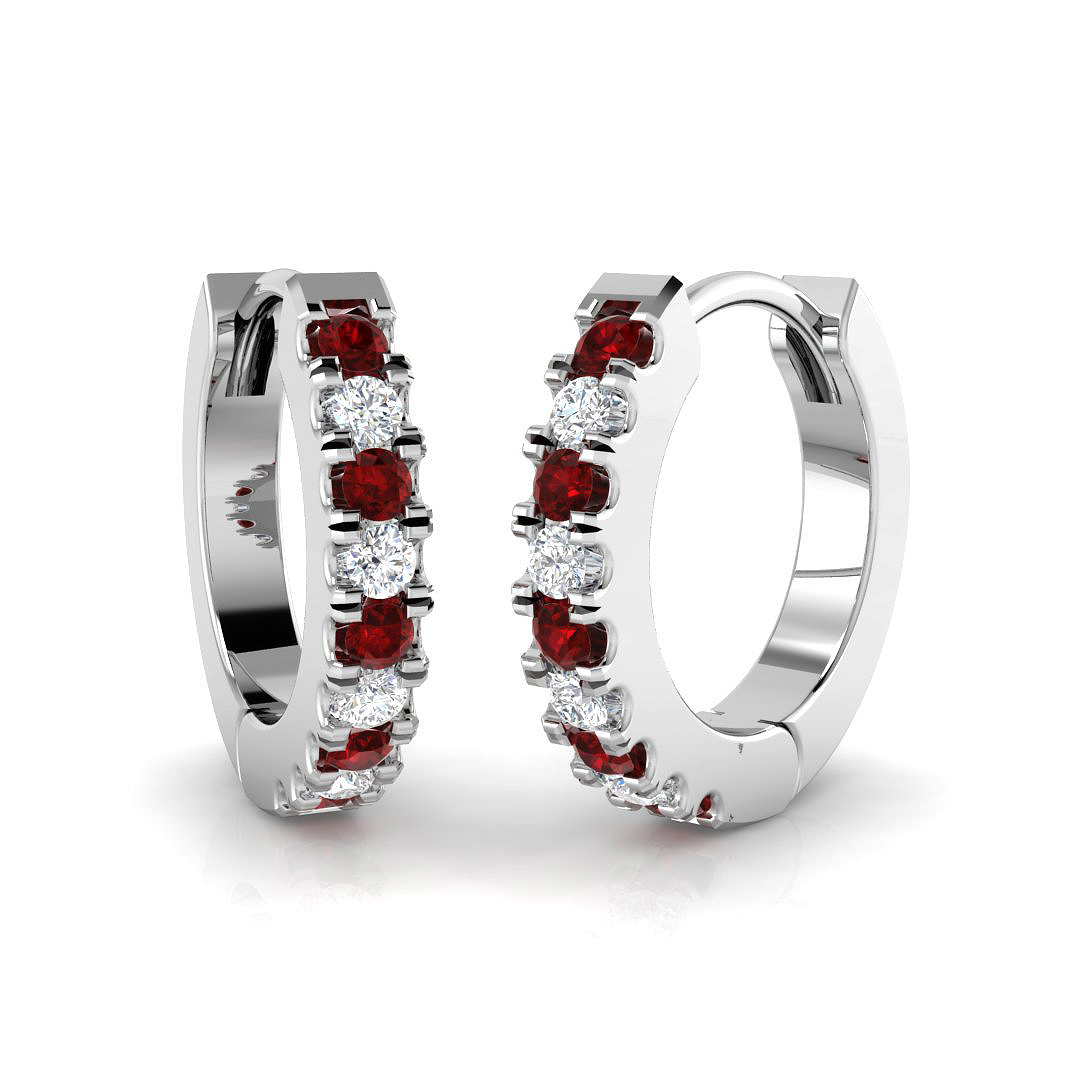
Ruby Hoop Earrings
For a more contemporary interpretation, ruby and diamond details can also be incorporated into hoop or huggie-style earrings.
This can create a modern alternative for customers who enjoy coloured gemstones but prefer a less traditional jewellery silhouette.
| Ruby Earring Style | Best For | Visual Effect | Practical Consideration |
|---|---|---|---|
| Ruby Stud Earrings | Everyday wear, work and understated gifts | Compact colour close to the ear | Choose secure posts and backs |
| Ruby Halo Earrings | Special occasions and elegant everyday wear | Diamond border emphasises the centre ruby | Check the small diamond settings periodically |
| Ruby Drop Earrings | Weddings, dinners and formal occasions | Movement adds noticeable sparkle | Consider weight and fastening comfort |
| Ruby Hoop Earrings | Contemporary and smart-casual styling | Modern silhouette with coloured detail | Check that the clasp closes securely |
| Ruby Cluster Earrings | Vintage-inspired and statement looks | Multiple stones create a fuller appearance | More settings may require periodic inspection |
How to Wear Ruby Jewellery with Red
One of the strongest elements of the Princess of Wales’s Wimbledon appearance was the use of jewellery within the same general colour family as her outfit.
The red clothing and ruby jewellery created a coordinated look without requiring every item to match perfectly.
The same styling principle can work well for weddings, formal dinners, celebrations and special occasions.
The principle can also be used with other coloured gemstones:
- Sapphire jewellery: Pair with navy, royal blue or pale blue shades.
- Emerald jewellery: Wear with forest green, black, cream or softer green tones.
- Ruby jewellery: Pair with red, burgundy, black, cream or neutral clothing.
- Aquamarine jewellery: Complement with pale blue, grey, silver or pastel colours.
How to Style Ruby Jewellery Without Overdoing It
Ruby jewellery already has a strong visual identity, especially when the coloured gemstone is surrounded by diamonds.
For a balanced result, choose one main jewellery feature and allow the remaining pieces to support it.
- Wear statement ruby earrings with a delicate bracelet rather than a heavy necklace.
- Pair ruby studs with a fine diamond pendant for an elegant evening look.
- Consider using the same precious-metal colour across several pieces.
- Allow the ruby colour to complement the outfit rather than matching it exactly.
- Avoid placing several large statement pieces close together.
- Consider the neckline of your outfit before adding a substantial ruby necklace.
Ruby Jewellery with Black, White and Neutral Clothing
You do not need to wear red clothing to enjoy ruby jewellery. Neutral shades can actually make the colour of a ruby appear even more noticeable.
Ruby Jewellery with Black
Ruby against black creates strong visual contrast and can be particularly effective for evening wear.
A pair of ruby and diamond drop earrings or a ruby pendant can become the focal point of a simple black outfit.
Ruby Jewellery with White or Cream
White and cream clothing provide a clean background against which red gemstones can appear especially vibrant.
This makes ruby jewellery suitable for summer events as well as formal evening occasions.
Ruby Jewellery with Neutral Colours
Beige, taupe and grey allow the gemstone colour to take centre stage without creating an overly strong combination.
This can be a sophisticated way to introduce ruby jewellery into an everyday wardrobe.
Can Ruby Jewellery Be Worn Every Day?
Ruby jewellery is often associated with significant occasions, but smaller designs can also work beautifully as everyday jewellery.
Ruby studs, delicate pendants and understated ruby and diamond rings can introduce colour into a regular jewellery collection without appearing excessively formal.
How practical a particular piece will be depends on its design, setting and how it is worn.
Earrings and pendants are generally exposed to less direct contact than rings, while rings can experience more knocks and contact with hard surfaces.
For jewellery worn regularly, consider:
- Secure stone settings
- Comfortable earring backs or clasps
- A design suitable for your daily routine
- Regular checks of claws and settings
- Removing jewellery before manual work or exposure to chemicals
Ruby: The Birthstone for July
Ruby is traditionally recognised as the birthstone for July, making ruby jewellery particularly meaningful as a birthday gift.
Birthstone jewellery can also provide a personal way to represent a child, partner or another family member.
Popular July birthstone jewellery ideas include:
- Ruby stud earrings
- Ruby and diamond earrings
- Ruby pendants
- Ruby rings
- Ruby and diamond bracelets
- Ruby eternity-style rings
- Personalised birthstone jewellery
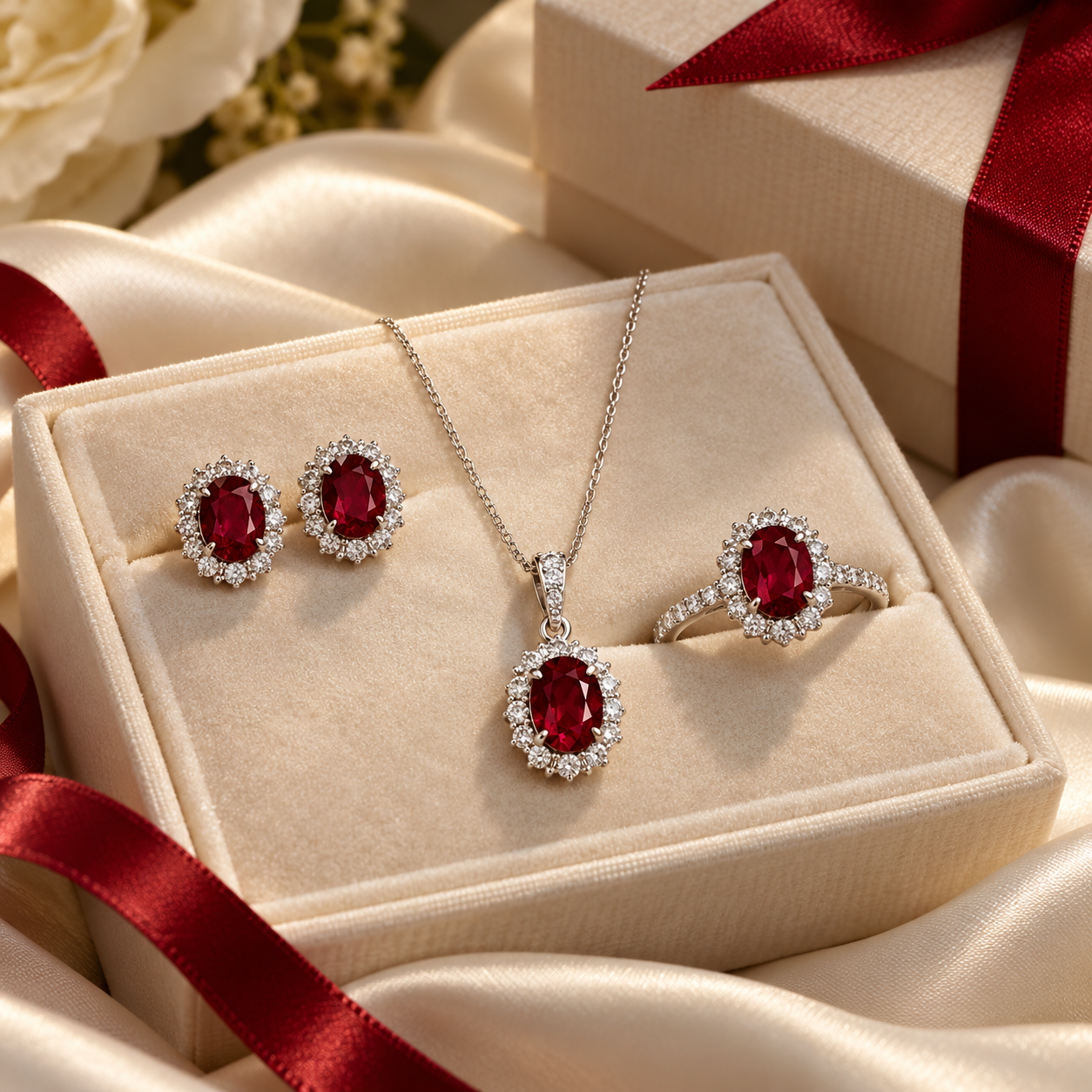
Ruby Jewellery as a Meaningful Gift
Ruby jewellery is not limited to July birthdays.
Its distinctive colour and long association with fine jewellery make it suitable for a wide range of milestones and celebrations.
A ruby jewellery gift may mark:
- A July birthday
- A wedding anniversary
- An engagement
- A graduation
- A significant promotion
- The birth of a child
- A milestone birthday
- Valentine’s Day
- Christmas
- A personal achievement
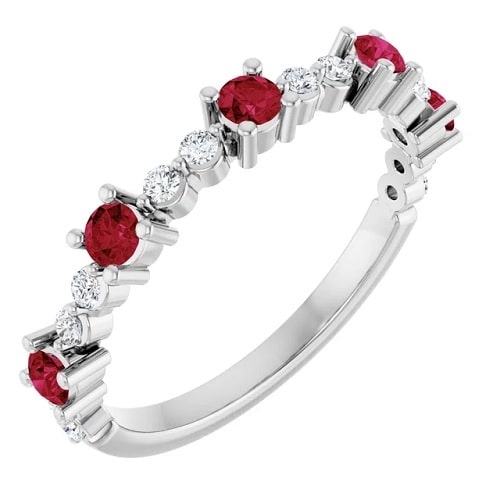
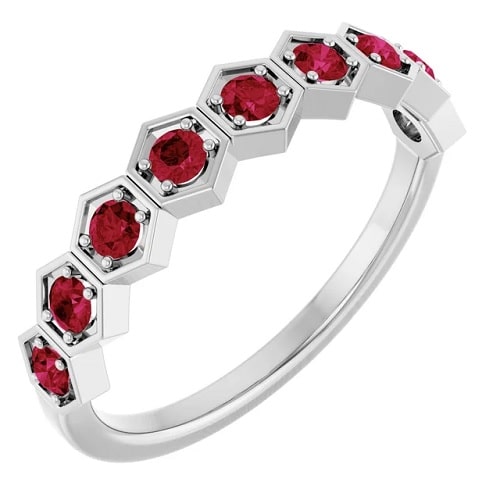
Ruby and Diamond Rings
Although the Princess of Wales’s Wimbledon jewellery focused attention on earrings and her necklace, the same ruby-and-diamond combination can be especially effective in rings.
A central ruby may be combined with diamonds in several different settings, allowing customers to choose between understated, classic and statement designs.
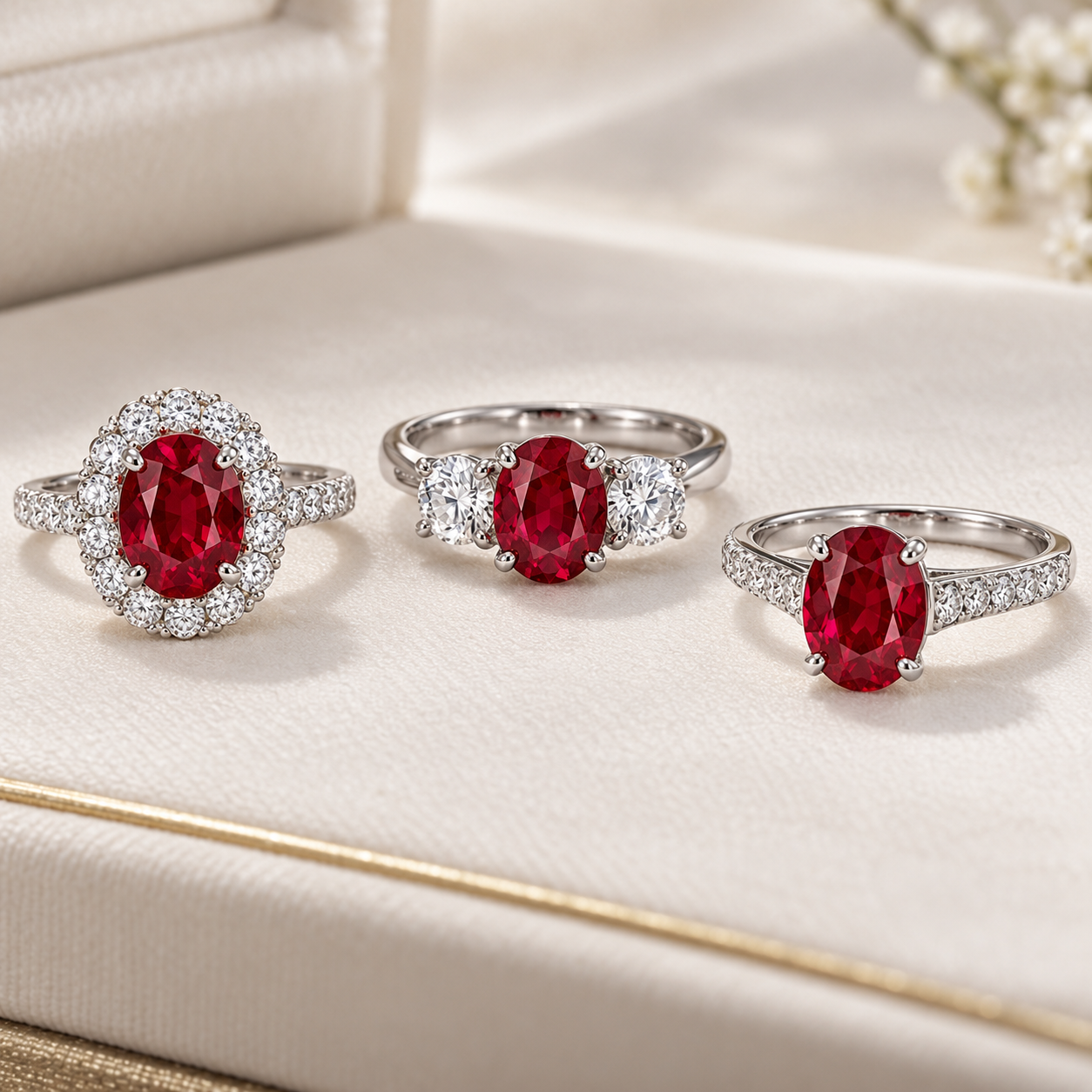
Ruby Solitaire Rings
A ruby solitaire keeps attention primarily on one coloured gemstone.
Diamond accents may also be introduced into the shoulders or band when additional sparkle is desired.
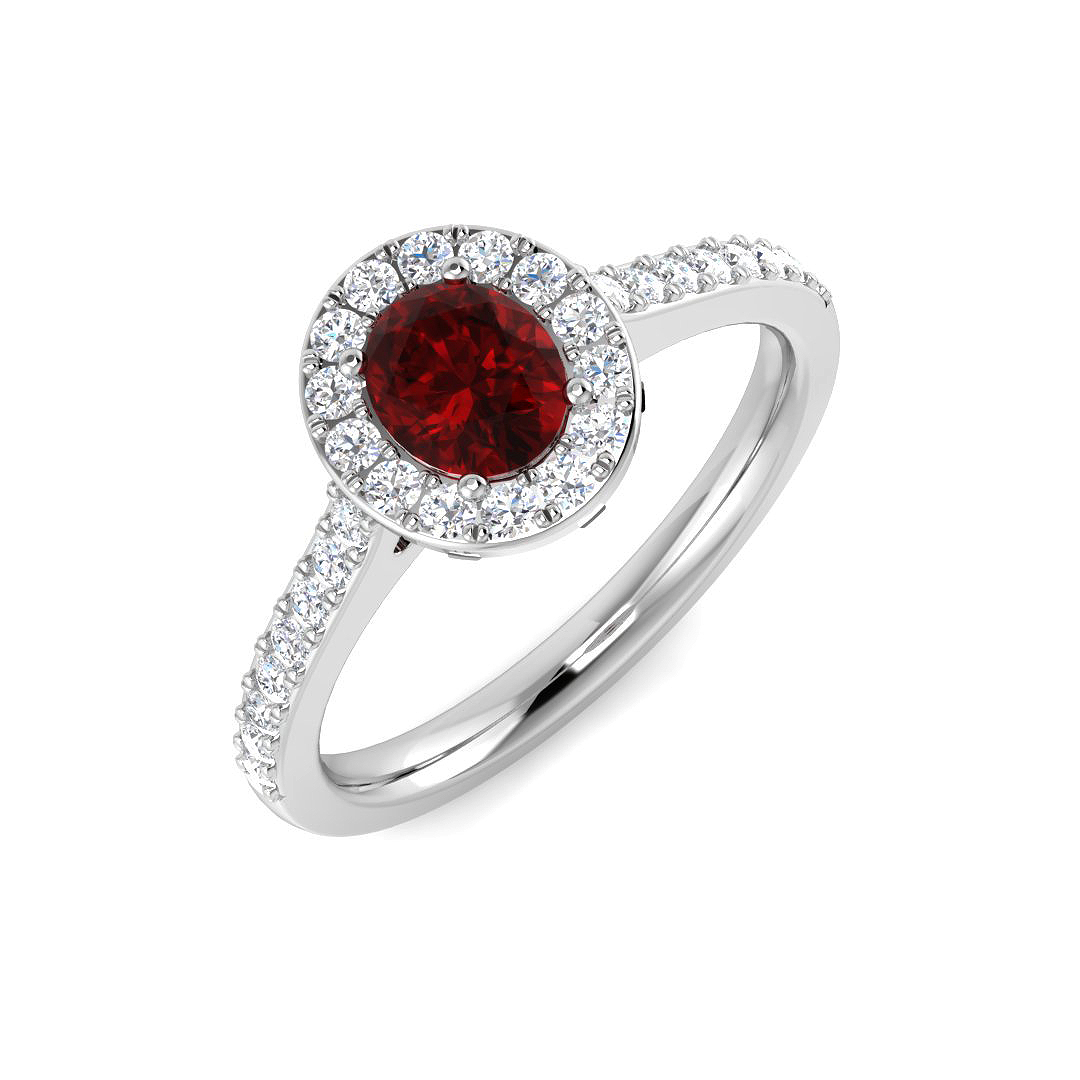
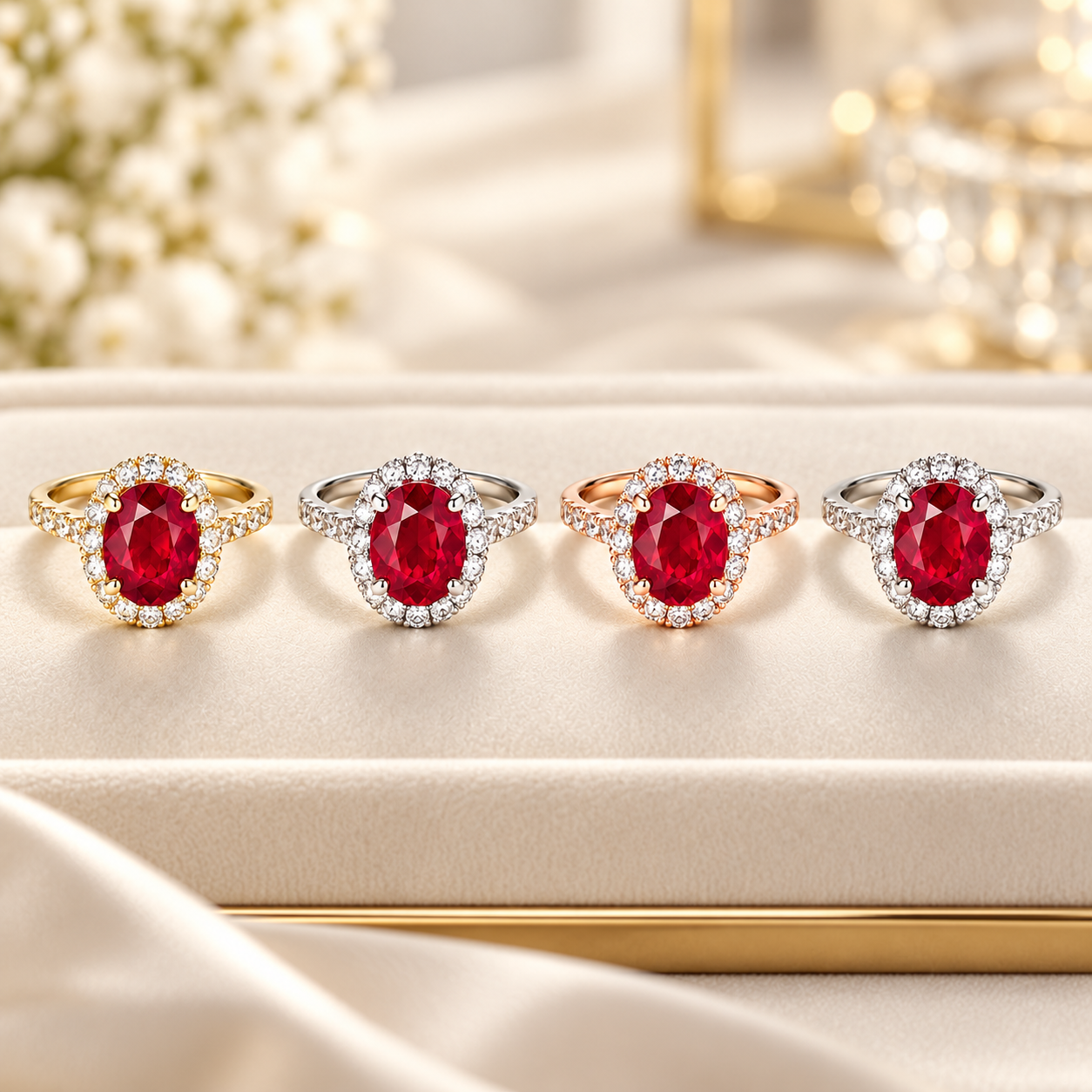
Ruby and Diamond Halo Rings
A diamond halo surrounds the centre ruby with smaller diamonds.
The strong contrast between white diamonds and the red centre gemstone can make the ruby appear especially prominent.
Ruby Cluster Rings
A ruby cluster ring uses several gemstones or a combination of ruby and diamonds to create a more decorative arrangement.
Traditional cluster designs can have a vintage character, while contemporary styles may use more geometric or unusual layouts.
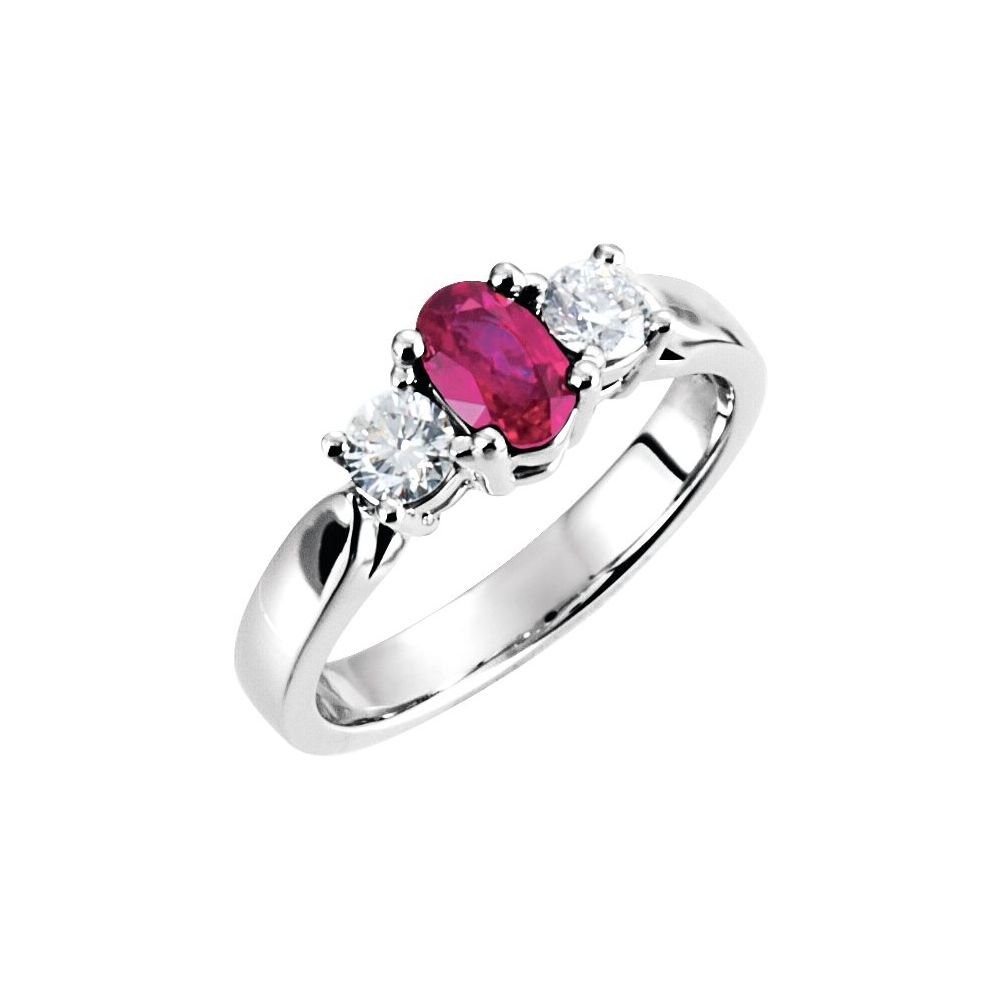
Ruby Three-Stone Rings
Three-stone designs allow ruby and diamond to be combined in several different ways.
For example, a central ruby may be accompanied by a diamond on either side, creating a balanced combination of colour and brilliance.
Are Ruby and Diamond Rings Suitable for Engagement Rings?
For someone who wants an engagement ring with noticeable colour, a ruby and diamond engagement ring can provide an alternative to a traditional all-diamond design.
The ruby may be used as the centre gemstone, while diamonds provide additional brilliance through side stones, a halo or diamond-set shoulders.
Popular ruby engagement ring styles include:
- Ruby solitaire engagement rings
- Ruby halo engagement rings
- Ruby and diamond three-stone rings
- Oval ruby engagement rings
- Emerald-cut ruby rings
- Vintage-inspired ruby cluster rings
For some couples, choosing a coloured gemstone can also make the engagement ring feel more personal and distinctive.
Choosing the Right Precious Metal for Ruby Jewellery
The precious metal used around ruby can significantly change the finished appearance of the jewellery.
Yellow Gold
Yellow gold introduces warmth and creates a rich, traditional combination with ruby.
White Gold
White gold provides bright contrast and visually connects with surrounding diamonds.
Rose Gold
Rose gold can create a softer and more romantic combination with red gemstones.
Platinum
Platinum has a naturally white appearance and provides a neutral background for rubies and diamonds.
9ct Gold
9ct gold can provide an accessible precious-metal option for customers purchasing fine ruby jewellery.
18ct Gold
18ct gold contains a higher proportion of gold and is often selected for premium fine jewellery.
The best choice depends on personal preference, existing jewellery and the overall style of the piece.
Hallmarking Ruby Jewellery in the UK
When buying precious-metal jewellery in the UK, hallmarking is an important consideration.
Items described as gold, silver, platinum or palladium generally need an appropriate hallmark when they exceed the relevant legal exemption weight.
A recognised hallmark provides independent confirmation of the precious metal’s fineness.
When choosing ruby jewellery in the UK, buyers should consider:
- Precious metal: Confirm whether the piece is 9ct gold, 18ct gold, platinum or another specified metal.
- Hallmark: Check for a recognised hallmark where legally required.
- Gemstone description: Review how the ruby and diamonds are described.
- Carat weight: Check whether stated weights relate to the ruby, diamonds or combined gemstone weight.
- Setting: Ensure gemstones appear securely held.
- Returns: Review the retailer’s returns and exchange conditions before ordering.
- Aftercare: Consider whether cleaning, inspection or repair support is available.
Choosing Ruby Jewellery for Your Own Style
The Princess of Wales’s Wimbledon appearance can provide inspiration, but beautiful jewellery does not need to reproduce a royal look exactly.
Instead, consider which part of the combination appeals most to you.
If you love the contrast between red gemstones and white diamonds, you might consider:
- Ruby and diamond stud earrings
- Ruby halo earrings
- Ruby and diamond drop earrings
- Ruby pendants
- Ruby cluster rings
- Ruby and diamond engagement rings
- Ruby three-stone rings
- Ruby birthstone jewellery
Think about how the piece will actually be worn. Someone who wears jewellery every day may prefer small ruby studs or a delicate pendant, while someone shopping for an anniversary or other major milestone may prefer a more substantial ruby and diamond design.
How to Care for Ruby and Diamond Jewellery
Fine jewellery can retain its beauty for many years when stored, worn and cleaned appropriately.
To help protect ruby and diamond jewellery:
- Store jewellery pieces separately to reduce scratching.
- Avoid exposure to strong household chemicals.
- Remove rings before heavy manual work.
- Remove jewellery before swimming where appropriate.
- Check gemstone settings periodically.
- Use cleaning methods appropriate for the specific gemstone and metal.
- Have valuable or frequently worn jewellery professionally inspected when necessary.
Create a Ruby and Diamond Look Inspired by Wimbledon
The Princess of Wales’s Wimbledon appearance demonstrated how effectively ruby and diamond jewellery can complement a strong clothing colour.
However, the most useful styling lesson goes beyond simply pairing red jewellery with red clothing.
The look showed how one coloured gemstone can provide continuity throughout an outfit while diamonds add brightness and definition.
To create your own interpretation, begin with one central piece.
- Choose ruby and diamond earrings if you want the colour close to your face.
- Choose a ruby pendant if you prefer a more delicate effect.
- Make a ruby and diamond ring the centre of your look and keep other jewellery simple.
- Use matching precious-metal colours to create visual continuity.
- Allow different pieces to coordinate rather than requiring an identical matching set.
Explore Jewellery at Sunshine Diamonds
Frequently Asked Questions
Final Thoughts
The Princess of Wales’s Wimbledon 2026 appearance demonstrated how successfully ruby and diamond jewellery can combine colour, elegance and diamond sparkle.
The rich red gemstones complemented the colour of her outfit, while the diamonds introduced brightness and definition.
For jewellery buyers, however, the appeal of ruby extends far beyond a single royal appearance.
Ruby can represent a July birthstone, celebrate an anniversary, add personality to an engagement ring or simply provide a colourful alternative to all-diamond jewellery.
From understated ruby stud earrings to statement ruby and diamond rings, the combination offers many possibilities for creating jewellery that feels distinctive, meaningful and timeless.