Meghan Markle’s Pear-Shaped Diamond Ring: Why This Elegant Cut Continues to Stand Out
Quick Summary
- Meghan Markle has been seen wearing a striking pear-shaped diamond statement ring on her right hand
- The exact designer, carat weight and origin of the diamond have not been officially confirmed
- Pear-shaped diamonds combine a rounded base with an elegant tapered point
- The elongated outline can create a lengthening effect and a strong face-up presence
- A V-shaped claw helps protect the vulnerable pointed tip of a pear-shaped diamond
- Pear-shaped rings can be created in 9ct gold, 18ct gold or platinum
- Both natural and lab-created pear-shaped diamonds are available
- UK buyers should check symmetry, bow-tie effect, grading information and hallmarking
Content Quicklinks
- - Meghan Markle’s Pear-Shaped Diamond Ring
- - What Is a Pear-Shaped Diamond?
- - Why Are Pear-Shaped Engagement Rings Popular?
- - Which Way Should a Pear-Shaped Diamond Point?
- - Choosing a Secure Setting
- - Yellow Gold, White Gold or Platinum?
- - Natural or Lab-Created Pear-Shaped Diamonds?
- - What Should UK Buyers Check?
- - Creating a Celebrity-Inspired Ring
- - Frequently Asked Questions
- - Final Thoughts
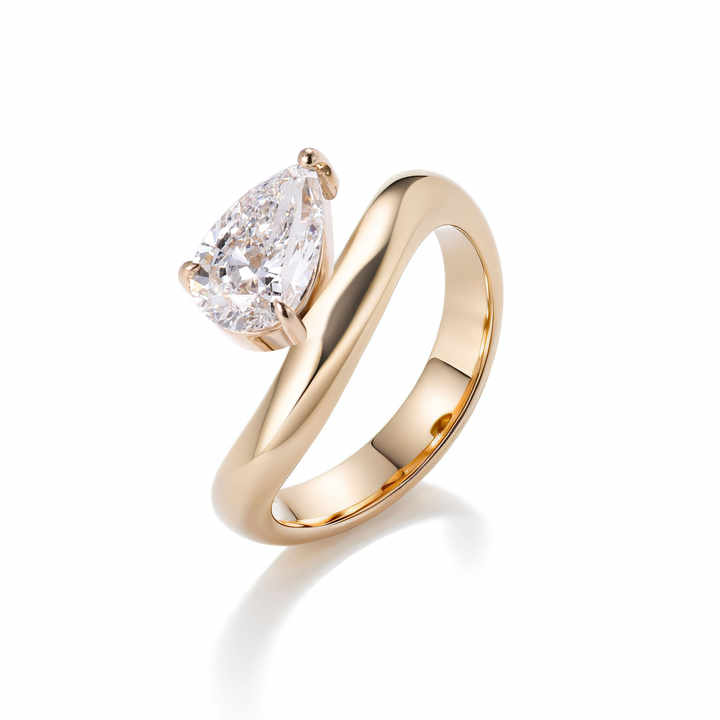
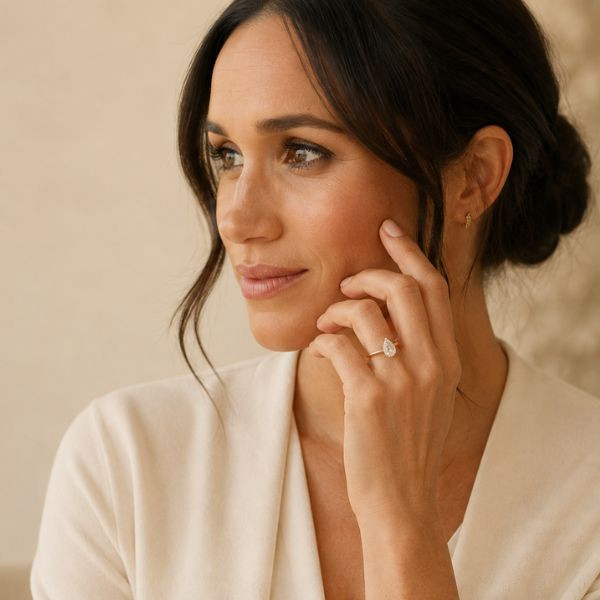
Meghan Markle has once again attracted attention with her jewellery choices after appearing with a striking pear-shaped diamond ring on her right hand.
The Duchess of Sussex wore the statement ring on a yellow-gold band alongside other understated gold jewellery. Although jewellery experts have offered different estimates of its size, the precise carat weight, designer and origin of the diamond have not been officially confirmed. It should therefore be viewed as a celebrity-inspired jewellery moment rather than a confirmed new engagement ring.
The appearance has renewed interest in one of the most distinctive diamond shapes available: the pear cut.
What Is a Pear-Shaped Diamond?
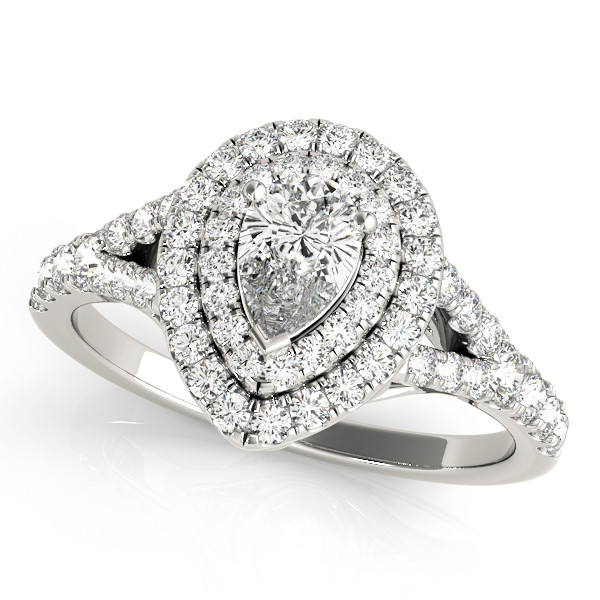
A pear-shaped diamond combines the rounded brilliance of an oval or round diamond with the tapered point of a marquise cut.
It is sometimes called a teardrop diamond because of its curved base and pointed tip. The shape is instantly recognisable and can feel both classic and contemporary, depending on the setting in which it is placed.
Its elongated outline can also create the appearance of greater length across the finger. This makes pear-shaped diamonds particularly appealing to customers who want something more individual than a traditional round solitaire.
Why Are Pear-Shaped Engagement Rings Popular?
Pear-shaped engagement rings offer an unusual balance of elegance, sparkle and individuality.
Unlike symmetrical round or princess-cut diamonds, every pear-shaped stone has its own proportions. Some have a fuller, softer outline, while others are narrower and more elongated.
This allows couples to select a diamond that reflects their personal style rather than simply following one standard appearance.
The pear shape can also work beautifully with a wide variety of engagement-ring settings:
Classic Solitaire
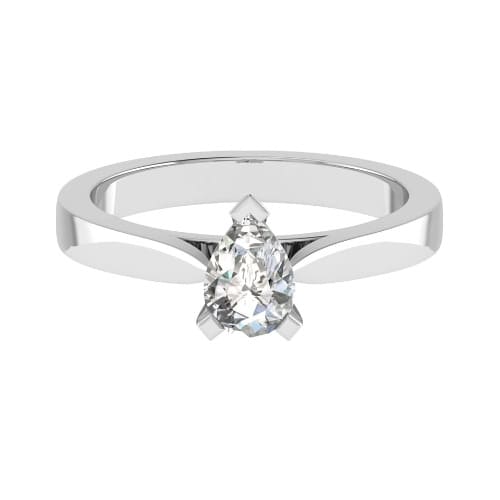
A clean setting that keeps attention on the teardrop outline and brilliance of the centre diamond.
Diamond Halo
A border of smaller diamonds adds sparkle and can make the centre stone appear more prominent.
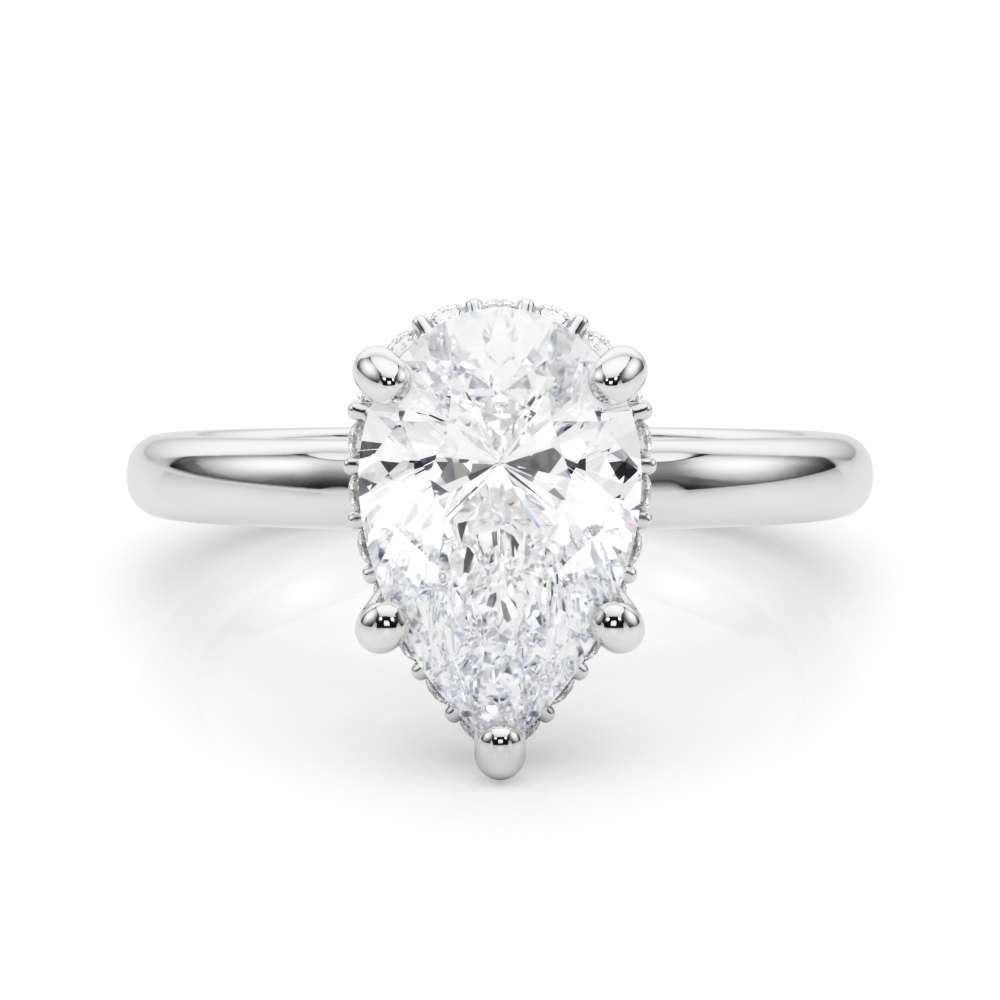
Hidden Halo
Small diamonds beneath the centre stone add discreet brilliance when the ring is viewed from the side.
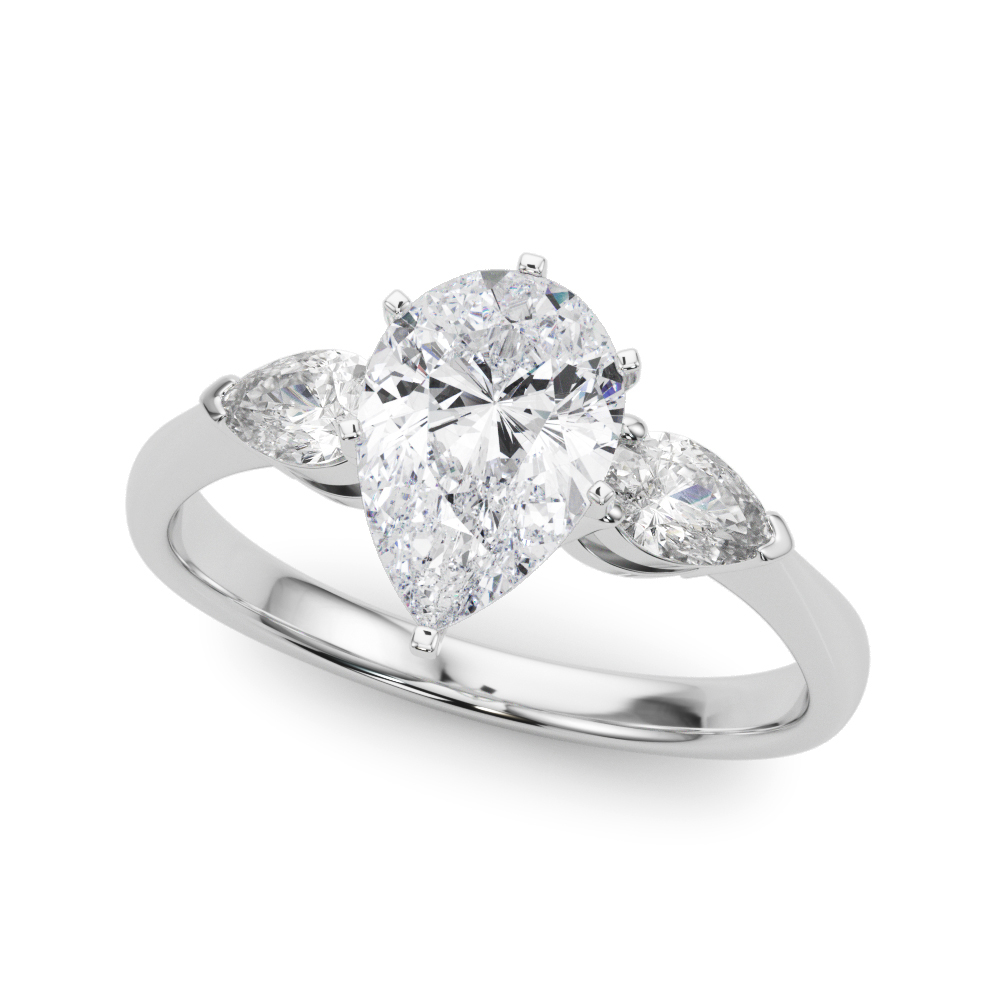
Three-Stone Design
Round, tapered baguette or smaller pear-shaped side stones can frame the centre diamond beautifully.
Diamond-Set Shoulders
Small diamonds along the band add extra sparkle while allowing the pear-shaped centre to remain the focus.
Vintage-Inspired Setting
Milgrain, decorative claws and intricate detailing can give the distinctive shape a romantic character.
A simple solitaire keeps attention on the outline of the centre diamond, while a halo can make the ring appear larger and add additional brilliance.
Which Way Should a Pear-Shaped Diamond Point?
A pear-shaped diamond can be worn with its point facing towards or away from the hand.
Wearing the point towards the fingertip is the most familiar choice and can create an elegant, lengthening effect. Turning the diamond in the opposite direction creates a more unconventional appearance.
There is no strict rule. The best orientation is the one that feels most comfortable and visually balanced to the wearer.
Pear-shaped diamonds can also be positioned horizontally in an East–West setting. This produces a modern look that works particularly well with wider gold bands and contemporary bezel settings.
Choosing a Secure Setting
The pointed tip is the most vulnerable part of a pear-shaped diamond, so it should be properly protected.
A V-shaped claw can be positioned with precision to offer additional protection to the point, while other claws hold the curved sides of the diamond securely in place. For maximum protection, a bezel setting surrounds all or part of the stone with metal.
Those who plan to wear their ring every day should consider the height of the diamond above the finger. A lower setting may be more practical for an active lifestyle, while a higher setting can allow more light to enter the diamond.
The claws should also be inspected periodically to ensure that the centre stone remains secure.
Yellow Gold, White Gold or Platinum?
The warm yellow-gold band seen with Meghan’s ring creates a noticeable contrast against the bright diamond.
For UK buyers, pear-shaped engagement rings are commonly available in several precious-metal options.
| Precious Metal | Appearance | Why Choose It? | Maintenance |
|---|---|---|---|
| 9ct Yellow Gold | Warm and traditional | A practical and more accessible option for everyday jewellery | Routine cleaning and setting inspections |
| 18ct Yellow Gold | Rich, warm gold colour | Higher gold content and a premium bridal appearance | Routine cleaning and professional checks |
| White Gold | Bright and contemporary | Creates a clean contrast around a colourless or near-colourless diamond | Rhodium plating may require refreshing over time |
| Rose Gold | Soft and romantic | Offers a warmer alternative with a distinctive pink-toned finish | Routine cleaning and setting inspections |
| Platinum | Naturally white and substantial | A premium choice that does not require rhodium plating | Develops a natural patina and can be professionally polished |
A mixed-metal design can also be considered. For example, yellow-gold shoulders can be combined with white-gold or platinum claws to maintain a bright appearance around the centre diamond.
Natural or Lab-Created Pear-Shaped Diamonds?
The pear-shaped look can be created with either a natural or lab-created diamond.
Both options are diamonds with the same fundamental optical and physical characteristics. The main differences relate to their origin, availability and price.
A lab-created diamond may allow a customer to choose a larger centre stone or a higher colour and clarity combination within the same budget. A natural diamond may be preferred by someone who values geological rarity and traditional origin.
Rather than choosing by carat weight alone, customers should compare the visible shape, symmetry, sparkle and overall face-up appearance of each stone.
What Should UK Buyers Check?
When purchasing a pear-shaped diamond ring in the UK, consider the following:
- Symmetry: The two curved sides should appear balanced, and the point should align with the centre of the rounded end.
- Bow-tie effect: Many elongated diamonds display a darker bow-tie-shaped area through the centre. A slight bow tie is normal, but it should not dominate the stone.
- Length-to-width ratio: A wider pear looks softer and fuller, while a narrower pear creates a more elongated appearance.
- Diamond grading: Ask for an independent grading report where applicable so you can review the diamond’s colour, clarity, measurements and carat weight.
- Setting security: Confirm that the pointed tip is protected and that the claws hold the centre diamond securely.
- Hallmarking: Precious-metal jewellery sold in the UK must carry a legally recognised hallmark when it exceeds the relevant exemption weight. A hallmark verifies the metal’s fineness and helps protect the buyer.
- Wedding-ring fit: Check whether a straight wedding band will sit alongside the engagement ring or whether a shaped band will be needed.
- Aftercare: Review the retailer’s resizing, returns, warranty, cleaning and repair policies before ordering.
Creating a Celebrity-Inspired Ring Without Copying It
Celebrity jewellery can provide inspiration, but an engagement ring should ultimately feel personal to the wearer.
The pear-shaped look can be adapted through the choice of diamond size, metal, band width and setting. A delicate solitaire may suit someone who prefers understated jewellery, while a halo or diamond-set band can provide a more glamorous finish.
A bespoke design can also include personal details such as a hidden birthstone, an engraved message or individually selected diamond proportions.
At Sunshine Diamonds in Hatton Garden, pear-shaped engagement rings can be created with natural or lab-created diamonds and a choice of 9ct gold, 18ct gold and platinum.
Explore Pear-Shaped Rings at Sunshine Diamonds
Frequently Asked Questions
Final Thoughts
Meghan Markle’s latest statement ring demonstrates why pear-shaped diamonds continue to attract attention.
The distinctive teardrop outline feels elegant without appearing predictable, while its elongated shape works beautifully in both traditional and contemporary settings.
Rather than concentrating solely on celebrity-sized carat weights, focus on the details that make a pear-shaped ring successful: balanced proportions, a secure setting, an appropriate metal and a design that suits the person who will wear it.
Those elements can create a meaningful engagement ring that remains distinctive long after the celebrity headlines have moved on.