How to Choose Diamond Earrings: The Complete Guide

Quick Summary
- Cut qualiy — not carat weight — is what creates visible sparkle in earrings
- Lab-grown diamonds offer 50–70% more carat weight at the same price, with better matched-pair consistency
- The matched-pair challenge is unique to earrings — both stones must be graded identically
- Backing choice affects comfort and security far more than most buyers realise
- Building a curated ear collection in stages is smarter than buying everything at once
- Pavé hoops and huggies lead the ear-stacking trend in 2026
- 18ct white and yellow gold are the 2026 trend metals for earrings
- Every Sunshine Diamonds earring is UK hallmarked and IGI/GIA certified
Content Quicklinks
- - Why Earrings Are Different from Every Other Jewellery Purchase
- - The Matched-Pair Challenge — and Why It Changes Everything
- - Cut First, Carat Second: The Earring-Specific Sparkle Principle
- - Diamond Shapes for Earrings: Which Works Best and Why
- - Setting Styles and Why Security Matters in Earrings
- - Backings: The Most Overlooked Decision in Earring Buying
- - Building a Curated Ear Collection in 2026
- - The Ear-Stacking Trend: How to Layer Earrings Properly
- - Lab-Grown Diamonds: The Earring-Specific Case
- - Earring Care: What Actually Damages Diamond Earrings
- - Frequently Asked Questions
- - Final Thoughts
Earrings are the one piece of jewellery you wear for others as much as yourself. They frame your face, catch light when you turn your head, and are often the first thing someone notices. That changes what to prioritise when buying them — and it makes the standard advice ("buy the biggest diamond you can afford") actively misleading.
There's also something earrings require that no other jewellery does: symmetry. You're buying two diamonds, not one, and they need to match. That single requirement reshapes every decision — the stone selection, the setting, the backing, and whether lab-grown or natural diamonds serve you better.
This guide covers what the others don't: matched pairs, backings, ear stacking, and how to build a collection over time rather than making one expensive gamble.
Why Earrings Are Different from Every Other Jewellery Purchase
Unlike a ring — which you see on your hand all day at close range — earrings are viewed from a distance, often in motion, at varying angles. A diamond's behaviour changes completely under these conditions. Brilliance (white light return) and fire (coloured dispersion) are most visible when the viewing angle keeps shifting — which is exactly what happens as you move through the day.
This means cut quality is the single most important factor in earring diamonds, more so than in any other jewellery type. A well-cut diamond is actively working for you throughout the day, catching and returning light from different directions. A poorly cut stone simply doesn't — regardless of its size or weight.
The second difference is the pair requirement. Every other jewellery purchase involves a single stone or a design where slight variation doesn't matter. Earrings are seen side by side, simultaneously. A one-grade difference in colour between your left and right stone is visible in daylight and obvious in photographs. Getting the matching right is as important as getting the individual stone right.
The Matched-Pair Challenge — and Why It Changes Everything
Every diamond is unique. Even two stones cut from the same rough will differ in colour, clarity, and the subtle geometry of their facets. For a ring this doesn't matter. For earrings, it matters considerably.
When you wear studs or drops, both ears are seen simultaneously and at the same scale. A difference of even one colour grade between left and right is noticeable in person and quite stark in photographs — particularly in flash or bright daylight. The same applies to clarity: a stone with a visible inclusion next to a cleaner stone creates an imbalance the eye is drawn to immediately.
Natural Diamonds and the Matching Difficulty
For natural diamonds, sourcing a genuinely matched pair requires identifying two stones that share the same cut grade, colour grade, clarity grade, and — critically — face up identically in size and brightness. This is genuinely difficult at lower price points. Retailers may list earrings as "matched," but the standard varies. Always ask whether both stones carry individual certificates and whether every grade is identical, not approximate.
Why Lab-Grown Solves This
Lab-grown production creates diamonds in controlled conditions, which means consistent colour and clarity outcomes are the norm rather than the exception. Matching across a pair is far more achievable at every budget. This is one of the most practical reasons lab-grown diamonds are particularly well-suited to earrings specifically.
Cut First, Carat Second: The Earring-Specific Sparkle Principle
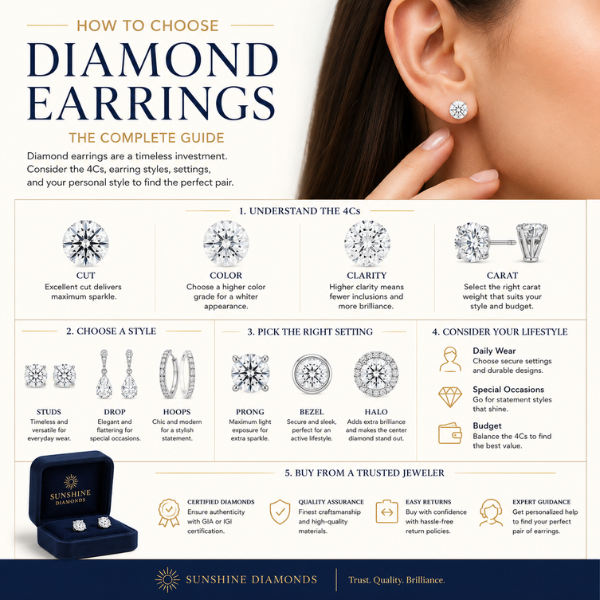
A diamond's sparkle comes from how light enters the stone, bounces between facets, and returns to the eye. That is entirely determined by cut quality — not by carat weight, not by clarity, not by colour. A poorly proportioned diamond loses light through the base. A precisely cut stone returns it as the white flashes and rainbow dispersion that make diamonds unmistakable.
In earrings, the viewing angle changes constantly as you move. This means a well-cut earring diamond is catching and returning light from dozens of different positions throughout the day. A poorly cut stone misses most of those moments.
| Cut Grade | What It Means | For Earrings |
|---|---|---|
| Excellent | Maximum light return across all viewing angles | ✓ First choice |
| Very Good | Near-maximum return, excellent value | ✓ Sound choice |
| Good | Noticeable reduction in sparkle | Only if budget is the constraint |
| Fair / Poor | Significant light leakage, visibly dull | ✗ Avoid for earrings |
Carat weight ranges that work for earrings:
- 0.3–0.5ct total — elegant everyday presence; ideal for a first stud purchase or a secondary piercing
- 0.5–1.0ct total — the sweet spot for most occasions; visible sparkle without drama
- 1.0–1.5ct total — a genuine statement; catches light noticeably in any setting
- 1.5ct+ — unmistakable presence, best for those who want it as part of their signature
Diamond Shapes for Earrings: Which Works Best and Why
Different shapes create different effects in earrings — both in how much light they return and in the silhouette they create against your face.
Round Brilliant
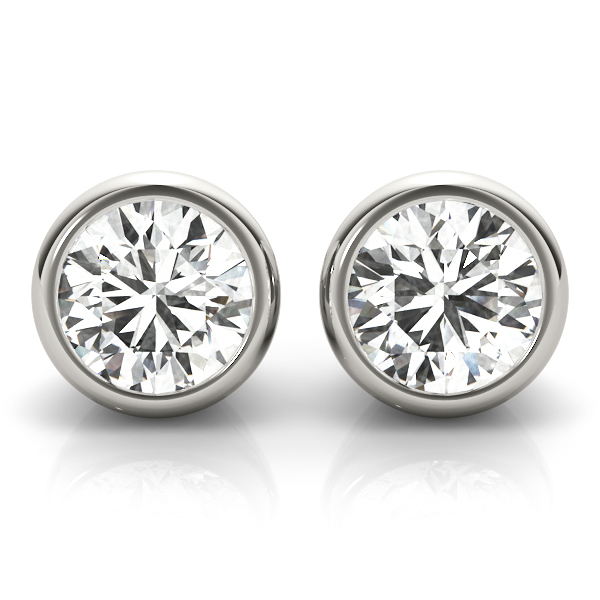
Maximum brilliance, suits every face shape, most forgiving of minor grade differences between stones. The default choice for a reason.
Oval
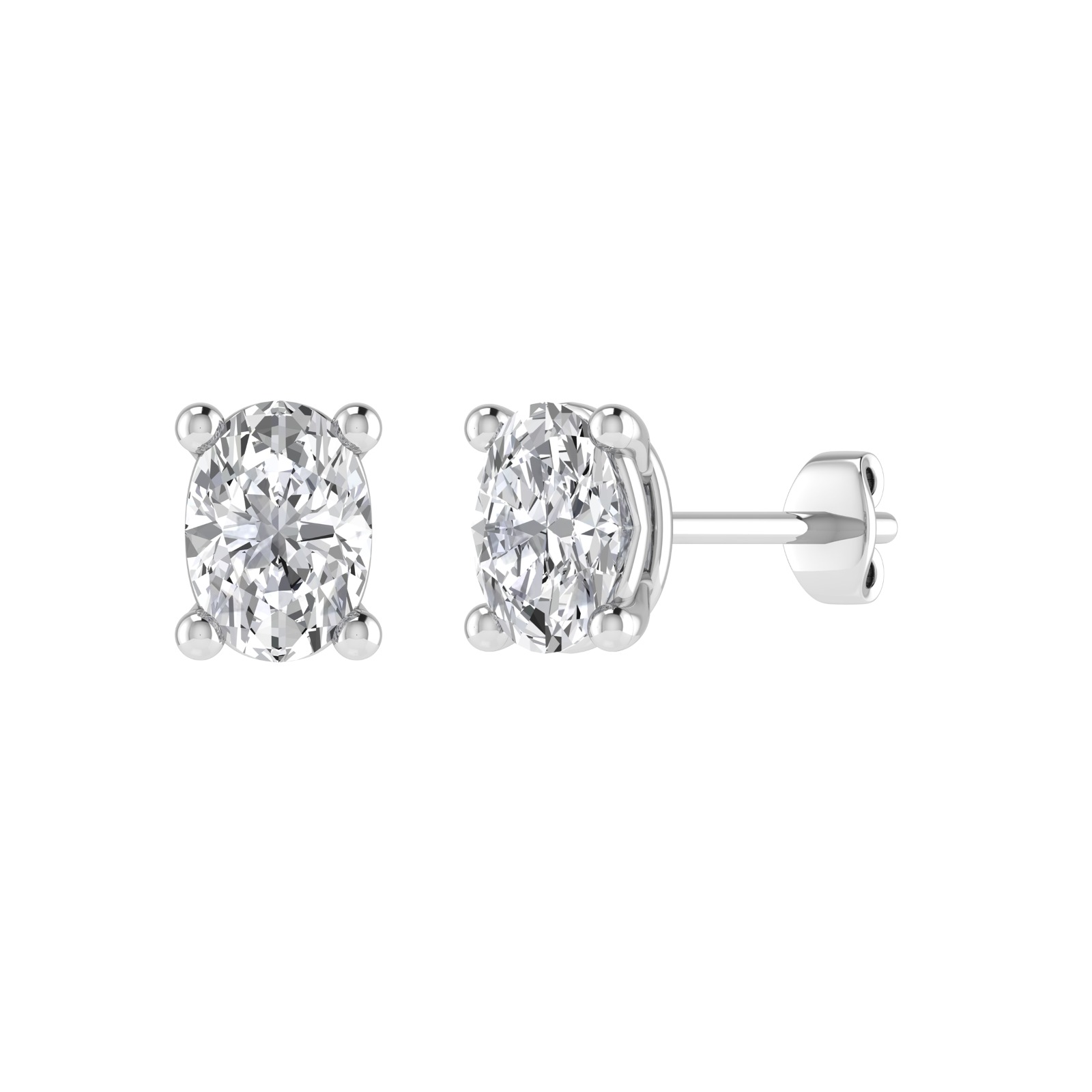
Elongated, flattering, slightly softer than round. Creates a lengthening effect that suits round and heart-shaped faces particularly well.
Princess (Square)
Clean and geometric. Returns excellent light but shows inclusions more readily — clarity becomes more important.
Cushion
Romantic, vintage-inflected, softer corners. Pairs beautifully with yellow gold. A warmer, more distinctive alternative to round.
Asscher
Square step-cut with a geometric hall-of-mirrors effect. Sophisticated and considered rather than flashy — for those who know their diamonds.
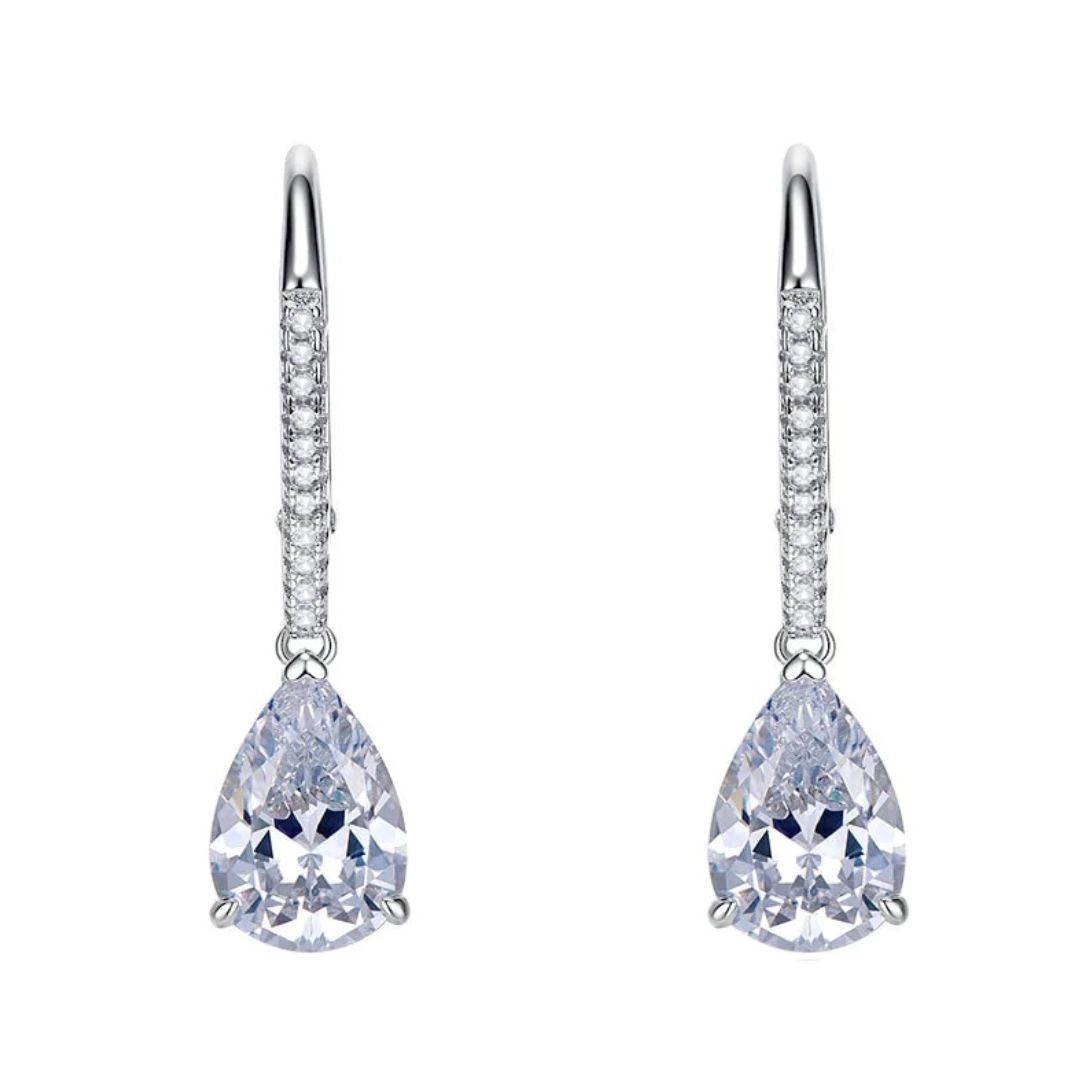
Pear & Marquise
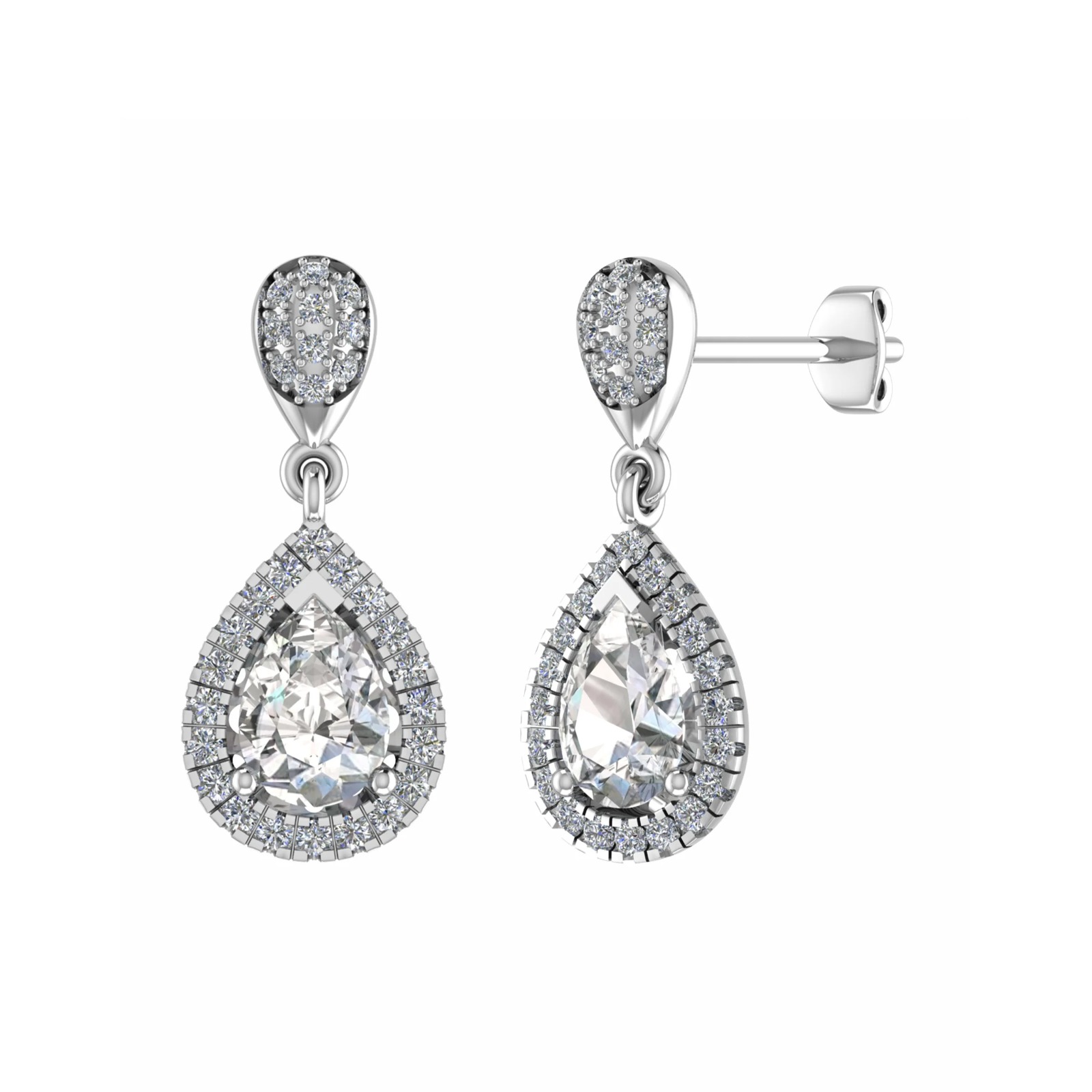
Elongated shapes that create beautiful movement in drop earrings. Visually lengthen the neck and add presence to occasion pieces.
Setting Styles and Why Security Matters in Earrings
The setting holds the diamond and determines how much of it is visible — but there's a third factor most guides overlook: security. Earrings catch on hair, fabric, and pillowcases. A setting that flexes or has weak prongs will eventually lose a stone, and that happens far more often than buyers expect.
Prong Setting
Four or six metal prongs hold the diamond in place, leaving the maximum surface area exposed for light entry. Maximises brilliance, but prongs can catch on fabric and wear down over time. Six-prong settings are more secure than four-prong — worth specifying if you're active.
Bezel Setting
A continuous rim of metal encircles the diamond completely. The most secure setting style — excellent for earrings worn daily, during exercise, or for anyone who is hard on their jewellery. The slight reduction in brilliance (less side-entry for light) is worth it for the security.
Martini Setting
A three-prong setting designed specifically for round diamonds in studs. The prongs sit low and close to the stone, creating a flatter profile against the ear. Popular for a minimal, modern look and one of the most comfortable stud settings for all-day wear.
Halo Setting
A ring of smaller diamonds surrounds the central stone, dramatically increasing visual size without increasing the centre stone's carat weight. A 0.4ct centre in a halo can face up to nearly double its actual size — excellent for buyers who want visible impact on a measured budget.
Pavé Setting
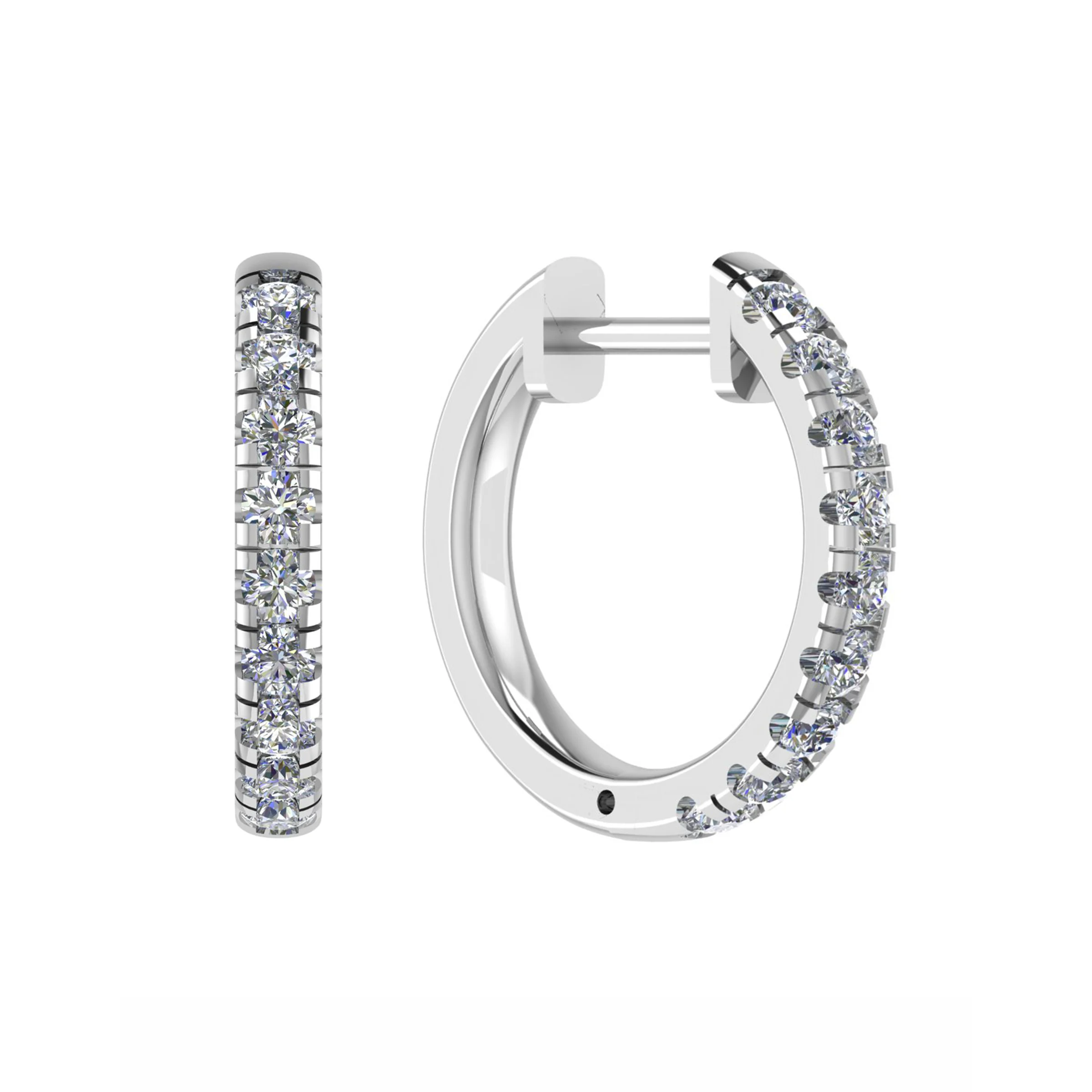
Small diamonds set closely across a surface create a continuous sparkle effect — the defining feature of pavé hoops. Pavé requires good craftsmanship; poorly set pavé stones can work loose. Always buy pavé earrings from a jeweller with a guarantee on stone setting.
Backings: The Most Overlooked Decision in Earring Buying
Nobody thinks about earring backings until they lose one. Then it becomes the most important thing. The backing is the mechanism that keeps the earring on your ear — and different types suit different wearers, earring styles, and lifestyles.
| Backing Type | How It Works | Best For | Security Level |
|---|---|---|---|
| Push Backs (Butterfly) | Clips onto the post | Everyday studs, most wearers | Good |
| Screw Backs | Threaded post, screws on | Heavier earrings, active lifestyle, 1.0ct+ | Excellent |
| Lever Backs | Hinged closure that clicks shut | Hoops and drop earrings | Very Good |
| La Pousette (Locking) | Push-and-twist to release | High-value pieces, daily wear | Outstanding |
| Omega Backs | Hinged flat back, distributes weight | Heavier drops and chandeliers | Very Good |
Building a Curated Ear Collection in 2026
The curated ear — a deliberately composed set of earrings across multiple piercings — has moved from niche fashion to mainstream. Building a considered collection in stages is how most discerning buyers now approach earring purchases. The key is thinking about it as a collection from the start, rather than buying pieces that don't relate to each other.
- The Foundation Stud. One pair of diamond studs. Round brilliant, 0.5–1.0ct total, Excellent cut, 18ct white or yellow gold. This is the piece you'll reach for every day. Everything else is built around it.
- The Second Piercing. A diamond huggie or small pavé hoop in the second hole. Smaller than your stud — typically 0.1–0.3ct total — so it frames rather than competes. The proportion matters: the lobe stud should always read as the anchor.
- The Occasion Piece. A drop earring or larger hoop for evenings, weddings, and events. Doesn't need to be worn every day — it just needs to be worth reaching for. This is where you can be bolder with style.
- The Statement or Stacker. Once stages 1–3 are in place, the collection has range. A third-piercing piece, an intentional mismatch, a coloured diamond accent — this is where individual style takes over.
The Ear-Stacking Trend: How to Layer Earrings Properly
Ear stacking — wearing multiple earrings in different piercings simultaneously — is the defining earring trend of the mid-2020s. Done well it looks deliberate and considered. Done poorly it looks busy and random. The principles that make a stack work:
Vary Scale, Not Style
Stay within one metal family but vary the size of each piece. A stud, a smaller huggie, then a delicate chain drop creates rhythm without chaos.
Anchor at the Lobe
The largest, most significant piece always goes at the lobe. Secondary piercings should decrease in scale as they move up the ear.
Use Negative Space
Leaving a piercing empty is a deliberate choice, not a failure. A busy stack with something in every piercing can look crowded. Restraint is part of the look.
Lab-Grown Diamonds: The Earring-Specific Case
Lab-grown diamonds are physically, chemically, and optically identical to mined diamonds. They are graded by IGI and GIA using the same 4Cs criteria. The distinction is origin only — grown in a controlled environment rather than extracted from the earth.
For earrings specifically, the case for lab-grown is particularly strong:
- Value. A £500 budget buys approximately 0.5ct in mined diamonds or 0.75–0.85ct in lab-grown. For earrings — where cut creates sparkle, not carat weight alone — that additional carat weight translates directly into visible impact.
- Matching. Controlled production makes consistent colour and clarity far more achievable at every price point. The matched-pair challenge that makes natural diamond earrings difficult at lower budgets largely disappears with lab-grown.
- Certification. Every Sunshine Diamonds lab-grown diamond carries an IGI or GIA certificate. You know the cut, colour, clarity, and carat of both stones. That confidence is part of the purchase.
| Factor | Lab-Grown Diamond | Natural (Mined) Diamond |
|---|---|---|
| Real diamond? | Yes — chemically identical | Yes |
| IGI / GIA certified? | Yes | Yes |
| Appearance to the eye | Indistinguishable | Indistinguishable |
| Matched-pair consistency | Excellent | More variable at lower budgets |
| Value per £ for earrings | 50–70% more carat weight | Higher price for same spec |
| Best for earrings? | Yes — especially matched pairs | Buyers prioritising rarity |
Earring Care: What Actually Damages Diamond Earrings
Most earring care guides focus on cleaning. The more common causes of damage are less obvious — and more preventable.
What Actually Causes Problems
- Chlorine and saltwater. Both attack gold alloys over time, weakening prongs and causing discolouration. Remove earrings before swimming — in pools and in the sea.
- Hairspray and perfume. Chemical residue coats diamond surfaces and dulls sparkle. Apply both before putting your earrings on, not after.
- Sleeping in earrings. Repeated stress on posts and backings during sleep bends posts and loosens backings over time. For valuable earrings, removal before sleep is good practice.
- Catching on fabric. Prong settings snag on jumpers, scarves, and towels. Repeated catching strains and eventually weakens a prong to the point of losing a stone.
- Skipping professional checks. Even well-made earrings benefit from a professional inspection every 12–18 months. A jeweller can check prong integrity and tighten settings before a stone works loose.
Cleaning at Home
Warm water with a small amount of washing-up liquid and a soft toothbrush handles most buildup. Rinse thoroughly and dry with a lint-free cloth. Avoid ultrasonic cleaners for pavé settings — vibration can loosen small stones.
Storage
Individual soft pouches or a compartmentalised jewellery box prevent earrings from scratching each other. Posts should not press against other metal surfaces during storage.
Browse Diamond Earrings
Frequently Asked Questions
Final Thoughts
Building a diamond earring collection isn't about spending as much as possible on one pair. It's about spending thoughtfully on pieces that serve specific purposes – and building from a foundation stud outward, in stages, as your style and collection mature.
The principles that make that possible: prioritise cut quality over carat weight, ensure your stones are genuinely matched, choose backings that suit your lifestyle, and buy with independent certification so you know exactly what you own on both sides.
Lab-grown diamonds make more of this accessible at every budget. They're not a compromise — they're the pragmatic choice for earrings, where matching and value per pair matter more than origin.
Browse the full diamond earrings collection at Sunshine Diamonds, explore diamond studs, hoops, or drops, or book a consultation with our Hatton Garden team for personalised guidance.