Eternity Rings by Anniversary Year: The Complete Guide
.jpg)
Quick Summary
- Eternity rings mark anniversaries, milestones & life events — not just decades
- Full eternity rings cannot be resized — get the size exactly right before ordering
- Half eternity rings offer the same sparkle with more flexibility and comfort
- Lab-grown diamonds give 50–70% more carat weight for the same budget
- Every Sunshine Diamonds eternity ring is UK hallmarked & IGI/GIA certified
- From £145 for lab-grown half eternity to £3,000+ for full diamond bands
- Eternity rings stack beautifully between an engagement ring and wedding band
- Yellow gold is the 2026 trend; platinum is the most durable for daily wear
Content Quicklinks
- - What Is an Eternity Ring — and What Does It Mean?
- - The Complete Milestone Gift Guide: Which Anniversary Gets What
- - Full Eternity vs Half Eternity: Which Should You Choose?
- - Eternity Ring Styles: Setting Types Explained
- - Why Lab-Grown Diamonds Are the Smart Anniversary Choice
- - Choosing Your Metal for an Eternity Ring
- - How to Wear & Stack an Eternity Ring
- - Budget Guide: What to Expect at Every Price Point
- - Step-by-Step: How to Choose the Right Eternity Ring
- - 6 Common Eternity Ring Mistakes to Avoid
- - Comparison Tables
- - FAQs
- - Final Thoughts
There is something quietly powerful about an eternity ring. Unlike an engagement ring — which is about a promise of the future — an eternity ring looks back. It says: we made it here, and this is what it looks like. Every stone in the band represents something: years lived together, a child arrived, a chapter survived, a love that has grown rather than faded.
That is why eternity rings are one of the few gifts that genuinely land. They are not bought for a birthday because it is someone's birthday — they are given because something real has been earned. This guide covers every milestone, every style, and every decision you need to make to choose the right eternity ring with complete confidence.
What Is an Eternity Ring — and What Does It Mean?
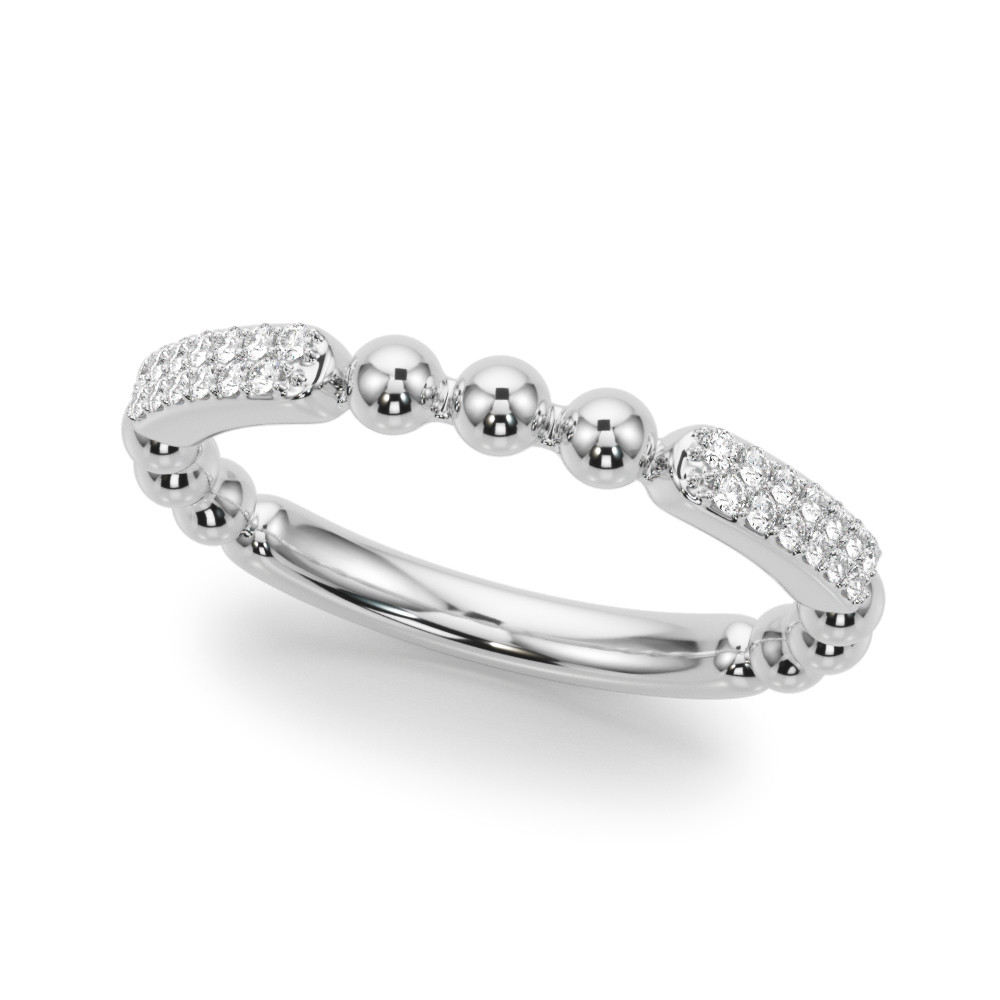
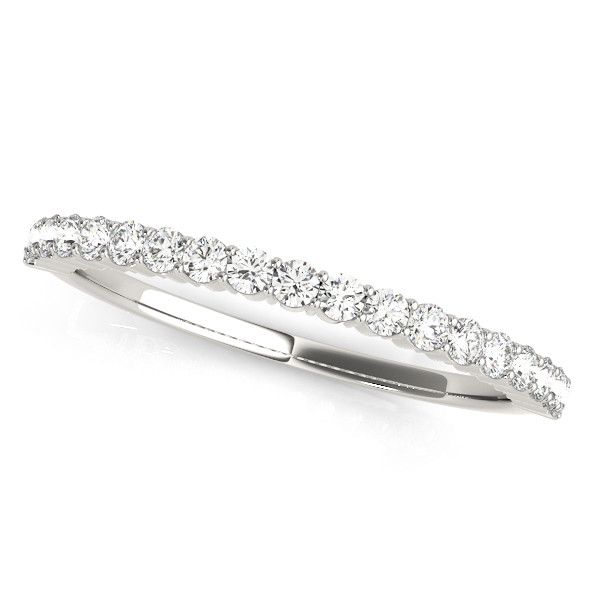
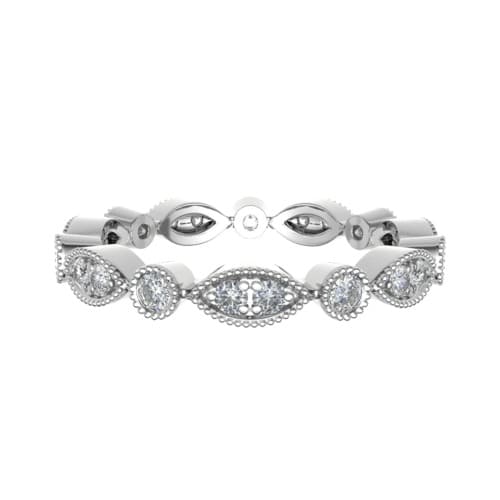
An eternity ring — sometimes called an infinity ring — is a band set with a continuous line of identically cut gemstones, typically diamonds, running either halfway or all the way around the band. The unbroken circle of stones is the point: it represents love that has no beginning and no end, a promise that holds through every season of a shared life.
The modern eternity ring was popularised in the 1960s but the symbolism is ancient — rings given as tokens of undying love appear across cultures and centuries. What makes the eternity ring distinct from a wedding band or a diamond ring is precisely that continuous, unbroken line of matched stones: it is designed to look infinite, and when it is properly made, it genuinely does.
Traditionally, eternity rings are given on significant wedding anniversaries — most commonly the 10th, 25th or 30th. But in 2026, the occasions have expanded considerably. Eternity rings are now regularly given to mark the birth of a first child, a major career milestone, a significant birthday, a health battle survived, or simply because the moment feels right. The occasion does not need to be traditional to be meaningful.
The Complete Milestone Gift Guide: Which Anniversary Gets What
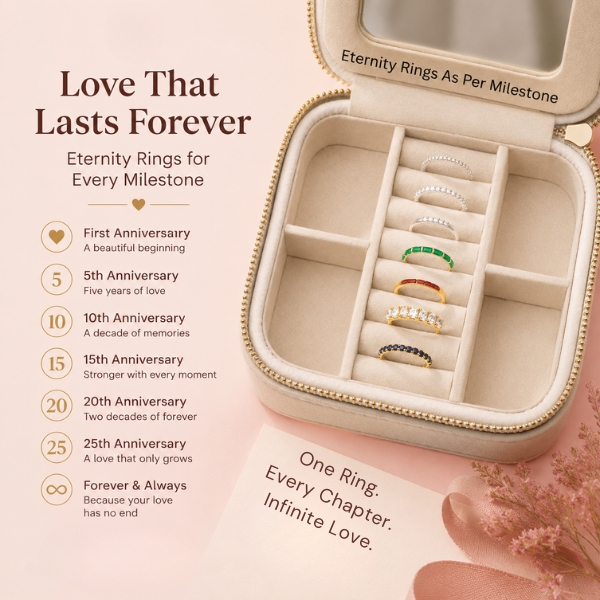
Traditional anniversary gift materials give a useful framework — but they are a guide, not a rule. Here is how to map each milestone to an eternity ring choice that feels appropriate in both sentiment and scale.
The First Year
A slim lab-grown diamond half eternity ring in 18ct yellow gold. Understated, meaningful, and the beginning of a stack that can grow with each milestone. From around £145 for lab-grown.
Five Years
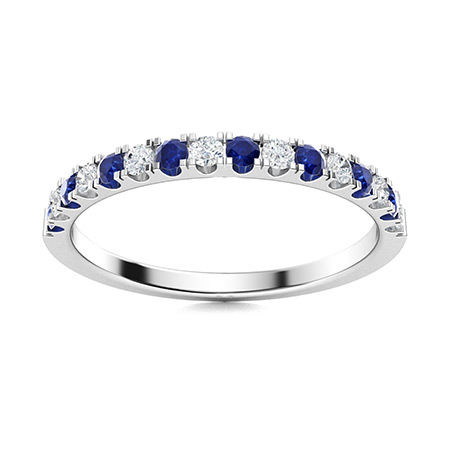
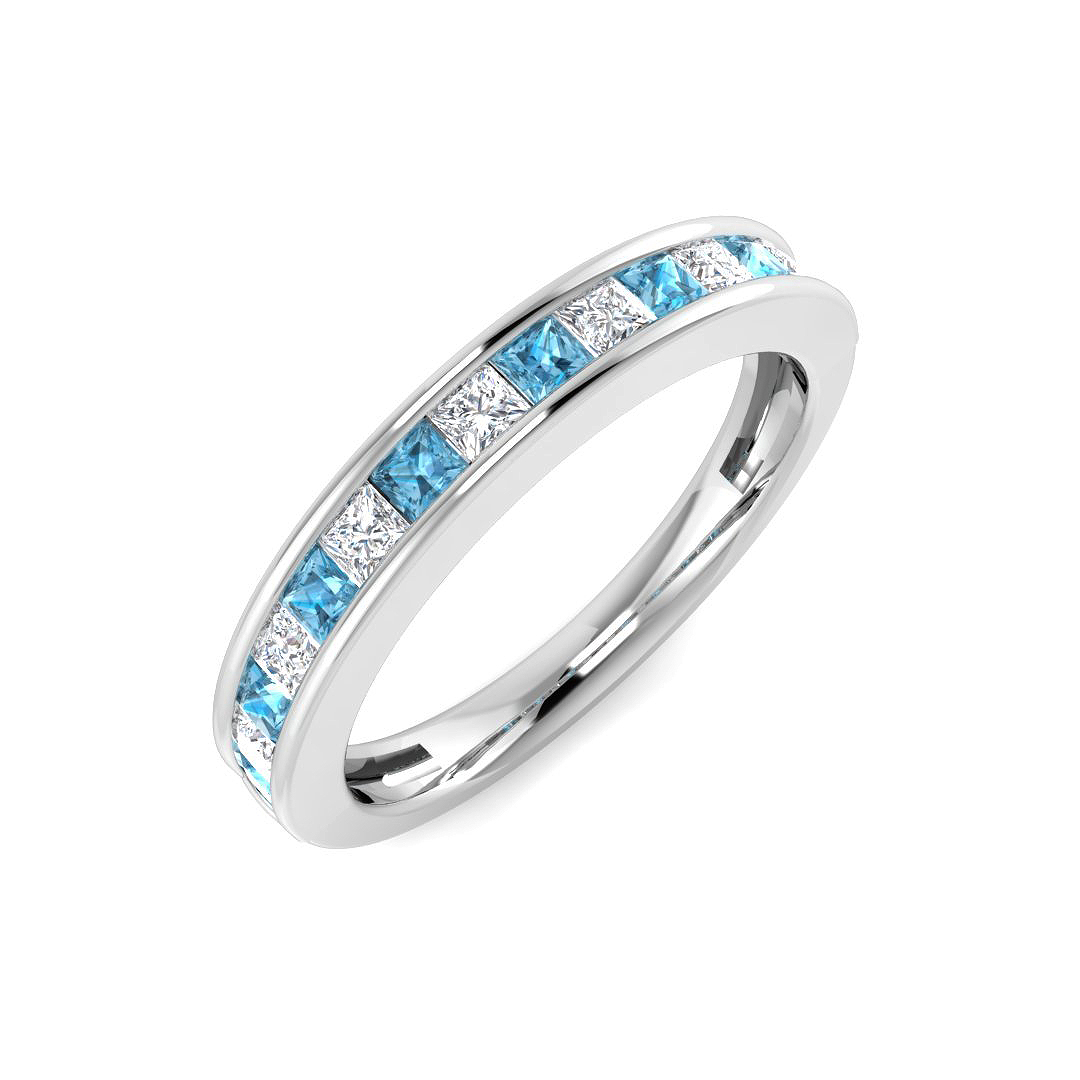
A sapphire and diamond half eternity ring — a coloured gemstone eternity ring is a beautiful departure from the all-diamond norm. Rich blue sapphire in 18ct gold is a classic combination.
Ten Years
This is the traditional eternity ring anniversary. Step up to a wider pavé or channel-set diamond half eternity, or make the occasion with a full eternity ring in platinum. A proper statement.
Fifteen Years
A beautiful moment to upgrade the original eternity ring — move from a half to a full eternity, or from a smaller stone to a more significant carat weight. Let the band reflect how far you've come.
Twenty Years
Platinum is the traditional 20th material — and a platinum full eternity ring set with lab-grown diamonds is one of the most luxurious options in fine jewellery. Built for a lifetime of daily wear.
Silver Jubilee
A significant milestone deserves a significant ring. A wider full diamond eternity band with higher total carat weight — or a bespoke design — marks twenty-five years with the weight they deserve.
Thirty Years
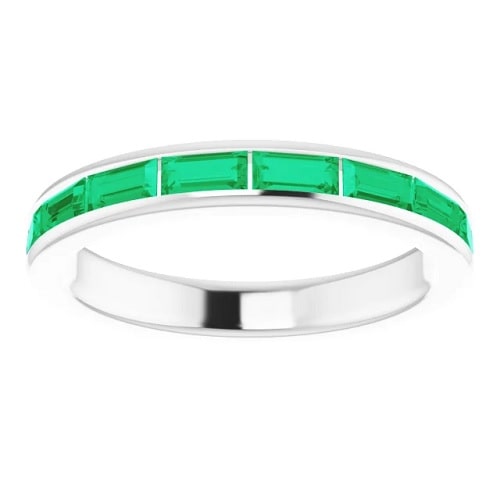
An emerald-cut or princess-cut diamond eternity ring – something with more architectural presence than a round brilliant band – marks thirty years with genuine distinction. The character of the cut matches the depth of the occasion.
Ruby Anniversary
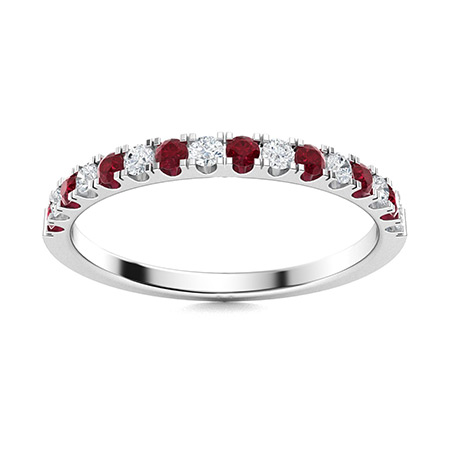
A ruby and diamond eternity ring. Deep red rubies alternating with lab-grown diamonds in 18ct yellow gold is one of the most striking combinations in fine jewellery — and perfectly aligned with the traditional gift material.
Golden Jubilee
The grandest milestone. A full diamond eternity ring in 18ct yellow gold — rich, warm, and entirely fitting for fifty years. A piece to be handed down as a family heirloom.
Birth of a Child, Recovery, Achievement
A slim half eternity ring in the birthstone of a new child, or a lab-grown diamond band to mark a health milestone or career achievement. The occasion sets the sentiment — the ring makes it permanent.
Full Eternity vs Half Eternity: Which Should You Choose?
This is the most important practical decision in buying an eternity ring — and it is the one most buyers do not fully think through before purchasing. The difference is not just visual; it has real implications for comfort, wearability, and whether the ring can ever be adjusted.
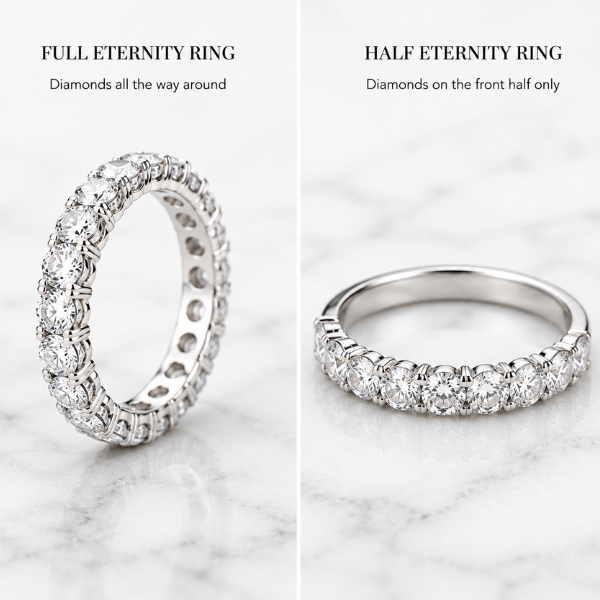
Full Eternity Ring
Diamonds run continuously all the way around the band. Maximum sparkle from every angle. The most dramatic and statement-making option. Cannot be resized — size must be exactly right at purchase. Best for significant milestone anniversaries.
✦ Half Eternity Ring
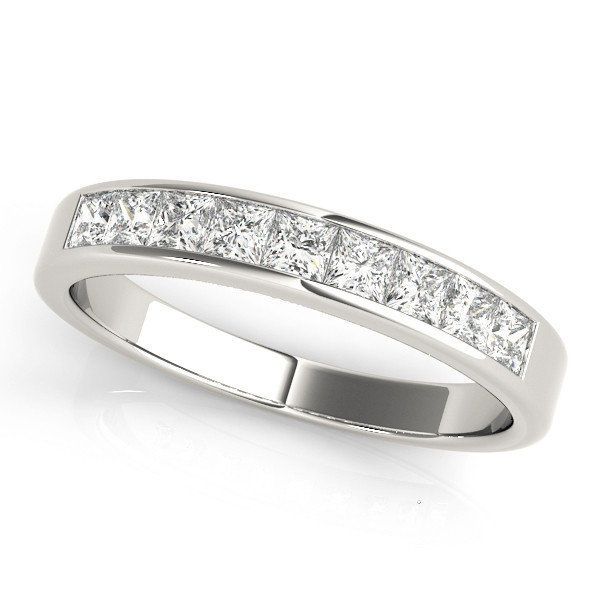
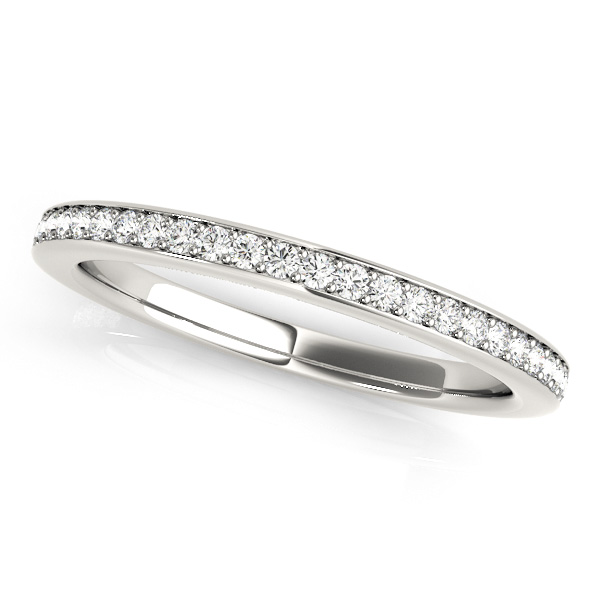
Diamonds set across the front half of the band only. The same visible sparkle when worn, with a plain metal back that allows for resizing. More comfortable for daily wear. Can be engraved on the plain inner section. The smarter everyday choice.
⅔ Three-Quarter Eternity
A middle ground — diamonds covering three-quarters of the band. More sparkle than a half eternity when the ring rotates, with slightly more flexibility than a full. Relatively rare but worth asking about for a bespoke order.
Browse full eternity diamond rings and half eternity rings at Sunshine Diamonds to compare styles side by side.
Eternity Ring Styles: Setting Types Explained
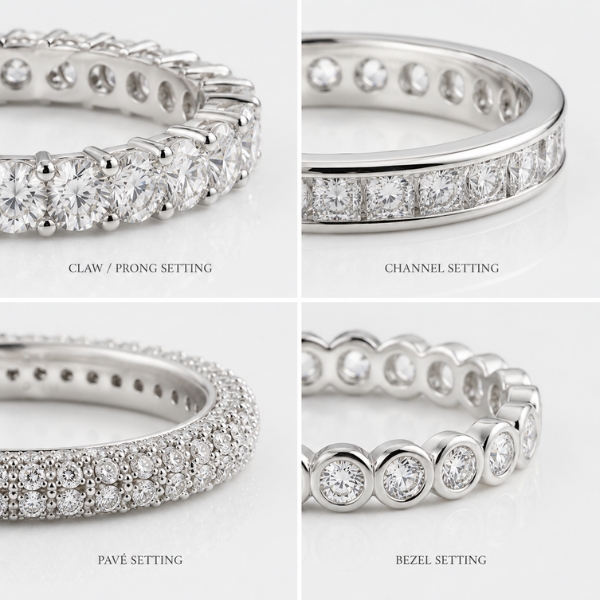
The setting is what holds each diamond in place and determines the overall character of the ring — how much light enters the stones, how secure they are in daily wear, and how the finished band looks from the side. Here are the four main settings you will encounter:
Claw / Prong Setting
Each diamond is held by small metal claws (typically four or six), leaving the maximum amount of the stone exposed to light. This produces the most brilliant, sparkly result — light enters from multiple angles and the stones appear larger than they are. The trade-off is that claws can catch on fabrics and may need checking periodically to ensure they remain secure. Best for: maximum brilliance, occasional-to-daily wear.
Channel Setting
Diamonds are set between two parallel rails of metal with no individual prongs. The stones sit recessed and flush with the band surface — extremely secure, completely snag-free, and very comfortable for daily wear. Slightly less brilliant than claw setting because less light reaches the sides of the stones. Best for: active daily wear, practical buyers, clean modern aesthetic.
Pavé / Micro-Claw Setting
Very small diamonds are set extremely closely together with tiny shared prongs, creating a surface that appears almost entirely covered in stone — a paved effect. Produces exceptional sparkle and a luxurious appearance. Because the stones are small and close, the metal visible between them is minimal. Best for: maximum surface coverage, glamorous aesthetic, stacking alongside other bands.
Bezel Setting
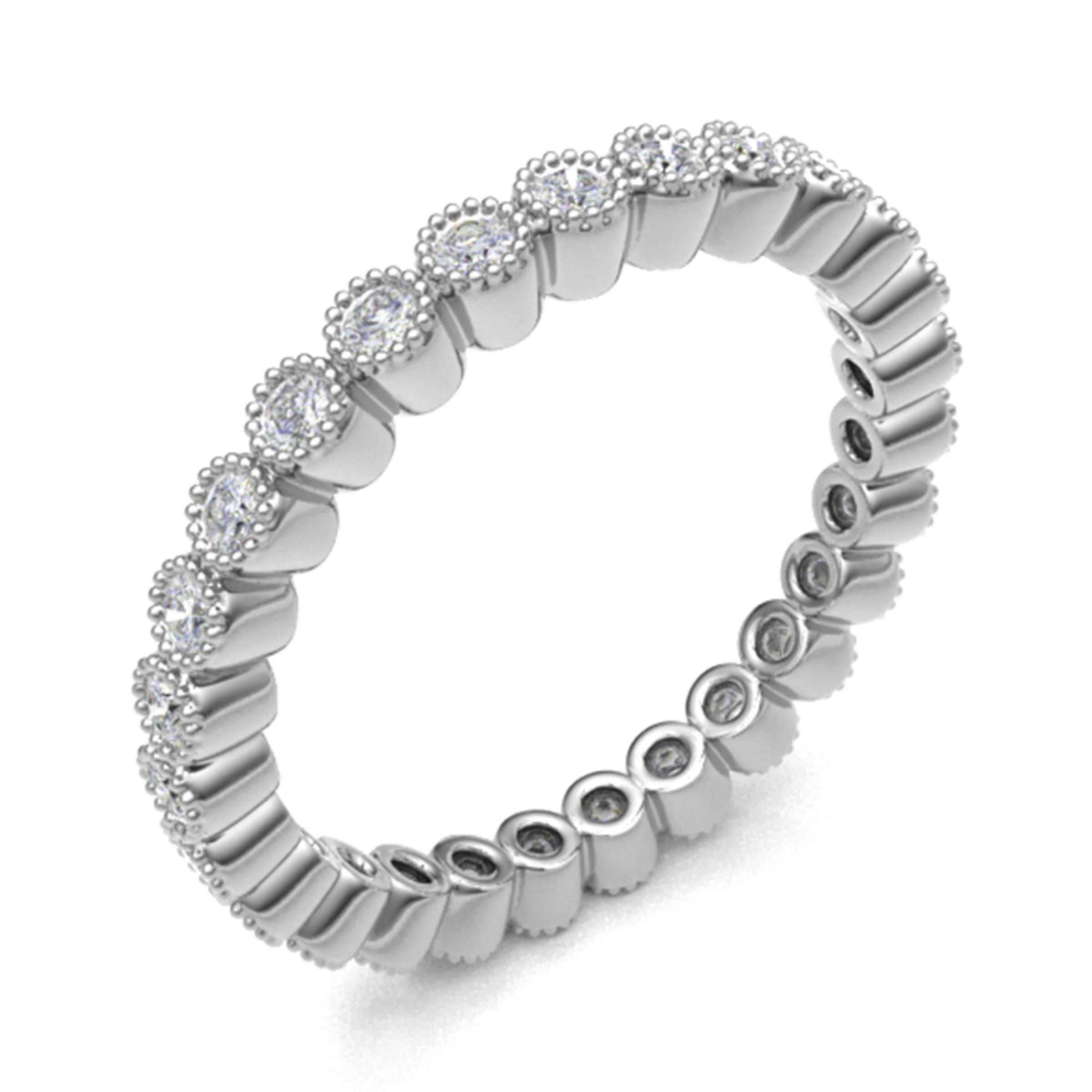
Each diamond is individually surrounded by a thin rim of metal, completely enclosing the girdle of the stone. Extremely secure — the most protective setting available. Produces a sleek, contemporary look that suits modern minimalist styles. Slightly less brilliant than prong settings. Best for: active lifestyles, contemporary taste, maximum stone security.
Browse Eternity Rings by Style
Why Lab-Grown Diamonds Are the Smart Anniversary Choice
For an eternity ring specifically — a piece with multiple matched stones running across or around a band — lab-grown diamonds offer a more significant advantage than almost any other jewellery type. Here is why.
- Consistency across the full band. An eternity ring demands that every stone matches — same colour grade, same clarity, same cut quality, same size. This consistency is significantly easier and less expensive to achieve with lab-grown diamonds, which are grown in controlled conditions. A mined diamond band at the same price point may struggle to achieve the same visual uniformity across 15–25 individual stones.
- 50–70% more carat weight per pound. That same spend that buys a 0.50ct total weight mined diamond half eternity typically buys a 0.75–1.00ct lab-grown equivalent. On a ring with many stones, this means either a significantly larger total carat weight, a better colour and clarity grade, or both.
- Chemically and optically identical. A lab-grown diamond is not a diamond simulant. It is chemically, physically and optically identical to a mined diamond — the same carbon crystal structure, the same hardness (10 on the Mohs scale), the same refractive index. The sparkle is indistinguishable because it is the same material.
- IGI and GIA certified. Every Sunshine Diamonds lab-grown diamond is independently graded by IGI or GIA — the same laboratories that certify mined diamonds. You receive a grading certificate confirming cut, colour, clarity and carat weight. You know exactly what you own.
- Ethical provenance. Lab-grown diamonds have no association with conflict mining and offer full supply chain transparency. For an anniversary gift — a symbol of the values a couple shares — this matters to more buyers than ever in 2026.
- UK hallmarked settings. Every Sunshine Diamonds eternity ring is crafted in hallmarked 18ct gold or platinum, independently verified by a UK Assay Office. The hallmark is your legal guarantee of metal purity — not just a claim on a website.
Choosing Your Metal for an Eternity Ring
The metal you choose for an eternity ring sets the entire character of the piece — and it also needs to sit comfortably alongside whatever the recipient already wears on that finger. Here is an honest guide to each option:
18ct Yellow Gold
The standout trend for 2026 — warm, rich, and genuinely timeless. Yellow gold complements colourless lab-grown diamonds beautifully and photographs exceptionally well. At 18ct (750 parts per thousand), it is the correct standard for fine jewellery: significantly harder wearing than 9ct gold and far more valuable. If the existing engagement or wedding ring is yellow gold, matching the metal is the right call.
18ct White Gold
Cool, contemporary and the classic setting for diamond jewellery. White gold makes colourless lab-grown diamonds appear even brighter by contrast, and gives the ring a crisp, modern edge. Sunshine Diamonds' 18ct white gold is nickel-free, making it a comfortable option for those with sensitive skin. Note that white gold will need rhodium re-plating every few years to maintain its bright finish.
18ct Rose Gold
Warm, romantic, and flattering across all skin tones. Rose gold has been a consistently popular choice for eternity rings, particularly when given as a non-traditional anniversary gift. Pairs especially well with champagne-toned or warmer-graded lab-grown diamonds. A beautiful option when the recipient's existing rings are already in rose gold.
Platinum
The premium choice for a significant milestone gift. Platinum is naturally white (no plating required), hypoallergenic, and denser than gold — it feels substantial on the finger in a way that gold does not. It develops a patina over time that many wearers come to love. For a 20th, 25th or 50th anniversary eternity ring — a piece that is meant to be worn every day for the rest of a life — platinum is the most practical and the most lasting fine metal available.
How to Wear & Stack an Eternity Ring
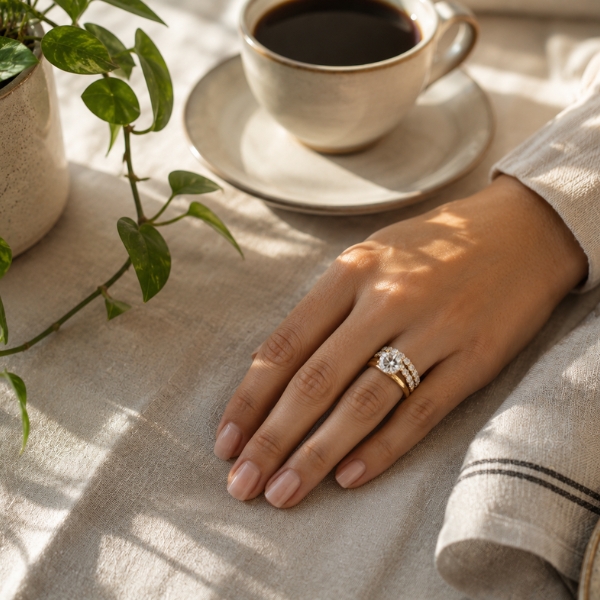
An eternity ring is most commonly worn on the left ring finger alongside the engagement ring and wedding band — but where exactly in the stack, and how the three rings sit together, is worth thinking about carefully.
Traditional Order (Left to Right on the Finger)
- Closest to the heart: Wedding band (placed first on the wedding day)
- Middle position: Eternity ring — sits between the wedding band and engagement ring
- Outermost: Engagement ring
This is the traditional UK order and the one most jewellers recommend — the eternity ring sits in the most protected central position, flanked by the two rings it completes.
Contemporary Alternatives
- Eternity ring on the right hand. A growing number of women in 2026 wear their eternity ring on the right hand as a standalone piece – particularly when the left hand is already crowded. This also works well as a birthday or achievement gift that is not anniversary-related.
- Eternity ring outermost. Wearing the eternity ring on the outside of the engagement ring gives it maximum visibility — a bold, contemporary choice that works when the eternity ring is the statement piece.
Budget Guide: What to Expect at Every Price Point
Eternity rings span a wide range — from slim, elegant lab-grown diamond bands that start under £200 to significant platinum full eternity rings in the thousands. Here is what your budget actually buys:
| Budget | What to Expect | Best Style Choice | Metal Options |
|---|---|---|---|
| Under £300 | Slim lab-grown diamond half eternity, 0.10–0.30ct total, round brilliant cut | Half eternity, pavé or prong set | 9ct or 18ct gold |
| £300–£600 | Lab-grown half eternity 0.50ct+, better colour (DE–FG), VS–SI clarity | Channel or claw-set half eternity | 18ct gold |
| £600–£1,200 | Lab-grown full eternity 0.75–1.50ct, or natural diamond half eternity with certified stones | Full eternity or premium half eternity | 18ct gold or platinum |
| £1,200–£2,500 | Natural or lab-grown full eternity 1.50–3.00ct, emerald cut or premium round, platinum | Statement full eternity ring | Platinum or 18ct gold |
| £2,500+ | Significant carat weight full eternity, bespoke setting, high colour/clarity grades, premium platinum | Milestone 25th/50th anniversary ring | Platinum |
Step-by-Step: How to Choose the Right Eternity Ring
- Identify the occasion and the scale it deserves. A 1st anniversary and a 25th anniversary call for very different rings. Let the milestone guide the statement level — slim and elegant for early anniversaries, more significant for major ones.
- Decide: full or half eternity? If you are confident in the sizing and want maximum impact, a full eternity ring is the statement choice. If there is any doubt about the size — or if the recipient leads an active life — choose a half eternity that can be resized if needed.
- Choose your setting style. Claw/prong for maximum brilliance. Channel for practical daily security. Pavé for luxurious surface coverage. Bezel for the most modern and protective option. Match the style to how the recipient actually lives.
- Pick the metal. Match the metal to the recipient's existing rings wherever possible. Yellow gold for warmth and trend; platinum for durability and a milestone gift; white gold for a contemporary diamond setting.
- Choose lab-grown or natural diamonds. For most buyers in 2026, lab-grown diamonds deliver more carat weight, better colour/clarity matching, and full certification for significantly less money. For a ring with many matched stones, the advantage is particularly compelling.
- Get the sizing right — especially for full eternity. Have the recipient's ring size professionally measured, in the afternoon, on the finger the ring will be worn on. For a full eternity ring, treat this measurement as final — it cannot be adjusted later.
- Consider engraving for a half eternity. The plain inner section of a half eternity ring can be engraved with a date, initials, or a short phrase — something only the wearer sees. Add 1–2 weeks' lead time for engraving.
- Order with time to spare. Allow 3–4 weeks for standard orders, and 6–8 weeks for bespoke sizing, engraving, or coloured gemstone variations. Contact the Sunshine Diamonds team for a consultation if you are unsure which style is right.
6 Common Eternity Ring Mistakes — and How to Avoid Them
- Choosing a full eternity ring without confirming the size precisely. Full eternity rings cannot be resized. If the size is wrong, the ring cannot be fixed — it must be replaced. Always get professionally measured for a full eternity, and always in person.
- Buying without trying the ring alongside the existing stack. An eternity ring that looks beautiful in isolation can look completely wrong between an engagement ring and wedding band. Always try the three rings together before committing.
- Choosing width without considering the existing rings. A wide eternity ring can dwarf a slender engagement ring; a slim eternity ring can disappear between two substantial bands. Width balance matters as much as style.
- Dismissing lab-grown diamonds on principle. They are chemically identical to mined diamonds, graded by the same labs, and offer significantly more per pound. For an eternity ring requiring many matched stones, dismissing them means paying considerably more for the same result.
- Getting sized in cold weather or in the morning. Fingers are at their smallest in cold temperatures and early in the day. For a ring you plan to wear in all seasons, get sized in the afternoon in a warm room — particularly important for a full eternity ring that cannot be adjusted.
- Leaving it too late before a milestone date. Eternity rings — particularly full eternity, coloured gemstone, or engraved styles — need lead time. Allow 4–6 weeks minimum; 8 weeks if bespoke. Do not order a significant anniversary gift in the week before the date.
Comparison Tables
Full Eternity vs Half Eternity — Complete Comparison
| Feature | Full Eternity Ring | Half Eternity Ring |
|---|---|---|
| Diamond coverage | All the way around the band | Across the front half only |
| Visual impact | Maximum — sparkle from all angles | Same when worn — unseen from behind |
| Resizable | No — size must be exact at purchase | Yes — can be adjusted 1–2 sizes |
| Engravable | No — no plain metal section | Yes — plain inner band can be engraved |
| Daily comfort | Can rotate on the finger | More stable, comfortable daily wear |
| Price point | Higher (more stones required) | Lower starting price |
| Best occasion | 10th, 25th, 50th anniversaries | 1st–10th, birth of child, daily wear |
| Risk level when buying as a gift | Higher — size must be right | Lower — can resize if needed |
Setting Style Comparison
| Setting | Sparkle Level | Daily Security | Snag Risk | Best For |
|---|---|---|---|---|
| Claw / Prong | ⭐⭐⭐⭐⭐ | Good (check prongs annually) | Low–medium | Maximum brilliance |
| Channel | ⭐⭐⭐⭐ | Excellent | None | Active daily wear |
| Pavé / Micro-claw | ⭐⭐⭐⭐⭐ | Good | Low | Glamorous surface sparkle |
| Bezel | ⭐⭐⭐ | Outstanding | None | Modern, active lifestyle |
Lab-Grown vs Natural Diamonds in Eternity Rings
| Factor | Lab-Grown Diamond | Natural (Mined) Diamond |
|---|---|---|
| Real diamond? | Yes — chemically & optically identical | Yes |
| IGI / GIA certified? | Yes | Yes |
| Stone matching across band | Excellent — grown in controlled conditions | More difficult at lower budgets |
| Value for money | 50–70% more carat weight per £ | Higher price for same specification |
| Ethical provenance | Fully traceable, conflict-free | Varies by supply chain |
| Appearance to the eye | Indistinguishable from mined | Indistinguishable from lab-grown |
| Advantage for eternity rings | Particularly strong — matching critical | Higher cost for equivalent matching |
Frequently Asked Questions
Final Thoughts
An eternity ring is not like any other piece of jewellery. It is not bought because it is someone's birthday, or because a sale was on, or because it seemed like a nice thing to do. It is given because something real has been earned — years lived together, a love that has grown, a milestone that deserves to be permanently marked.
Get the decision right and it becomes one of the most cherished pieces a person owns. That means matching the scale of the ring to the scale of the occasion, choosing a style that suits how the recipient actually lives, getting the sizing right (especially for a full eternity), and giving yourself enough lead time to have the piece made properly.
Lab-grown diamonds make the choice easier than it has ever been — more carat weight, better consistency across the band, full certification, and complete ethical transparency for significantly less than mined equivalents. There is very rarely a reason to choose otherwise for a piece you are buying to mark a moment that matters.
Browse the full eternity diamond ring collection, explore full eternity rings, or compare half eternity styles at Sunshine Diamonds. Ready to choose? Book a consultation with our team — we will help you find the right ring for the milestone it is marking.