Diamond Pendants vs Tennis Necklace
Quick Summary
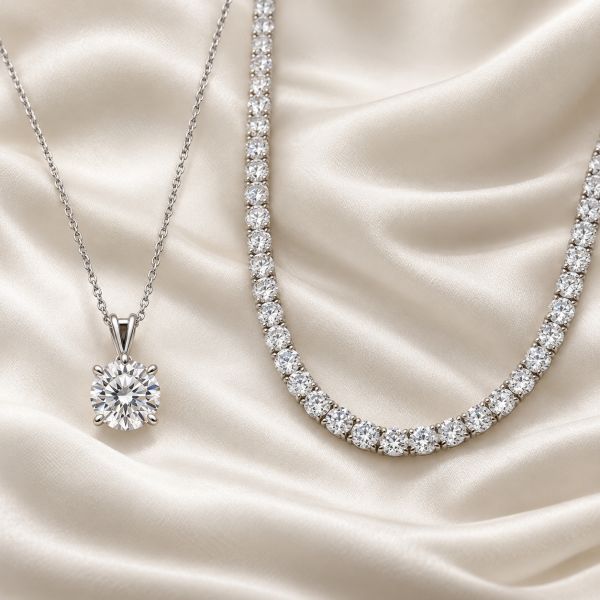
- A diamond pendant concentrates sparkle into one central design suspended from a chain
- A tennis necklace creates continuous or near-continuous diamond sparkle around the neckline
- Diamond pendants are generally easier to style for everyday wear and necklace layering
- Tennis necklaces usually create greater visual impact because diamonds extend across more of the neckline
- A solitaire diamond pendant is ideal for buyers wanting a classic and understated diamond necklace
- Tennis necklaces are available in different carat weights, lengths, precious metals and diamond settings
- Both diamond pendants and tennis necklaces can feature natural or lab-grown diamonds
- The right choice depends on personal style, occasion, diamond coverage, budget and how frequently the necklace will be worn
Content Quicklinks
- - What Is a Diamond Pendant?
- - What Is a Tennis Necklace?
- - Diamond Pendant vs Tennis Necklace
- - Which Has More Sparkle?
- - Which Is Better for Everyday Wear?
- - Which Is Better for a Gift?
- - Solitaire Diamond Pendants
- - Tennis Necklace Settings
- - Which Is Better for Layering?
- - Choosing by Neckline
- - Natural vs Lab-Grown Diamonds
- - Carat Weight Explained
- - Choosing Necklace Length
- - Choosing the Precious Metal
- - Necklace Care
- - Frequently Asked Questions
- - Final Thoughts
Choosing a diamond necklace sounds simple until you begin comparing the different styles available.
Two options can look particularly appealing for very different reasons: the diamond pendant and the tennis necklace.
A diamond pendant usually focuses attention on one central design, which may feature a solitaire diamond, halo, cluster, heart, cross or another decorative element.
A tennis necklace takes a different approach. Instead of concentrating the diamonds in one area, it creates a continuous or near-continuous line of diamonds around the neckline.
Both styles can provide beautiful diamond sparkle, but they create noticeably different looks.
If you are deciding between a diamond pendant and tennis necklace, consider when you intend to wear the piece, whether you prefer subtle or statement jewellery, the necklace length, diamond coverage, precious metal and your overall budget.
What Is a Diamond Pendant?
A diamond pendant is a decorative diamond-set element designed to hang from a chain.
The pendant becomes the main focal point, while the chain positions the jewellery around the neckline.
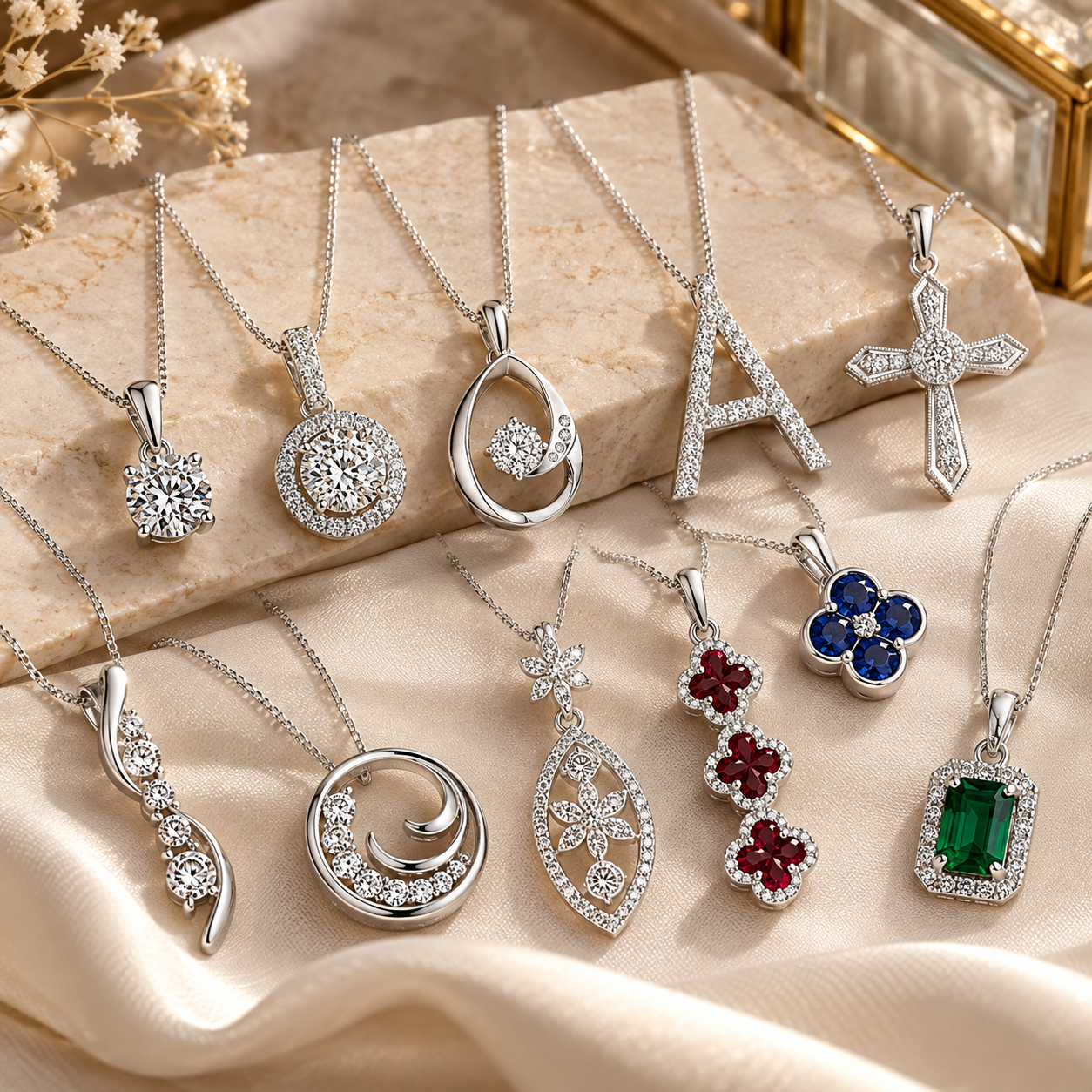
Diamond pendants are available in many designs, including:
- Solitaire diamond pendants
- Halo diamond pendants
- Cluster pendants
- Heart diamond pendants
- Cross pendants
- Initial pendants
- Journey-style pendants
- Drop pendants
- Gemstone and diamond pendants
A solitaire diamond pendant is one of the simplest examples. One diamond forms the main feature, allowing its shape and brilliance to remain the focus.
More decorative designs may combine several diamonds, halos or coloured gemstones.
You can explore different styles in the Sunshine Diamonds necklace and pendant collection.
What Is a Tennis Necklace?
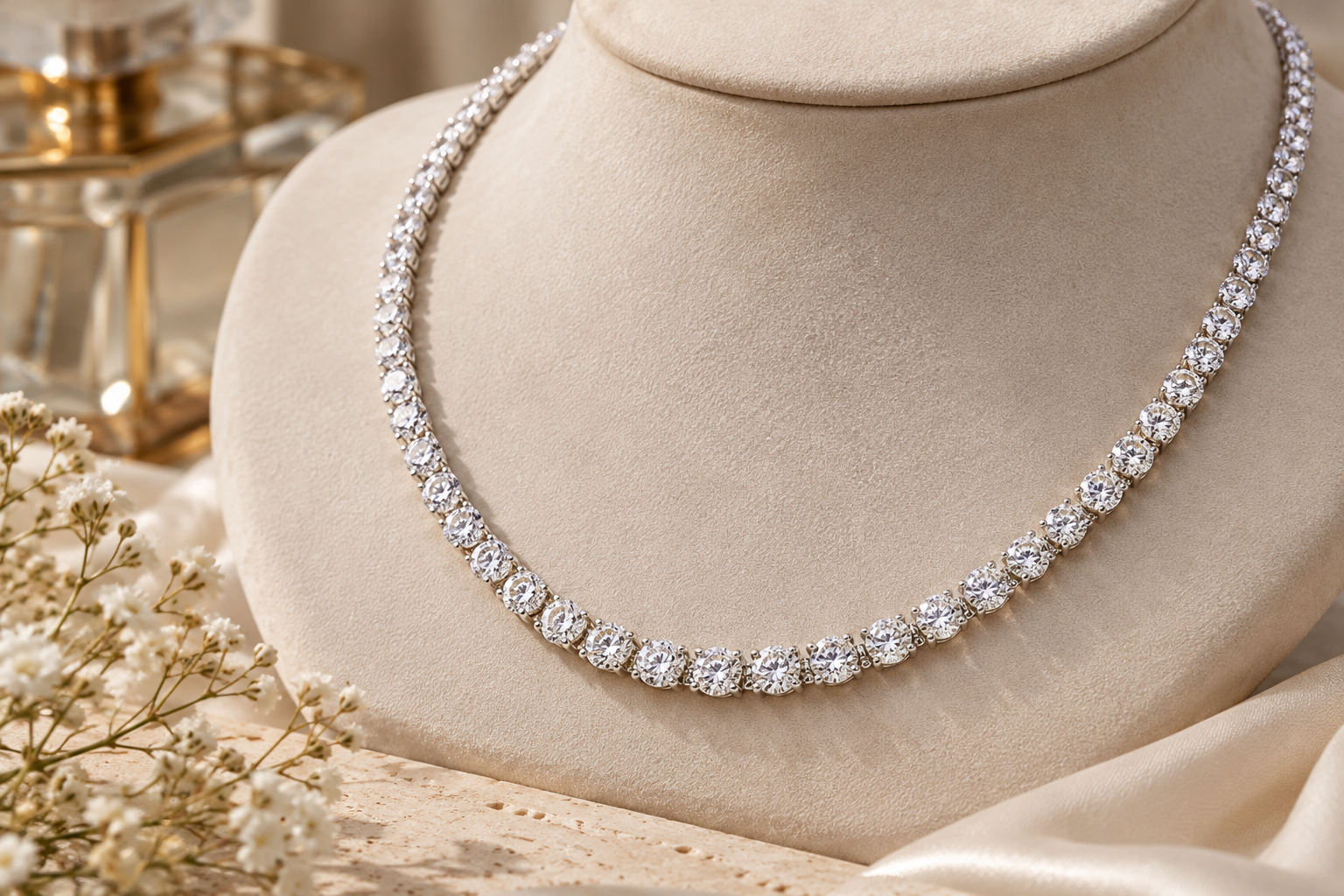
A tennis necklace features a line of individually set diamonds or gemstones arranged around all or a substantial part of the necklace.
The style takes its design principle from the classic tennis bracelet, extending the continuous line of stones around the neckline.
A diamond tennis necklace may feature:
- Round brilliant diamonds
- Graduated diamond sizes
- Uniform diamond sizes
- Prong settings
- Bezel settings
- Shared-prong designs
- Different total carat weights
- Natural diamonds
- Lab-grown diamonds
Rather than creating one central focal point, a tennis necklace distributes sparkle across a much larger section of the neckline.
Diamond Pendant vs Tennis Necklace: Quick Comparison
| Feature | Diamond Pendant | Tennis Necklace |
|---|---|---|
| Diamond Placement | Concentrated in one main pendant | Diamonds extend around the neckline |
| Overall Look | Understated to statement | More continuous and noticeable |
| Everyday Versatility | Excellent | Depends on carat weight and design |
| Diamond Focus | One main diamond or design | Multiple diamonds |
| Layering | Particularly easy | Possible but needs more consideration |
| Formal Occasions | Suitable | Particularly effective |
| Statement Factor | Low to high depending on design | Usually medium to high |
| Budget Flexibility | Very broad | Often influenced strongly by total carat weight |
Which Has More Sparkle?
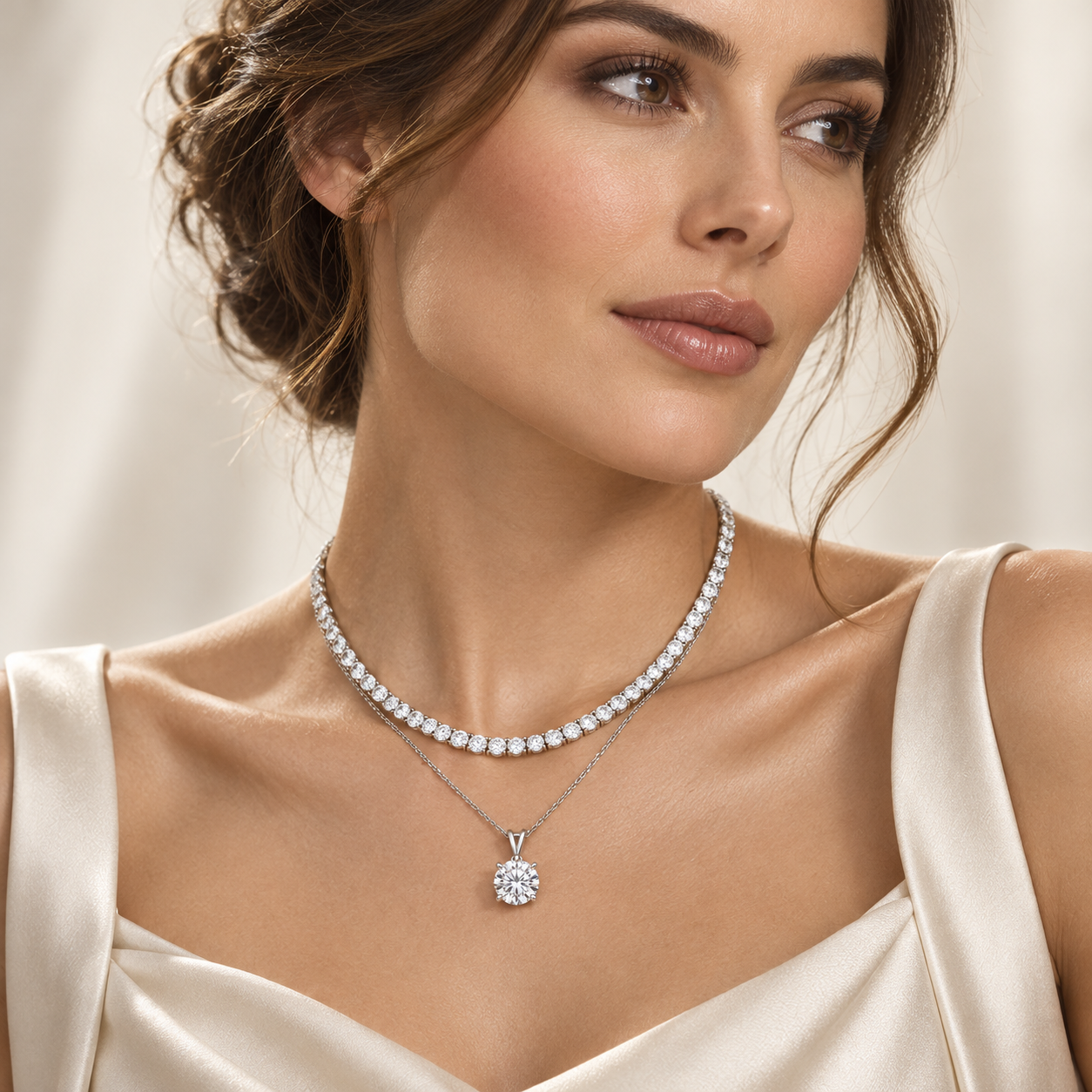
If maximum visible diamond coverage is your priority, the tennis necklace will usually create the stronger overall effect.
This is because diamonds extend around considerably more of the neckline instead of being concentrated in one central position.
As the wearer moves, different sections of the necklace can interact with the light.
A diamond pendant creates a different kind of sparkle.
Rather than surrounding the neckline, it directs attention towards one particular point. A well-proportioned solitaire or halo pendant can therefore appear highly brilliant without requiring diamonds throughout the necklace.
Diamond Pendant
Best for focused sparkle and a clear central point of interest.
Tennis Necklace
Best for continuous brilliance and greater visible diamond coverage.
Your Choice
Choose according to the level of visual impact you want from your necklace.
Which Is Better for Everyday Wear?
For many people, a diamond pendant is the easier everyday choice.
A delicate solitaire pendant can work with:
- Office clothing
- T-shirts
- Knitwear
- Dresses
- Blouses
- Evening outfits
- Wedding guest outfits
Because the diamonds are concentrated in one area, the piece can provide noticeable sparkle without dominating an everyday outfit.
Tennis necklaces can also be worn regularly, particularly finer designs containing smaller diamonds.
However, a higher-carat tennis necklace naturally produces greater visual presence.
If you like jewellery that attracts attention as part of your everyday look, this may be exactly what you want.
Which Is Better for Special Occasions?
A diamond tennis necklace can be particularly effective when you want the necklace to become a major feature of your outfit.
It can work beautifully for:
- Weddings
- Black-tie events
- Anniversary celebrations
- Formal dinners
- Milestone birthdays
- Christmas parties
- Other significant celebrations
Its continuous line of diamonds can frame the neckline particularly well when worn with evening dresses or formal occasionwear.
A pendant can also work beautifully for these occasions. A larger solitaire, halo or elaborate drop pendant provides a more focused form of statement jewellery.
Which Is Better for a Gift?
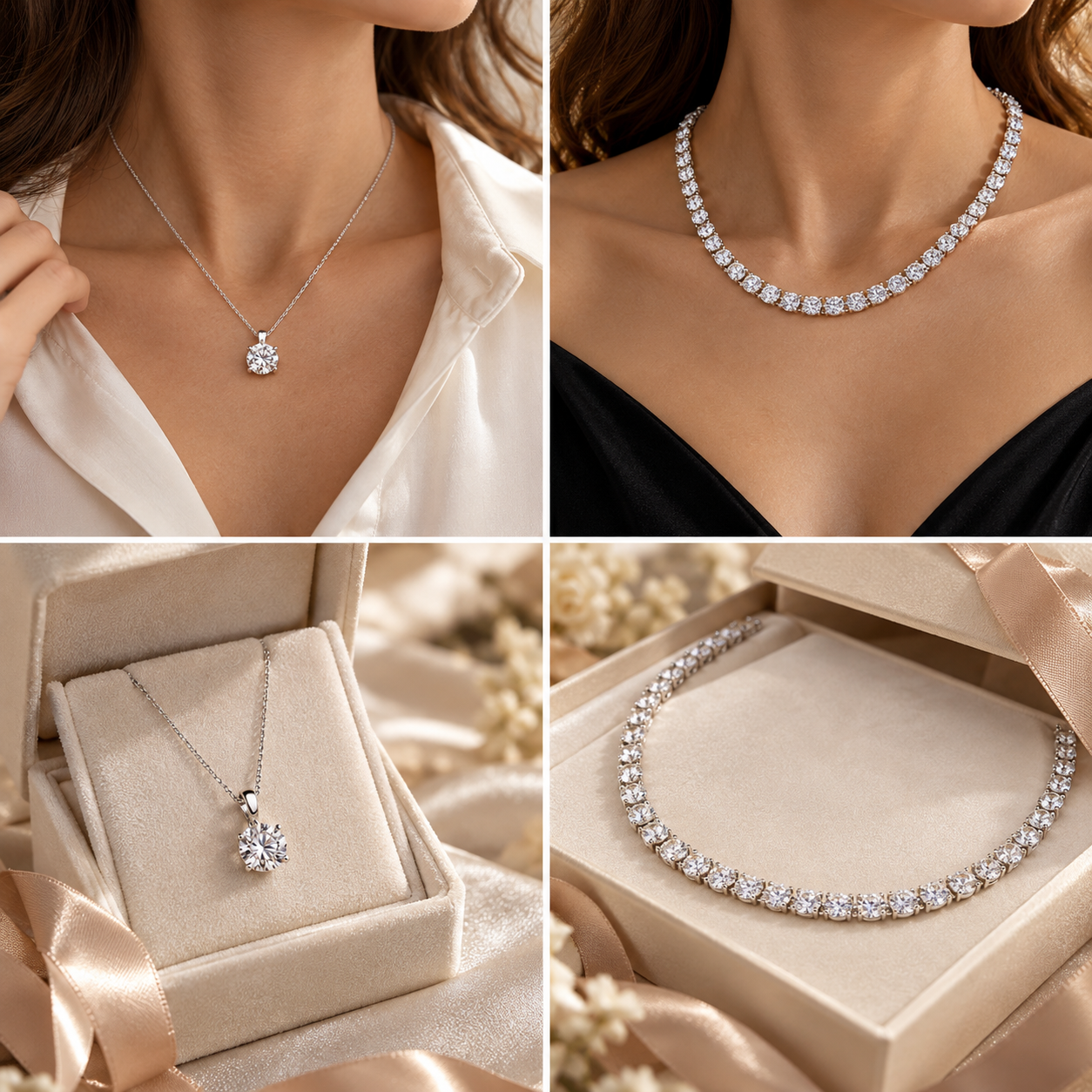
Both diamond pendants and tennis necklaces can make memorable gifts, but the occasion and recipient should guide the choice.
When to Give a Diamond Pendant
A diamond pendant can be suitable for:
- Birthdays
- Anniversaries
- Graduations
- Christmas
- Valentine's Day
- Mother's Day
- Wedding gifts
- Personal milestones
- A first significant diamond jewellery gift
Because pendant designs range from simple solitaires to more elaborate diamond and gemstone pieces, it is relatively easy to choose one that reflects the recipient's existing style.
When to Give a Tennis Necklace
A tennis necklace may be especially appropriate for:
- A major wedding anniversary
- A milestone birthday
- A wedding-day gift
- A significant professional achievement
- A major family celebration
- A luxury Christmas gift
It can be particularly appealing for someone who already owns classic diamond studs, rings or pendants and wants to add a more substantial diamond necklace to their collection.
Solitaire Diamond Pendants: Why They Remain a Classic
The solitaire diamond pendant remains one of the simplest ways to wear a diamond at the neckline.
Instead of relying on several decorative elements, the design keeps one diamond as the central feature.
Popular diamond shapes can include:
- Round
- Oval
- Pear
- Princess
- Emerald
- Cushion
- Marquise
- Heart
Round diamonds provide a familiar classic appearance, while fancy shapes such as pear, oval and emerald can create a more distinctive silhouette.
If you would like to explore different pendant styles in more detail, read our Necklace & Pendant Buying Guide.
Tennis Necklace Settings: Why They Matter
The setting contributes significantly to the finished appearance of a tennis necklace.
Prong-Set Tennis Necklaces
Prong settings use small metal claws to hold each diamond securely.
Because relatively little metal may be visible around each stone, this can create a particularly diamond-focused appearance.
Bezel-Set Tennis Necklaces
A bezel setting surrounds more of the diamond with precious metal.
This creates clearly defined individual stones and can give the necklace a clean, contemporary appearance.
Shared-Prong Tennis Necklaces
In a shared-prong design, neighbouring diamonds may share setting elements.
This can help maintain the appearance of a continuous line of diamonds while minimising some of the visible metal between them.
Which Is More Versatile?
For pure wardrobe versatility, the diamond pendant has an advantage.
A simple pendant can accompany casual, business and occasion wear without looking out of place.
A tennis necklace is versatile in a different way.
Although often associated with evening jewellery, finer tennis necklaces can also be styled with relatively simple clothing, allowing the diamonds themselves to become the central feature.
A tennis necklace can work with:
- A simple black dress
- An open-neck white shirt
- A fitted knit
- Minimal tailoring
- An evening gown
Which Is Better for Layering?
Diamond pendants are particularly well suited to necklace layering.
For example, you could combine:
- A short fine chain
- A diamond solitaire pendant
- A slightly longer plain or diamond necklace
Using different lengths can help prevent the jewellery from competing for the same area of the neckline.
Tennis necklaces can also be layered, but they already provide significant detail.
A shorter tennis necklace can, for example, be combined with a longer minimalist pendant when there is enough separation between the two pieces.
Diamond Pendant vs Tennis Necklace for Different Necklines
V-Neck
A pendant can work particularly well with a V-neck because its vertical drop follows the direction of the neckline.
Pear and drop-shaped pendants can emphasise this effect.
Strapless or Off-the-Shoulder
A tennis necklace can frame an exposed neckline and collarbone beautifully, making it a strong choice for formal and bridal styling.
Crew Neck
A slightly longer pendant can provide visual contrast against a higher neckline.
Scoop Neck
Both styles can work effectively. A pendant provides a central focal point, while a tennis necklace can follow the curve of the neckline.
Natural vs Lab-Grown Diamonds
Both diamond pendants and tennis necklaces can feature either natural or lab-grown diamonds.
Natural and lab-grown diamonds share the same fundamental crystal structure and optical characteristics, but their origin differs.
The choice can affect how much total diamond carat weight or visible diamond coverage you can achieve within a particular budget.
This becomes particularly relevant with a tennis necklace because the design contains multiple diamonds.
When comparing necklaces, consider:
- Diamond cut
- Colour
- Clarity
- Carat weight
- Matching between stones
- Setting quality
- Precious metal
- Overall craftsmanship
For a more detailed explanation, read our Natural vs Lab-Grown Diamonds Guide.
Customers specifically looking for naturally formed stones can also browse our Natural Diamond Necklaces.
Does Carat Weight Matter More in a Tennis Necklace?
Carat weight works differently depending on the necklace design.
With a solitaire pendant, much of the carat weight may be concentrated into one main diamond.
With a tennis necklace, the total carat weight is distributed across numerous individual stones.
Two tennis necklaces with a similar total carat weight can therefore look different depending on:
- The total number of diamonds
- Individual diamond size
- Necklace length
- Setting style
- Whether diamond sizes are uniform or graduated
What Necklace Length Should You Choose?
Necklace length changes where the jewellery sits and how it works with clothing.
| Approximate Length | Typical Position | Suitable For |
|---|---|---|
| 16 Inches | Higher around the neckline | Short pendants and close-fitting necklace styles |
| 18 Inches | Near the collarbone / upper chest | A versatile length for many pendants |
| 20 Inches | Slightly lower on the chest | Larger pendants and layering |
| Longer Lengths | Lower on the chest | Layering and selected pendant designs |
Tennis necklaces are often chosen to sit relatively close to the neckline so the diamonds remain clearly visible.
However, the actual fit depends on neck circumference, necklace construction and personal preference, so always check the listed dimensions before purchasing.
Yellow Gold, White Gold, Rose Gold or Platinum?
Precious metal can significantly change the character of both diamond pendants and tennis necklaces.
Yellow Gold
Creates warmth and visible contrast around white diamonds for a classic yet contemporary look.
White Gold
Provides a bright background that visually blends with white diamonds and keeps attention on the stones.
Rose Gold
Introduces a softer and warmer tone that can give a diamond pendant a more romantic character.
Platinum
Provides a naturally white appearance and is widely used for premium fine jewellery.
9ct Gold
Provides a precious-metal option at a more accessible starting point for many necklace designs.
18ct Gold
Contains a higher proportion of gold and is often chosen for premium diamond jewellery.
Which One Costs More?
There is no fixed answer because the price depends on several factors.
- Natural or lab-grown diamonds
- Total carat weight
- Diamond quality
- Number of stones
- Precious metal
- Necklace length
- Setting complexity
- Overall design and craftsmanship
A tennis necklace often contains considerably more diamonds than a simple pendant, which can make it a larger jewellery purchase.
A pendant gives buyers greater flexibility to concentrate the budget into one main diamond or a smaller decorative design.
Which Should You Buy First?
If you are building a diamond jewellery collection from the beginning, a diamond pendant can be a particularly versatile first purchase.
It works easily alongside other jewellery and can be worn frequently without requiring a formal occasion.
If you already own:
- Diamond stud earrings
- A solitaire pendant
- A tennis bracelet
- Diamond rings
then a tennis necklace may provide a more distinctive next addition by introducing significantly greater diamond coverage around the neckline.
Diamond Pendant or Tennis Necklace with a Tennis Bracelet?
A tennis necklace and tennis bracelet can create a coordinated look because both use a repeating line of diamonds.
For formal occasions, wearing both can produce an intentionally luxurious appearance.
For more understated styling, you may prefer one tennis piece as the main statement.
A diamond pendant combined with a tennis bracelet is another effective option. The pendant creates one central focal point while the bracelet provides repeated sparkle at the wrist.
Which Style Is Better for Women?
There is no single best diamond necklace for women because jewellery preference is highly individual.
| Choose a Diamond Pendant If She Prefers | Choose a Tennis Necklace If She Prefers |
|---|---|
| Minimal jewellery | Noticeable diamond jewellery |
| Solitaire designs | Statement pieces |
| Small everyday pieces | Continuous sparkle |
| Layered necklaces | Formal or occasion jewellery |
| Classic gifts | Tennis bracelets and coordinating diamond jewellery |
Look at the jewellery she already wears before deciding. Existing pieces often provide the best indication of whether she prefers delicate or more substantial diamond jewellery.
Diamond Pendant vs Tennis Necklace for a Wedding
Both styles can make beautiful bridal jewellery choices.
A solitaire or drop diamond pendant can work particularly well with:
- V-neck wedding dresses
- Delicate bridal looks
- Detailed dresses where the jewellery should remain understated
A tennis necklace can work particularly well with:
- Strapless gowns
- Off-the-shoulder dresses
- Minimal bridal gowns
- Evening wedding styling
The dress should guide the scale of the jewellery. If the neckline already contains substantial embellishment, a simpler diamond pendant may create better balance.
How to Care for Diamond Pendants and Tennis Necklaces
Diamond necklaces should be stored and handled carefully regardless of their design.
- Store necklaces separately to reduce tangling and scratching.
- Fasten the clasp before storing the necklace.
- Avoid pulling a pendant by its diamond setting.
- Check tennis necklace settings periodically.
- Keep jewellery away from harsh household chemicals.
- Remove valuable jewellery before strenuous exercise or manual work.
- Use cleaning methods appropriate for the diamonds and precious metal.
- Arrange professional inspection when a piece is worn frequently.
A tennis necklace contains numerous individual settings, so periodic inspection can be especially worthwhile.
For more maintenance advice, read our Jewellery Care Guide.
Diamond Pendant vs Tennis Necklace: Which Is Right for You?
The simplest way to decide is to consider how you want the necklace to work within your existing wardrobe.
Choose a Diamond Pendant If You Want:
- A versatile everyday necklace
- One clear diamond focal point
- Easy necklace layering
- A classic jewellery gift
- Broad budget flexibility
- A necklace that works with casual and formal clothing
Choose a Tennis Necklace If You Want:
- Continuous diamond sparkle
- Greater visible diamond coverage
- A luxury statement necklace
- Jewellery for major celebrations
- A necklace that can be worn alone as the focal point
- A piece that coordinates naturally with a tennis bracelet
Explore Diamond Necklaces at Sunshine Diamonds
Frequently Asked Questions
Final Thoughts
Choosing between a diamond pendant and a tennis necklace ultimately means choosing between two different ways of wearing diamonds.
A diamond pendant focuses attention on one central design. It is versatile, easy to style and well suited to everyday wear, gifting and necklace layering.
A tennis necklace spreads the brilliance around the neckline, creating greater diamond coverage and a stronger visual presence.
If you are buying your first significant diamond necklace, a solitaire or classic diamond pendant may offer greater everyday flexibility.
If you already own understated diamond jewellery and want something with greater impact, a tennis necklace may be the more distinctive addition.
Whichever style you choose, consider the details beyond appearance: diamond quality, total carat weight, setting, necklace length, precious metal, craftsmanship and how comfortably the piece fits into the way you actually dress.
The best diamond necklace is not simply the one with the most diamonds. It is the one that suits your style and that you will enjoy wearing again and again.