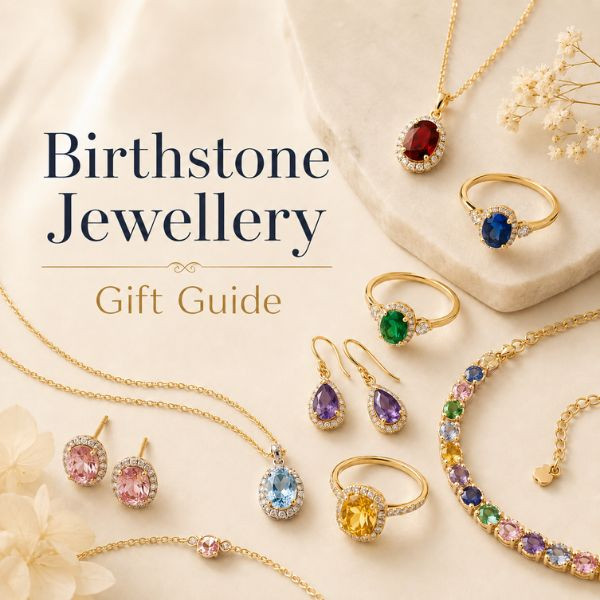
Birthstone Jewellery with Diamonds: A Personal Gift Guide
Quick Summary
- Every month of the year has a dedicated birthstone, each with its own colour, symbolism and meaning
- April's birthstone is diamond — the most coveted and durable gemstone, ranking 10 on the Mohs scale
- Birthstone jewellery is one of the most personal gifts you can give — far more considered than a generic present
- Lab-grown diamonds and gemstones offer identical optical and physical properties at a fraction of the cost of natural stones
- UK birthstone jewellery prices range from under £100 for a petite pendant to £15,000+ per carat for top natural diamonds
- The metal you choose matters: warm stones (ruby, garnet) suit yellow gold; cool stones (sapphire, aquamarine) shine in white gold or platinum
- Pendants and stud earrings are the most universally wearable birthstone jewellery types for gifting
- Every Sunshine Diamonds piece is UK hallmarked and supplied with full gemstone documentation
Content Quicklinks
- - What Is Birthstone Jewellery?
- - A Brief History of Birthstone Jewellery
- - Birthstones by Month — Every Stone Explained
- - April's Birthstone: Diamond — The Ultimate Gift
- - Birthstones at a Glance — All 12 Months
- - How to Choose the Right Birthstone Jewellery
- - Birthstone Jewellery for Every Occasion
- - Birthstone Jewellery Price Guide (UK)
- - Natural vs Lab-Grown Gemstones Explained
- - Step-by-Step: Choosing Your Birthstone Piece
- - Common Mistakes to Avoid
- - Caring for Birthstone Jewellery
- - FAQs
- - Final Thoughts
There's something genuinely special about giving a piece of jewellery that was made — symbolically, at least — just for someone. Gemstone jewellery has been treasured for centuries, and birthstone pieces in particular carry a meaning that no generic gift can replicate. When you hand someone a ring or necklace set with their birthstone, you're not just giving a beautiful object. You're saying: I thought about you. I know you. This was chosen with you in mind.
Whether you're shopping for a milestone birthday, an anniversary, Mother's Day, or a heartfelt out-of-the-blue surprise, birthstone jewellery hits differently. And with Sunshine Diamonds' range of diamond and gemstone jewellery — set in gold, white gold, and platinum — finding the right piece for the right person has never felt more considered.
What Is Birthstone Jewellery?
Birthstone jewellery is jewellery set with the gemstone traditionally associated with a person's birth month — each stone carrying its own colour, symbolism and meaning, standardised by the Gemological Institute of America (GIA) and widely recognised across the UK. The tradition dates back thousands of years, with some historians tracing it to the breastplate of Aaron described in the Book of Exodus, set with twelve stones representing the twelve tribes of Israel. By the 18th century, wearing your birthstone had become a widespread custom across Europe.
What makes birthstone jewellery so enduringly popular is its personal nature. Unlike a generic gift, a birthstone piece quietly communicates that you paid attention — you knew their month, their stone, their meaning. Each month has at least one primary birthstone, and a handful of months have alternates, giving you extra flexibility if you prefer a different colour or a more accessible price point.

A Brief History of Birthstone Jewellery
Birthstone traditions stretch back to antiquity. In ancient India, rubies were revered as the "king of gemstones" and worn by royalty; in ancient Rome, sapphires were associated with the gods and with wisdom. As trade routes opened along the Silk Road, coloured gemstones travelled west and began appearing in the crowns, pendants and rings of European nobility, each stone believed to carry protective powers tied to the cosmos.
The modern standardisation of birthstones — the list most UK buyers recognise today — was formalised by the American National Association of Jewellers in 1912, with minor updates added in subsequent decades. Today, the tradition sits comfortably between sentiment and style: a birthstone piece is as likely to be chosen for its beauty as its symbolism, and often both at once. That dual appeal is precisely why birthstone jewellery has never really gone out of fashion.
Birthstones by Month — Every Stone Explained
Here's the complete guide to every birth month, its stone, its meaning, and what to look for when choosing a birthstone jewellery gift.
Garnet
Deep, wine-red warmth. Garnet looks stunning in yellow gold settings, which bring out its rich tones. A meaningful gift for someone starting a new chapter.
Amethyst
Soft violet-purple, historically worn by royalty. Exquisite in white gold or platinum. A delicate pendant or drop earrings make a lovely February gift.
Aquamarine
Cool, sea-blue clarity. Named after the ocean, aquamarine suits white gold and photographs exceptionally well. A beautiful choice for a March birthday ring or pendant.
Diamond
The most coveted of all birthstones. Ranks 10 on the Mohs scale — the hardest natural material on earth. Works beautifully in every metal. Also available lab-grown.
Emerald
Rich, vivid green prized since antiquity — Cleopatra famously adored them. Looks magnificent in yellow gold settings. A genuinely luxurious May birthday gift.
Pearl / Moonstone
Three options: pearl (classic and elegant), alexandrite (rare and colour-changing), or moonstone (ethereal blue-white glow). Real flexibility for June birthdays.
Ruby
Bold, deep red and one of the most emotive gemstones. Closely associated with love and strength. Rose or yellow gold settings suit rubies beautifully.
Peridot
Distinctive yellow-green — unlike any other gemstone. Pairs warmly with yellow gold. A more accessible price point makes peridot a great option for bolder, larger stones.
Sapphire
Deep, velvety blue and enduringly iconic. Associated with loyalty and nobility. Exceptional in white gold or platinum — a standout choice for September birthdays.
Opal / Pink Tourmaline
Opal's dramatic play-of-colour shifts as the stone moves in light. Pink tourmaline offers a softer, more wearable alternative. Both make distinctive October gifts.
Blue Topaz / Citrine
Two lovely options: cool blue topaz in white gold, or warm golden citrine in yellow gold. Both are generously sized for their price — excellent value for the budget-conscious buyer.
Blue Topaz / Tanzanite
Three options: accessible blue topaz, historic turquoise, or rare and dramatic tanzanite. Tanzanite's violet-blue rivals sapphire — a memorable December birthday gift.
April's Birthstone: Diamond — The Ultimate Gift
If you're shopping for someone born in April, lucky them. Diamond is April's birthstone — the hardest natural material on earth, ranking 10 on the Mohs scale, and the most sought-after gemstone in fine jewellery worldwide. Diamonds are prized for their exceptional brilliance, enduring beauty, and symbolic weight — strength, clarity, and eternal love — making them a genuinely fitting birthstone for what is often the most meaningful of gifts.
At Sunshine Diamonds, the diamond jewellery collection spans everything from classic solitaire pendants and diamond stud earrings to diamond rings set in 9ct and 18ct gold and platinum. Lab-grown diamonds offer exactly the same physical and optical properties as mined diamonds — the same fire, the same hardness, the same GIA or IGI certification — at a significantly more accessible price point. A diamond pendant or pair of diamond studs for an April birthday is a gift they'll wear and treasure for decades.
Birthstones at a Glance — All 12 Months
A complete reference for every birth month, stone, colour, meaning and the best metal to pair it with.
| Month | Birthstone | Colour | Symbolism | Best Metal |
|---|---|---|---|---|
| January | Garnet | Deep Red | Love & Friendship | Yellow Gold |
| February | Amethyst | Purple | Calm & Clarity | White Gold / Platinum |
| March | Aquamarine | Light Blue | Courage & Peace | White Gold |
| April | Diamond | Colourless / White | Strength & Eternal Love | All Metals |
| May | Emerald | Green | Rebirth & Fortune | Yellow Gold |
| June | Pearl / Moonstone | White / Blue-White | Purity & Calm | White Gold / Silver |
| July | Ruby | Red | Passion & Vitality | Yellow / Rose Gold |
| August | Peridot | Yellow-Green | Strength | Yellow Gold |
| September | Sapphire | Deep Blue | Loyalty & Wisdom | White Gold / Platinum |
| October | Opal / Pink Tourmaline | Multi / Pink | Creativity & Hope | Gold / Silver |
| November | Blue Topaz / Citrine | Blue / Golden Yellow | Clarity & Joy | White / Yellow Gold |
| December | Blue Topaz / Tanzanite | Blue / Violet-Blue | Calm & Rarity | White Gold / Platinum |
How to Choose the Right Birthstone Jewellery
Knowing the birthstone is just the starting point. Here's how to translate that knowledge into the right piece.
Match Their Everyday Style
Classic wearers suit a simple solitaire pendant or small studs. Those who love a bolder look will appreciate a statement ring or layered necklace. Match the piece to how they actually dress.
Choose the Right Metal
Warm-coloured stones — ruby, garnet, citrine, peridot — sing in yellow or rose gold. Cool-toned stones — sapphire, aquamarine, amethyst, blue topaz — look exceptional in white gold or platinum.
Pick the Jewellery Type
A pendant necklace is universally wearable. Stud earrings suit almost everyone. Rings require knowing their size. Adjustable bracelets make gifting easier when you're not certain.
Insist on Hallmarked Metal
A well-made setting in hallmarked gold or platinum protects the stone and ensures the piece lasts a lifetime. All Sunshine Diamonds pieces are hallmarked and certified.
Consider the Setting Style
A halo setting makes a smaller centre stone look more substantial — a smart choice if you want impact on a tighter budget. A solitaire lets the colour of the stone do all the talking.
Think About Wearability
For active daily wear, a channel or bezel setting protects gemstones better than a high claw solitaire. For occasional pieces and gemstone engagement rings, a claw setting maximises brilliance.
Birthstone Jewellery for Every Occasion
- Milestone birthdays. For 18th, 21st, 30th or 40th birthdays, quality birthstone jewellery in hallmarked gold is a far more lasting alternative than a generic experience or voucher. A piece they'll wear for life.
- Anniversaries. Your own birthstone, your partner's, or a combination of both — birthstone jewellery offers a creative and deeply meaningful approach to anniversary gifting that a bunch of flowers simply cannot match.
- New baby. A delicate birthstone bracelet, pendant or stud earrings for a new arrival is a truly special keepsake. Choose something simple and durable that can be worn as the child grows.
- Christmas. A thoughtful alternative to generic festive gifts — particularly meaningful under the tree for someone who has everything they need.
- Just because. Sometimes the most cherished gifts aren't tied to any occasion at all. A birthstone piece says: I was thinking of you, and I chose this specifically for you.

Birthstone Jewellery Price Guide (UK)
Birthstone jewellery spans one of the widest price ranges of any jewellery category — from petite gemstone pendants in 9ct gold to exceptional diamonds and sapphires set in platinum. Here's a realistic guide to what your budget buys in 2026.
| Budget | What to Expect | Best Jewellery Choice |
|---|---|---|
| Under £100 | Petite lab-grown or natural gemstone (amethyst, peridot, garnet) in 9ct gold or sterling silver | Solitaire pendant or small stud earrings |
| £100–£300 | Natural gemstone (aquamarine, citrine, blue topaz) in 9ct or 18ct gold; lab-grown diamond studs or pendant | Pendant, halo stud earrings, or slim ring |
| £300–£800 | Larger or finer natural gemstone (sapphire, ruby, emerald) in 18ct gold; natural diamond studs or pendant | Halo ring or three-stone setting; diamond pendant |
| £800–£2,500 | Fine natural sapphire, ruby or emerald 0.50–1.50ct; natural diamond 0.50–1.00ct in 18ct gold or platinum | Statement solitaire, halo, or three-stone ring |
| £2,500–£15,000+ per carat | Fine natural unheated coloured gemstones or high-quality natural diamonds — the collector and investment tier | Bespoke or solitaire; certificate essential |
Natural vs Lab-Grown Gemstones Explained
This is one of the most important — and most commonly skipped — parts of buying birthstone jewellery. Lab-grown gemstones are an increasingly popular, completely legitimate alternative to natural stones, and understanding the difference helps you make a genuinely informed choice.
| Type | What It Means | Price vs Natural | Best For |
|---|---|---|---|
| Natural gemstone | Formed in the earth over millions of years. Traces of origin, inclusions and slight colour variations are all part of what makes each stone unique. | Baseline — the premium category | Collectors, investment pieces, milestone gifts where provenance matters |
| Natural, treated gemstone | Formed in the earth and then heat-treated to improve colour or clarity. Standard trade practice for rubies, sapphires, and many other stones. Widely accepted and disclosed by reputable jewellers. | Typically 30–60% less than unheated equivalents | Most engagement and fashion rings — excellent value for colour quality |
| Lab-grown gemstone / diamond | Same chemical composition as natural stones, grown in a controlled environment. Identical optical and physical properties — including hardness and brilliance. Certified by GIA or IGI. | Typically 60–90% less | Larger, bolder stones on a sensible budget; buyers who prioritise size and quality over origin |
Step-by-Step: Choosing Your Birthstone Jewellery Piece
- Identify the birth month. Find out your recipient's birth month — or your own, if you're treating yourself — and identify the corresponding birthstone using our guide above.
- Set your budget first. This single decision determines whether you're shopping lab-grown, natural treated, or the natural unheated collector tier — and which jewellery types are realistically available to you.
- Decide: natural or lab-grown? If size and visual impact matter more than provenance, a lab-grown stone gives significantly more for the same budget. If origin and rarity are the priority, go natural with treatment disclosure.
- Choose the jewellery type. Pendants are the most universally wearable gift. Studs suit almost everyone. Rings require knowing their ring size. Consider how the piece will actually be worn day-to-day.
- Select the right metal. Warm stones (ruby, garnet, citrine, peridot) suit yellow or rose gold. Cool stones (sapphire, aquamarine, amethyst, blue topaz) shine in white gold or platinum. Diamond works beautifully in all metals.
- Prioritise colour and quality over carat size. A smaller stone with vivid, even colour in a well-made setting will always look better — and hold its value better — than a larger stone of mediocre quality.
- Request documentation. For any natural stone above approximately 0.50ct, ask for an independent gemstone report from a recognised laboratory — GIA, GRS, or IGI are the names to look for.
- Confirm ring size before ordering. Particularly important for fully set or eternity-style bands that can be harder to resize without disturbing the stones.
Common Mistakes to Avoid When Buying Birthstone Jewellery
- Choosing size over quality. A smaller stone with vivid, even colour in a hallmarked gold setting will always impress more than a larger stone of mediocre colour. Prioritise quality every time.
- Skipping certification on a higher-value piece. Without an independent lab report, you have no confirmation of a stone's treatment status, origin or grade — and no protection if a claim turns out to be inaccurate. Always ask.
- Judging colour from photographs alone. Gemstone colour is notoriously difficult to capture accurately in photography, particularly under artificial lighting. Where possible, see the stone in person or under daylight-equivalent lighting before committing.
- Choosing the wrong metal for the stone. Pairing a cool-toned sapphire with yellow gold, for example, can make the stone appear slightly greenish rather than blue. Match the metal to the stone's colour temperature for the best result.
- Buying without checking ring size. Particularly for rings with continuous stone settings that are difficult to resize — always confirm the size before ordering, or choose a pendant or earrings to avoid the issue entirely.
- Not asking about treatment. Heat treatment is standard practice for many coloured gemstones and is nothing to worry about — but it should always be disclosed clearly. If a seller is evasive about treatment history, that is a red flag worth taking seriously before you buy.
Caring for Your Birthstone Jewellery
Care requirements vary by stone hardness, but the basics apply universally. Clean birthstone jewellery regularly with warm water, a mild soap and a soft brush, and dry with a lint-free cloth. Most diamonds, sapphires and rubies — ranking 9–10 on the Mohs scale — can be safely cleaned with an ultrasonic or steam cleaner. Softer stones such as opal (5.5–6.5 Mohs) and pearl (2.5–4.5 Mohs) need much gentler handling — warm water and a soft cloth only, kept well away from ultrasonic cleaners.
Store birthstone jewellery pieces separately, since harder stones (particularly diamond) can scratch softer gems and gold surfaces if left to knock together in the same box. Remove rings before heavy manual work, gym sessions or swimming in chlorinated water, and have prongs and settings checked annually by a jeweller to keep every stone secure. For opal jewellery specifically, avoid prolonged exposure to direct sunlight and very dry conditions, which can cause the stone to crack over time.
Continue Browsing
Note to client: confirm the above category URLs against the live sitemap (sunshinediamonds.com/sitemap.xml) before publishing — validate any URL you are unsure about before going live.
Frequently Asked Questions
Final Thoughts
Buying birthstone jewellery well comes down to understanding what you're actually giving: a stone chosen for someone specifically, set in quality metal, and presented with genuine thought. Whether you choose a natural gemstone, a heat-treated alternative, or a lab-grown stone for more carat weight on the same budget, the same principles apply — prioritise colour and quality, ask about treatment, request documentation on anything significant; and choose a setting that suits how the piece will actually be worn.
Browse the full diamond jewellery collection and gemstone range at Sunshine Diamonds, or get in touch with our team for personal guidance on the right stone, setting and budget for you.